

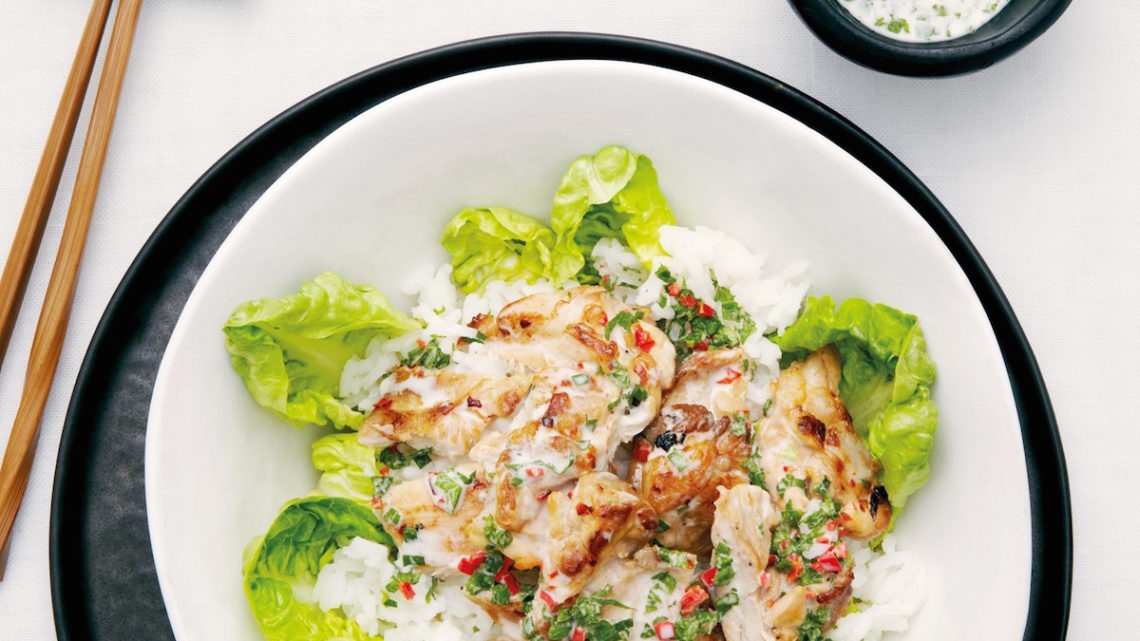
Coconut Lime Chicken with Rice
An easy and healthy dish which is light and full of zingy flavours. A satisfying weekday recipe.
Serves 2
Ingredients
150g jasmine rice
400 g chicken thighs, boned
2 baby gem lettuce
1 small tin coconut milk
2 limes
15 g mint
1 red chilli pepper
olive oil (3 tablespoons)
salt
pepper
fish sauce
Method
1
Preheat the oven to 200° C. Bring a pan of salted water to the boil. Add the rice and cook for 10 minutes. Drain the rice off through a sieve; add a small amount of water to the pan. Set the sieve over the pan, cover with a lid and allow the rice to steam over a low heat.
2
Finely chop the red chilli. Place the chicken in a bowl, drizzle over 2 tablespoons olive oil, season with salt and pepper, squeeze over the juice from the lime and add half he chopped chilli. Heat a grill pan over high heat and grill the chicken thighs on both sides. Place the chicken in a roasting dish and roast in the oven for 20 minutes.
3
Finely chop the mint. In a bowl, mix together 120 ml coconut milk, the juice of half the second lime, fish sauce to taste, the chopped mint and remaining chopped chilli. Click the leaves off the baby gem lettuce.
4
Lay the baby gem leaves in a serving bowl. Spoon the rice on top. Slice the chicken diagonally into pieces and place on top of the rice. Spoon over the coconut dressing and serve.

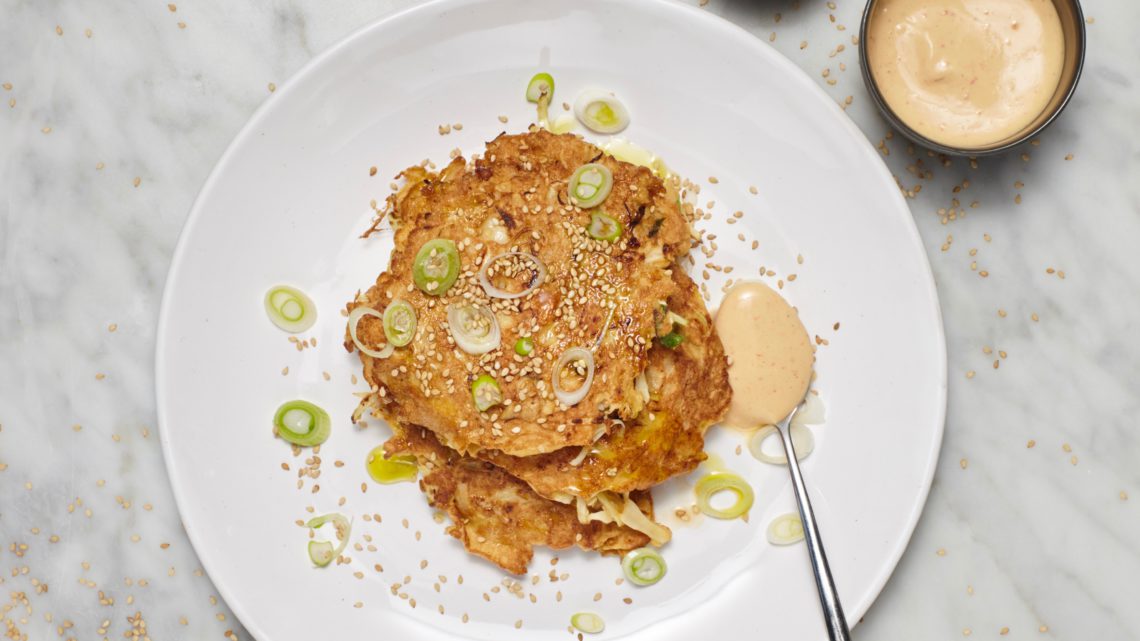
Okinomiyaki
Okonomiyaki is a Japanse snack of egg-rich pancakes filled with savoury ingredients such as shrimp, cabbage and spring onions. The pancakes are paired with a super-easy and delicious dipping sauce made with Japanse mayonnaise, soy sauce and hot sauce.
Serves 2
Ingredients
4 eggs
2 teaspoons container sesame oil
1-2 teaspoons chilli sauce
300g shredded cabbage
3 spring onions
150g pink shrimp
10g container sesame seeds
3 tablespoons sunflower oil (3 tablespoons)
1/2 cup Japanese or regular mayonnaise (½ cup)
soy sauce (2 teaspoons for the sauce and about 2 tablespoons for the batter)
20g flour (20 g)
salt
pepper
Method
1
Preheat an oven to 200° C. Coarsley chop the shrimp and finely slice the spring onions.
2
Mix ½ cup mayonnaise with 2 teaspoons soy sauce and chilli sauce to taste. This is the dipping sauce.
3
Whisk the eggs in a bowl with 20 g flour and add the shredded cabbage, prawns, spring onion, sesame oil and soy sauce to taste. Mix all the ingredients together well.
4
Heat a frying pan over medium heat with 2 tablespoons sunflower oil. Add spoonfuls of the batter to the pan just as you would for American pancakes. Fry for about 3 minutes on each side. Lay them on an oven tray lined with baking paper. Heat them up in a preheated oven fora bout 3 minutes.
5
Divide the pancakes between 2 plates, sprinkle over the sesame seeds and serve with the dipping sauce.

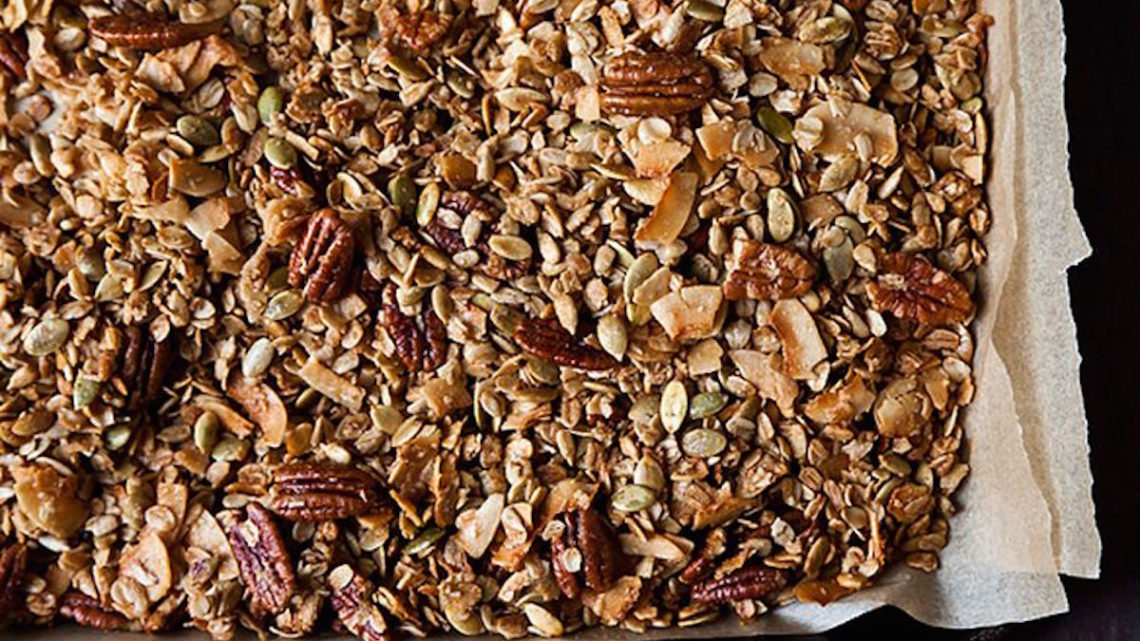
Home made granola
Granola is so easy to make and the best thing is you can put in ingredients you like. Here's our recipe, but feel free to play around with your own flavours.
Makes about 1kg
Ingredients
500g oats
100g hazelnuts, coarsley chopped
100g almonds, coarsley chopped
50g cashews
100g pecan nuts, coarsley chopped
25g sesame
25g sunflower seeds
25g pumpkin seeds
125g golden syrup
100g maple syrup
a good sprinkle of cinnamon
60g dried cranberries
60g raisins
60g dried apricots, roughly chopped.
60g prunes
Method
Preheat an oven to 160 C.
Mix all the ingredients together, except for the dried fruit and divide between to oven trays which have been lined with baking paper. Bake in the oven for about 30 minutes or until everything becomes evenly golden coloured. Give it a mix every 10 minutes or so.
Remove from the oven, allow to cool and mix in the dried fruit. Store in an airtight container.
Delicious served over yoghurt with fresh or stewed fruit.
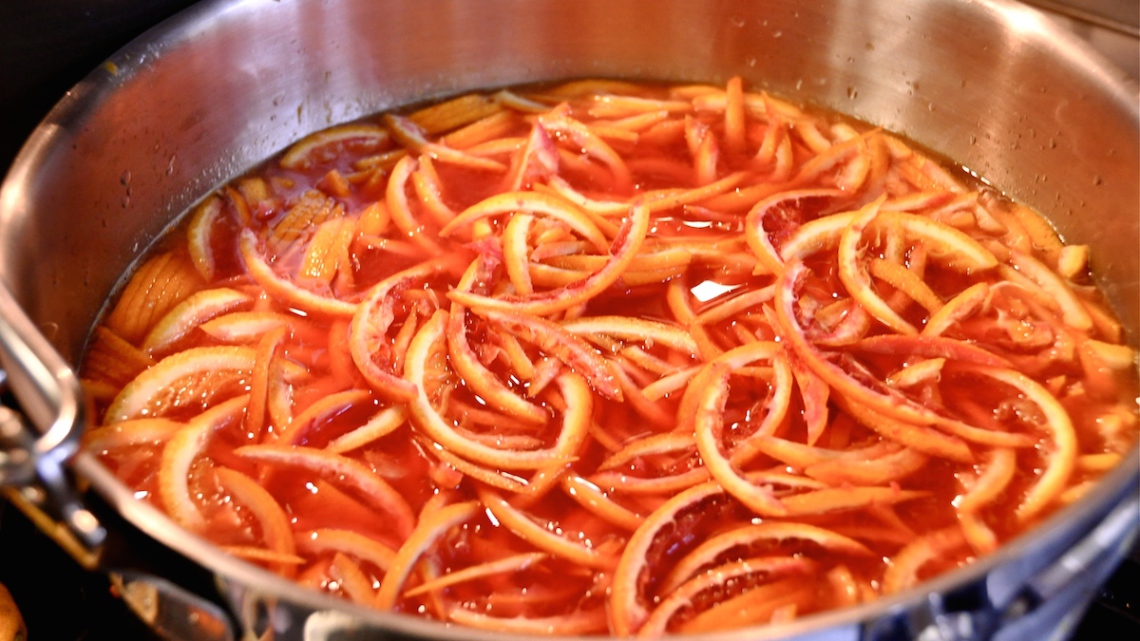
Blood Orange Marmalade
This is a recipe we have adapted from Delia Smith.
Makes about 6 x 350 ml jars
Ingredients
900 g blood oranges
1 lemon
1.8 kg granulated sugar
Method
Begin by measuring 2.25 litres water into a preserving pan, then cut the lemon and oranges in half and squeeze the juice out of them. Add the juice to the water and place the pips and any bits of pith that cling to the squeezer on a square of muslin.
Now cut the orange peel into quarters with a sharp knife, and then cut each quarter into thinnish shreds. As you cut, add the shreds to the water and any pips or spare pith you come across should go on to the muslin. The pith contains a lot of pectin so don't discard any and don't worry about any pith and skin that clings to the shreds – it all gets dissolved in the boiling.
Now tie the pips and pith up loosely in the muslin to form a little bag, and tie this on to the handle of the pan so that the bag is suspended in the water. Then bring the liquid up to simmering point and simmer gently, uncovered, for 2 hours or until the peel is completely soft (test a piece carefully by pressing it between your finger and thumb).
Meanwhile, chill a couple of saucers in the freezer.
Next, remove the bag of pips and leave it to cool on a saucer. Then pour the sugar into the pan and stir it now and then over a low heat, until all the crystals have dissolved (check this carefully, it's important). Now increase the heat to very high and squeeze the bag of pips over the pan to extract all of the sticky, jelly-like substance that contains the pectin. As you squeeze you'll see it ooze out. You can do this by placing the bag between two saucers or using your hands. Then stir or whisk it into the rest.
As soon as the mixture reaches a really fast boil, start timing. Then after 15 minutes spoon a little of the marmalade on to one of the cold saucers from the freezer and let it cool back in the fridge. You can tell – when it has cooled – if you have a 'set' by pushing the mixture with your little finger: if it has a really crinkly skin, it is set. If not, continue to boil the marmalade and give it the same test at about 10-minute intervals until it does set.
After that remove the pan from the heat (if there's a lot of scum, most of it can be dispersed by stirring in half a teaspoon of butter, and the rest can be spooned off). Leave the marmalade to settle for 20 minutes.
In the meantime, the jars should be washed, dried and heated in a moderate oven for 5 minutes. Pour the marmalade, with the aid of a funnel or a ladle, into the jars and seal while still hot.
Label when cold and store in a dry, cool, dark place.
We, the Amsterdam Flavours chefs, hope you enjoy this recipe as much as we do. If you have any questions on how to prepare it or just want to send us your feedback, you can reach us here Contact Amsterdam Flavours
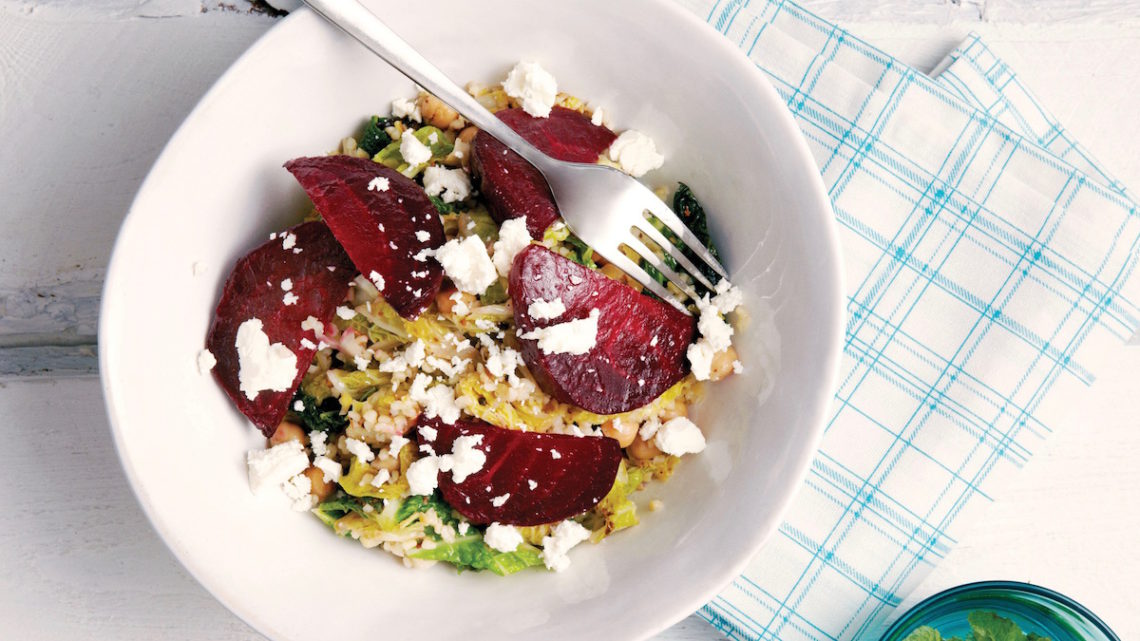
Warm Chickpea Salad
This salad, served warm, utilises a store cupboard staple, chickpeas, with a selection of later winter ingredients including beetroot and cabbage.
Serves 2
Ingredients
120 g bulghar wheat
600 g savoy cabbage
1 tin chickpeas
2 precooked beetroot
1 clove garlic
100 g feta
5 g ras al hanout
4 tablespoons olive oil
4 tablespoons walnut oil
1 tablespoon red wine vinegar
salt
pepper
Method
Bring a pot of water to the boil. Cut the savoy cabbage into 1-1.5 cm strips. Cut the beetroot into wedges. Add the bulghar wheat to the pot of boiling water and simmer gently for about 15 minutes.
Drain the bulghar through sieve. In a bowl, mix together the walnut oil, red wine vinegar, salt and pepper. Finely chop the garlic clove and add to the dressing. Drain the chickpeas through a sieve and rinse under cold water. Place the beetroot in a pan with 2 tablespoons olive oil and warm them gently through.
Heat a frying pan over medium heat with 2 tablespoons olive oil. Add the savoy cabbage and fry gently for about 4-6 minutes until tender. Add a splash of water to the pan to help the cabbage steam. Add the chickpeas and ras al hanout to the pan. Ensure that the ingredients are heated through. Season with salt and pepper.
Mix the bulghar through the chickpea mixture. Add the dressing and extra salt and pepper if necessary. Divide the salad between 2 plates. Lay the beetroot on top and sprinkle with the crumbled feta.
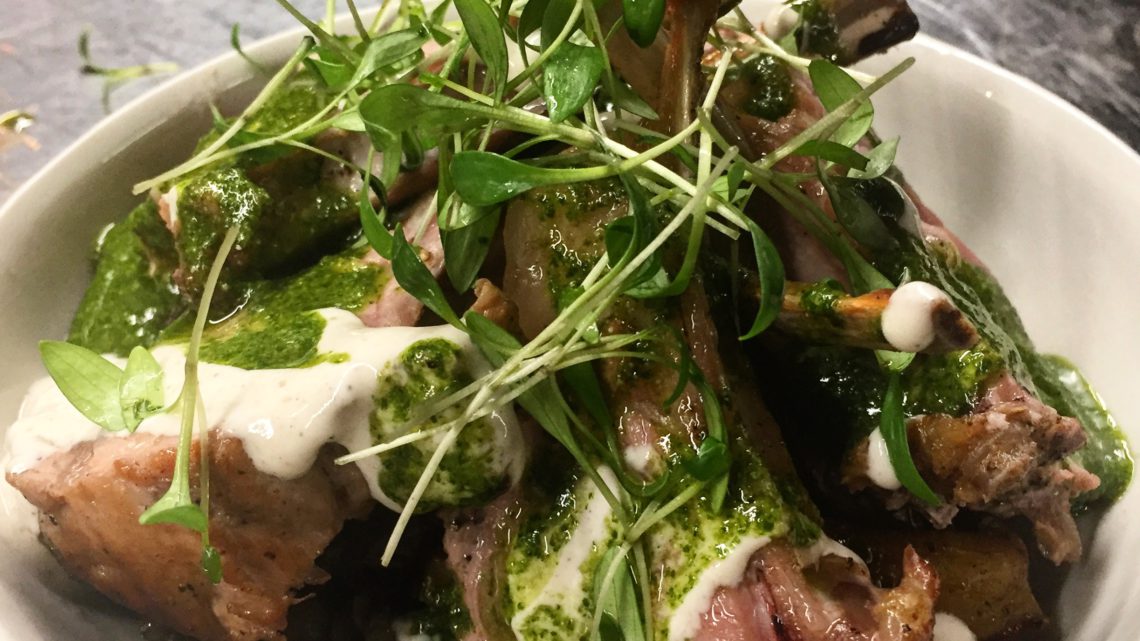
Lamb Cutlets with Lentils, Coriander & Mint dressing and Masala Yoghurt
A modern dish inspired by the flavours of India. Lightly spiced and complemented by coriander and mint, two of the best pairings with lamb.
Serves 4
Ingredients
2 lamb racks
salt
pepper
olive oil
200 g beluga or puy lentils
2 shallots
3 sprigs thyme
1 bunch coriander
1 bunch mint
250 ml natural yoghurt
1-2 tablespoons garam masala
coriander cress, to garnish
Method
Begin by making the coriander and mint dressing. Place the herbs in a blender. Add enough olive oil and blend to a dressing. Season with salt and pepper and set aside.
Finely chop the shallots. Heat a pan over medium heat with 2 tablespoons olive oil and sweat the shallots for 5 minutes. Add the lentils and thyme and fry for a further minute. Add water to cover, bring to the boil and simmer gently for 15-20 minutes until the lentils are cooked but still have a bite. Drain off the water, season with salt and pepper and about 2-3 tablespoons olive oil. Set aside.
Season the lamb cutlets with salt and pepper. Heat a frying pan over medium heat with 2 tablespoons olive oil and fry the lamb, fat side down until the fat has rendered down as much as possible and is golden brown. Turn over on to the meat side and fry for a further 1-2 minutes. Transfer to an oven tray and roast in a 200 oven for 15-17 minutes. Remove the lamb from the oven and allow to rest for at least 10 minutes lightly covered with a piece of aluminium foil.
Mix the natural yoghurt with garam masala to taste. Season with salt and pepper and 1 tablespoon olive oil.
Slice the lamb racks into cutlets. Divide the lentils between 4 plates. Lay 3-4 cutlets on each plate. Spoon over the coriander & mint dressing, masala yoghurt and top with the coriander cress.
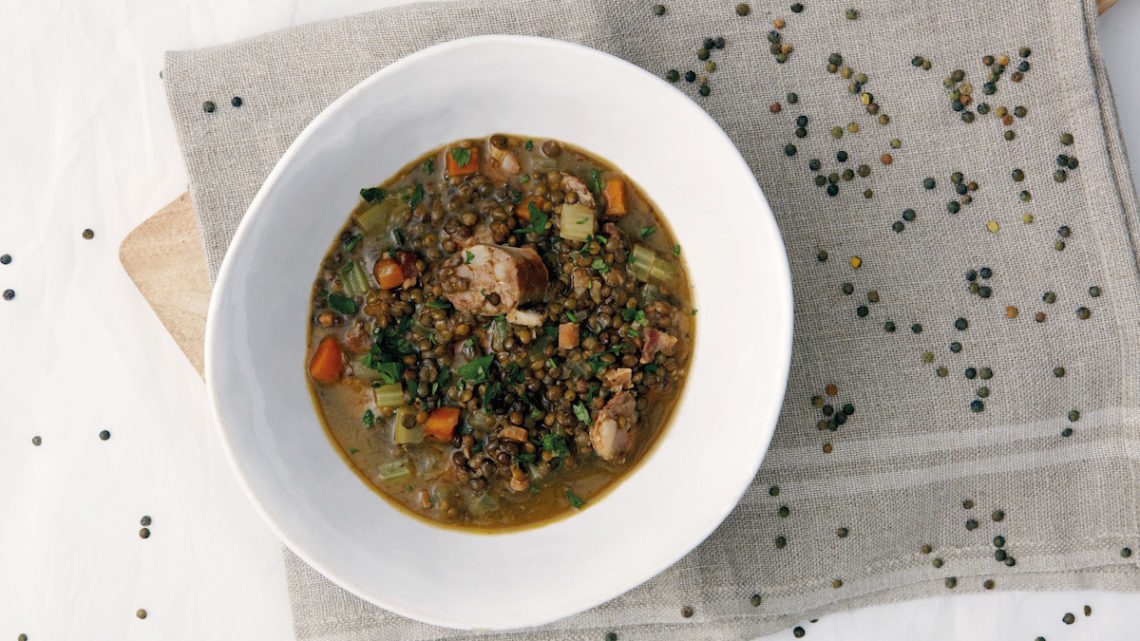
Sausages with Lentils
Fennel and Pepperoncini Sausages with Lentils and Onion Chutney
Serves 2
Ingredients
4 Brandt & Levie fennel and pepperoncini sausages
200g Puy lentils
1 carrot
1 stick celery
1 onion
2 cloves garlic
3 sprigs thyme
80g balsamic-onion chutney (homemade or store bought)
6 tablespoons olive oil
1 heaped teaspoons Dijon mustard
salt
pepper
Method
1
Peel the carrot and finely chop along with the onion, celery and garlic cloves. Heat a pot over medium heat with 2 tablespoons olive oil and fry the chopped vegetables for about 5 minutes.
2
Add the lentils and thyme to the pot and enough water to just cover the lentils. Bring to the boil and simmer gently for about 20-30 minutes.
3
Heat a frying pan over medium heat with 2 tablespoons olive oil. Fry the sausages until golden brown and cooked through, about 12 minutes.
4
If the lentils are still too wet when cooked, pour off the excess water. Season with salt and pepper and a heaped teaspoon Dijon mustard. Stir through 2 tablespoons olive oil. Divide the lentils between 2 plates, slices the sausages, lay on top and serve with the onion chutney.

Grape Chutney
We brought the recipe for this delicious chutney back from our trip to South Africa last year. It makes the perfect accompaniment to a cheese board. In our quest not to waste anything, we often use up leftover grapes in this recipe.
Ingredients
5 Granny Smith apples
1 onion
100ml balsamic vinegar
150ml brandy
1,1 kg white or red grapes (preferably seedless)
175g brown sugar
1 teaspoon mixed spice
1 teaspoon ground cinnamon
1/2 teaspoon ground ginger
salt, to taste
Method
Peel and core the apples and finely chop the onion. Pick the grapes from the stalks and wash under cold water.
Place the apples, onions, balsamic vinegar and brandy together in a heavy-based pan. Place over medium heat and simmer for 30 minutes. Stir in the remaining ingredients and cook until the fruits break down and the chutney has become thick and pulpy, about 1 1/2 to 2 hours.
Spoon into sterile jars, allow to cool and store in a dark cupboard or in the refrigerator.
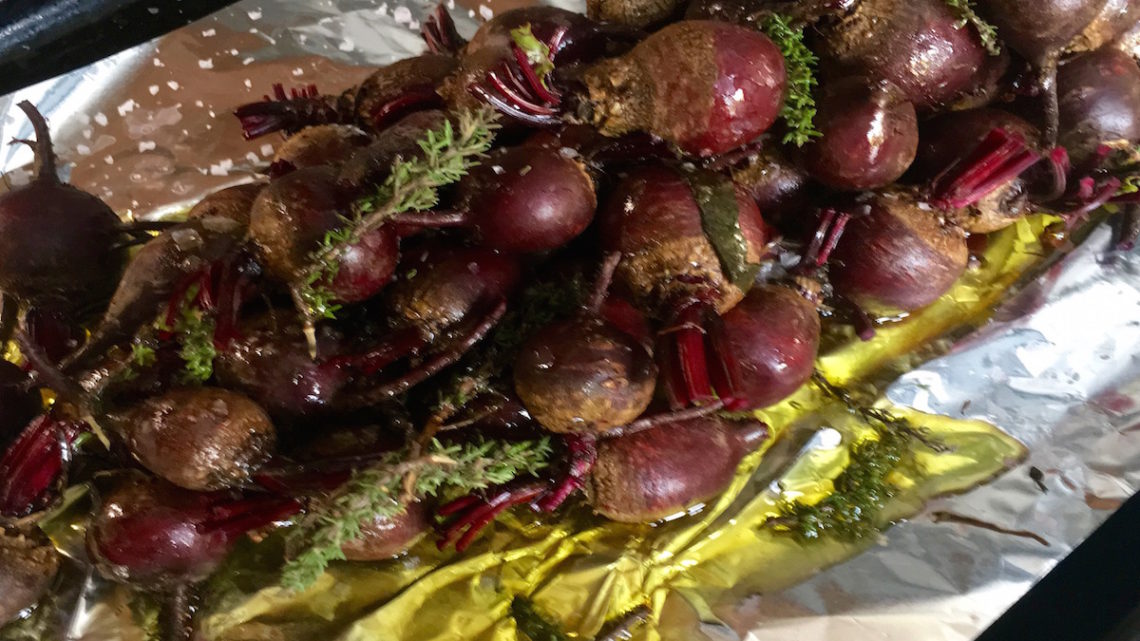
Baby Beetroot
Autumn is the season for root vegetables and one of our favourites is beetroot. If you are able to find them, spend that little extra and treat yourself to a bunch or two. They are a bit of a pain to clean. Be sure to rinse them well to remove all the sand. Trim off the leaves, leaving a little bit of the stalk. If the leaves are fresh and in good condition, you can use them too. Just walk briefly until wilted and they make a great side dish.
Place the beetroot on an oven tray lined with foil. Lay the beetroot on top, add some fresh thyme, whole unpeeled garlic cloves, a good drizzle of olive oil and a sprinkling of coarse sea salt. Wrap the ends of the foil tightly together and place in a 210 C oven for about 1-1,5 hours until tender. Allow to cool slightly and then peel of the skin with the help of a small knife. Serve as is or with a balsamic and olive oil dressing. The uses for beetroot are seemingly endless.
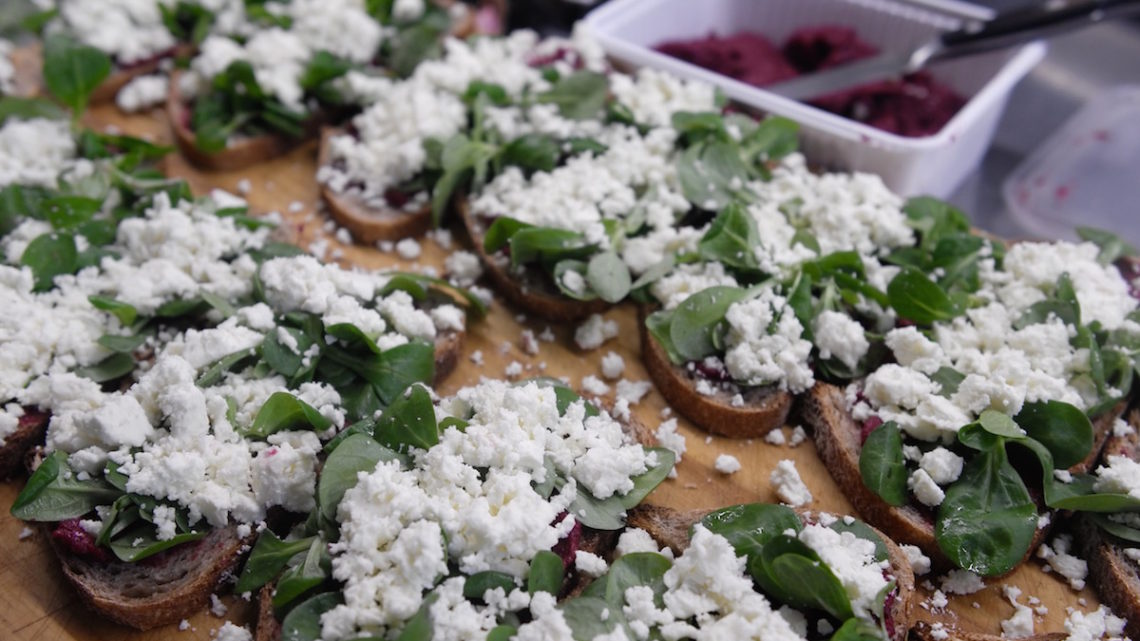
Vegetarian Lunch
With more people choosing to eat consciously an opting more for vegetarian, it's always a good idea to a few recipes handy.
Here are two of our favourites for lunch.
Beetroot Hummus and feta sandwich:
Ingredients for the beetroot hummus
500 g cooked beetroot, roughly chopped
1 clove garlic, chopped
1 tin chickpeas, drained
pinch of ground cumin
pinch of cayenne pepper
1-2 tablespoons tahini
2 tablespoons olive oil
lemon juice, to taste
salt and pepper
Method
Place the beetroot, garlic, chickpeas, cumin, cayenne and tahini in a food processor and blend all the ingredients are broken down. Add the olive oil (enough to make a smooth hummus), lemon juice to taste and season with salt and pepper.
To assemble the sandwiches, use a good bread of your choice. We like a sourdough spelt variety. Spread each slice liberally with the beetroot hummus. Top with some rocket leaves and generous scattering of a good feta.
Sweet Potato and Courgette Salad with Pear
Ingredients
1 head garlic
1 kg sweet potatoes
2 comice pears
1 red chilli
2 sprigs rosemary, finely chopped
2 tablespoons olive oil
2 tablespoons sesame oil
3 courgettes
100 g hazelnuts
100 g baby spinach leaves
Method
Preheat an oven to 200 C. Separate the garlic cloves from the head of garlic, leaving the skins on. Peel the sweet potatoes and cut into wedges. Finely chop the chilli, leaving in the seeds if you like it spicy and finely chop the rosemary.
Place the garlic cloves, sweet potato chilli and rosemary in a roasting pan and toss with the olive oil and 1 tablespoon of the sesame oil. Season with salt and pepper. Roast in the oven for about 20 minutes.
In the meantime, halve the pears, remove the core and cut each half into 6 slices. Cut the courgettes into quarters and then each quarter in half, so that you end you up with 8 pieces. Roughly chop the hazelnuts.
Add the pears, courgettes, hazelnuts, toss again and return to the oven for about another 20 minutes. Remove from the oven, add the remaining tablespoon of sesame oil, check the seasoning if it requires any more salt and pepper and mix through the baby spinach leaves.
We, the Amsterdam Flavours chefs, hope you enjoy this recipe as much as we do. If you have any questions on how to prepare it or just want to send us your feedback, you can reach us here Contact Amsterdam Flavours