

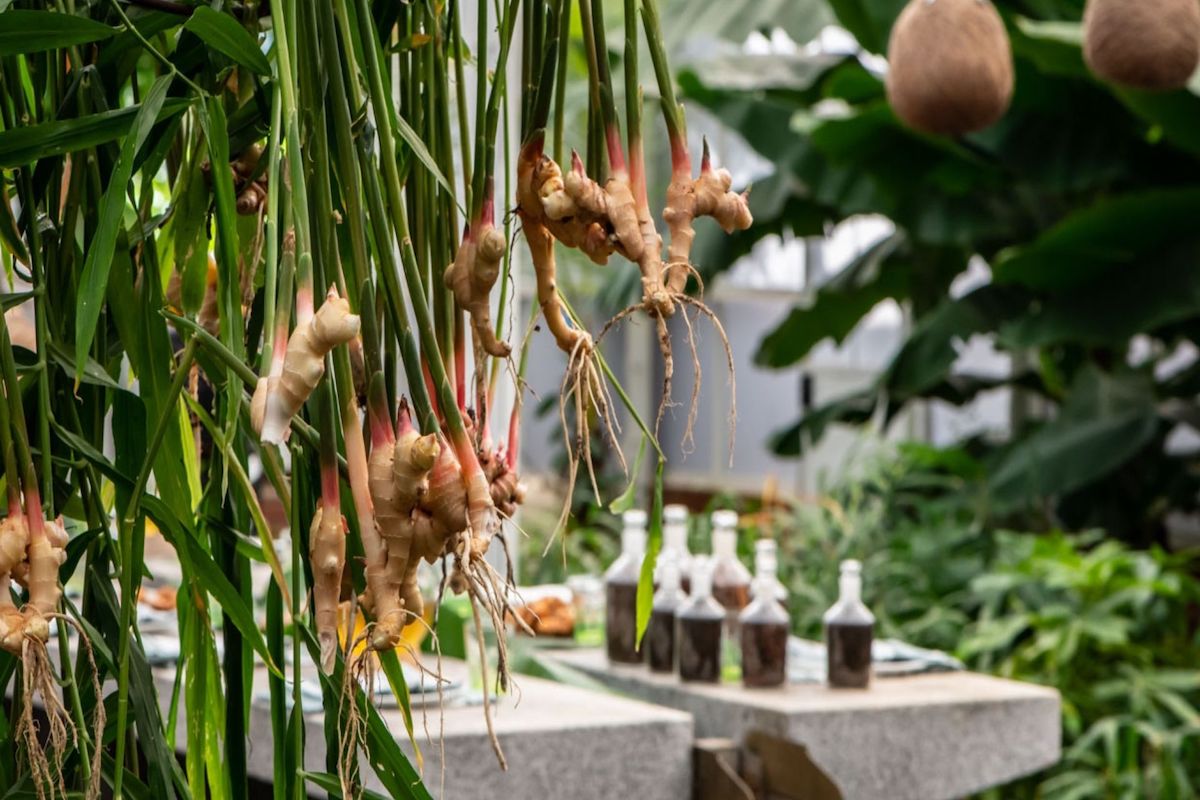
Ginger
Magical medicinal plant
Apart from its culinary and ornamental powers, the use of ginger is inextricably linked to its medicinal purposes. “When ingested it is like switching on your body’s engine, allowing for circulation within your body,” Gundula explains. The ancient Chinese and Indians used ginger as a tonic root for many ailments. “Ginger is often added to tea blends, because it helps to open up the channels in the body. This allows for the swift absorption of the health benefits from the other herbs it has been paired with. Ginger will, for example, take the turmeric to the extremities of your fingers to ease the swelling caused by arthritis.”
It is the natural oils in ginger that give it its unique fragrance and flavour. The most important of these is gingerol, which is responsible for much of the root’s medicinal properties, including its powerful anti-inflammatory and antioxidant effects. Research has also suggested that ginger may be useful in treating nausea, aiding with indigestion and weight loss, effective at reducing the symptoms of osteoarthritis, lowering blood sugar levels, reducing menstrual pain and helping to fight infections. It may even protect against age-related damage to the brain.
How to use ginger
Incorporating ginger into your diet seems like a no-brainer, and can be done in many ways.
- Add it to your favourite curries and winter dishes
- Make your own homemade ginger beer
- Add it to a herbal tea infusion by cutting 1 cm slices of fresh ginger root and adding them to your tea.
- Make a delicious non-alcoholic cocktail with ginger and its super-root cousin, turmeric.

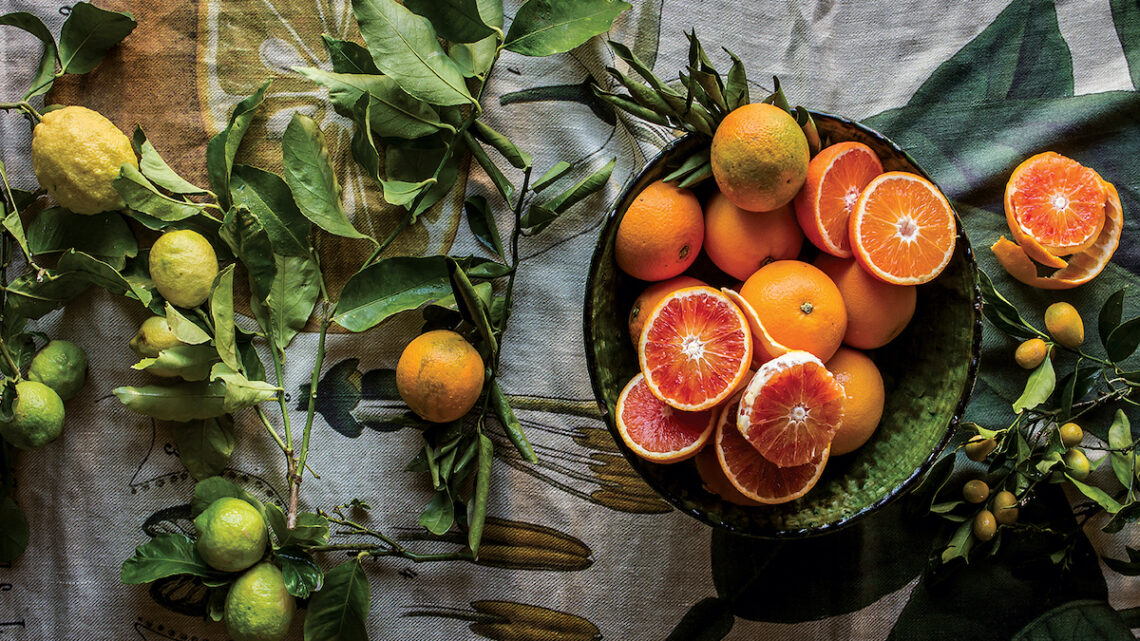
Winter the season for oranges
Citrus Varieties
Citrus is one of the world’s most loved fruit tree.
The Navel orange gets its name from the hole at the base of the fruit that encloses a miniature, underdeveloped secondary fruit (resembling a human navel). They have a rich, juicy flavour and rough, bright orange skins that are easy to peel.
Valencia
The Valencia is named after the Spanish city of Valencia, although its true origin remains unknown. It has thinner skin than the Navel, is generally sweet and commonly cultivated for the production of juice. Tarocco Blood Orange
The Italian Tarocco blood orange has striking, red flesh that develops during the cold winter nights. It is tender and juicy, with a flavour reminiscent of strawberry.
Seville
The common bitter Seville orange is widely grown in Spain. The bitter taste makes it an excellent choice for marmalade or other spreads. Petitgrain essential oil is distilled from the leaves, while oil of neroli is extracted from the flowers. The dried flowers are used to make tea in China.
