

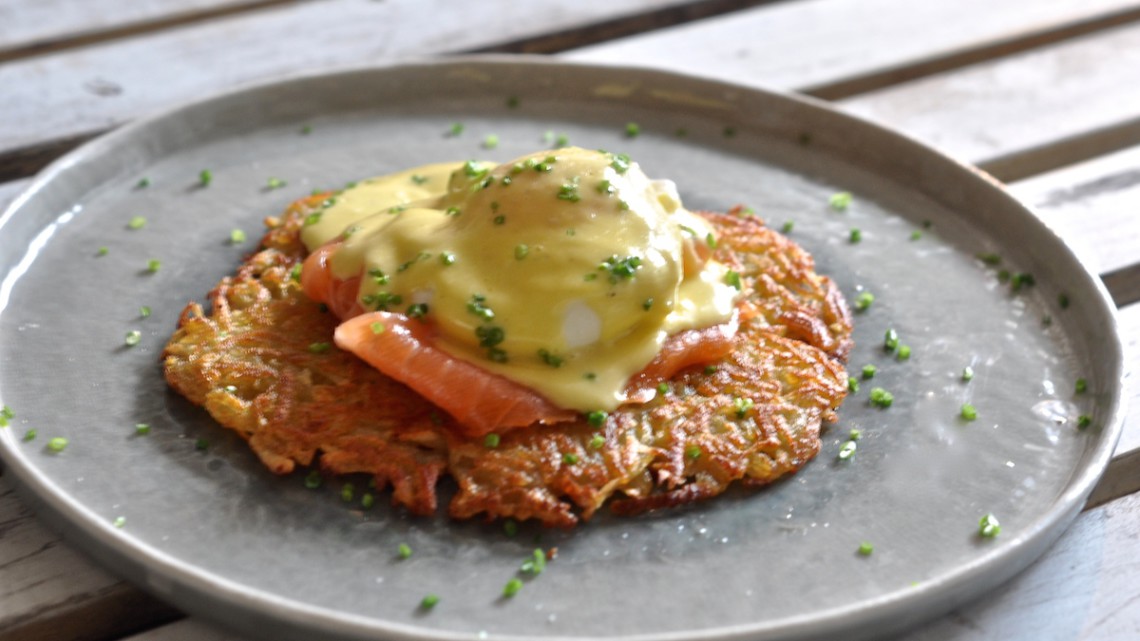
Potato Rosti with Poached Egg, Smoked Salmon and Hollandaise
This is our prefect recipe to make for that someone special in your life. We advise giving it a practice beforehand, so that you can execute all the elements perfectly.
Serves 2
Ingredients
Hollandaise Sauce
3 egg yolks
1 tablespoon cold water
1 tablespoon lemon juice
a little salt and pepper
200 - 250 g butter, chopped
Rosti
3 nicola potatoes
salt
pepper
olive oil
30 g butter
2 eggs
splash of white wine vinegar
1 pack smoked salmon
small bunch fresh chives, finely chopped
Method
Start by making the Hollandaise. Place the egg yolks in a Bain Marie pan or a small bowl. Beat well. Add the water, lemon juice and salt and beat together over hot water (au Bain Marie) until it thickens. Gradually beat in the butter, a couple small pieces at a time. Make sure to soften the butter slightly in your fingers before adding. Continue until all the butter is used and the mixture becomes thicker. If you feel the bowl is becoming too hot, remove from the heat for a short time to cool it down. It must be hot enough to cook the eggs and emulsify the butter, but not too hot so that the eggs scramble!
Season to taste with salt and pepper. Check the balance of flavour and add more lemon if desired. Keep warm over the hot water, but keep an eye on it. It might have to be stirred from time to time. If it gets too thick before serving, add a splash of cold water to thin it down.
Now for the rosti's. Peel the potatoes and coarsely grate them. Place the grated potatoes in a clean tea towel and squeeze out the liquid. Place the potato in a bowl and season with salt and pepper.
Heat a small frying pan with 2 tablespoons of olive oil and place the grated potato in the pan, pressing it down. Fry on a medium heat until golden brown. When the edges of the rosti begin to colour, add half the butter around the edges of the pan. Carefully flip the rosti over and continue frying until the other side is golden. Repeat with the remaining potato and keep both rosti's warm in the oven (100° C).
Bring a small pot of water to the boil. Add a splash of white wine vinegar and turn the heat down, so that the water gently simmers. Break the eggs into 2 cups. Use a whisk to stir the water vigorously, forming a 'whirlwind'. Carefully add the eggs to the pot so that the yolks become enveloped in the egg white. Cook the eggs for 2- 2 1/2 minutes. The yolks should still be soft.
To serve, place a rosti on each serving plate. Drape the salmon on top of each rosti. Remove the eggs with a slotted spoon and drain on a tea towel. Sprinkle each egg with a touch of salt and pepper. Lay the eggs on the salmon, spoon over the Hollandaise sauce and finish with the chopped chives.
We, the Amsterdam Flavours chefs, hope you enjoy this recipe as much as we do. If you have any questions on how to prepare it or just want to send us your feedback, you can reach us here Contact Amsterdam Flavours

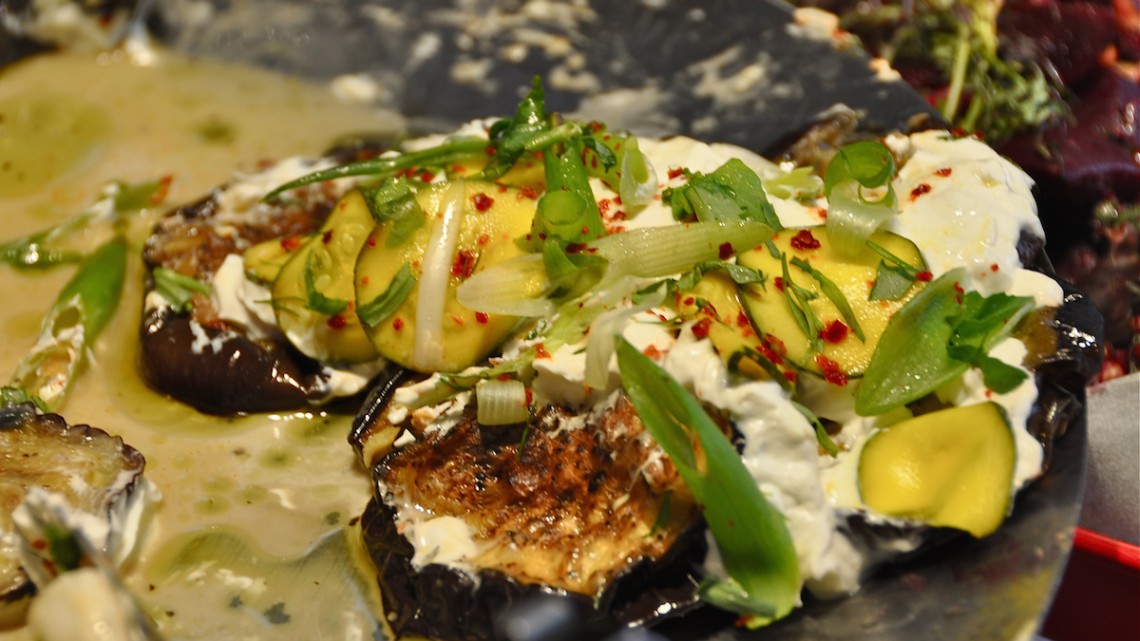
Aubergine Salad with Yoghurt Dressing and Pickled Courgette
This combination takes the humble aubergine and courgette to a new level. At first glance, it may seem like a lot of ingredients but don't let that put you off. A lot of them are store cupboard staples. If you don't happen happen to have them at hand, they are easily available from your local market or supermarket. If you don't want to make the pickle, just use some flash fried thinly sliced courgette or finely shaved raw courgette dressed with some lemon juice and olive oil. This dish is delicious served as a salad or as an accompaniment to grilled lamb cutlets or fish.
Serves 4
Ingredients
3 aubergines
olive oil
salt and pepper
4 spring onions
1 red chilli
1 small bunch flat leaf parsley
1 small bunch basil
1 small bunch mint
Yoghurt dressing
200 g Greek yoghurt
1 lemon
2 tablespoons olive oil
1 tablespoon water (or a little more if required)
salt and pepper
Pickled Courgette
1 large courgette
1 tablespoon salt
70 g demarara sugar
1/2 teaspoon dried chilli flakes
1/2 teaspoon turmeric powder
2 small shallots
250 ml cider vinegar
1/2 teaspoon mustard seeds
1/4 teaspoon fennel seeds
Method
Begin with the courgette pickle. Slice the courgette and shallots as thinly as possible. If you have a mandolin, you can slice the courgette on that, but mind your fingers. Place the courgette and shallot in a bowl with the salt and leave to stand for 15 minutes. Toast the mustard and fennel seeds in a dry pan to release their aromas. Transfer to a bowl and add the remaining ingredients, stirring until the sugar dissolves. Pour off any liquid from the courgette and shallots and place them in the pickling liquid. At least an hour in the pickle would be great before serving. These don't really keep for long and are best eaten on the day they are made.
Now on to the dressing; place the Greek yoghurt in a bowl and grate the zest of the lemon over. Add 3 tablespoons lemon juice (or to taste), 2 tablespoons olive oil, salt, pepper and 1 tablespoon water. Whisk to a smooth dressing. It should have the consistency of thick pouring cream. If it's a little on the thick side, add a little extra water. Set aside.
Slice the aubergine lengthways into 1 cm thick slices. Heat a griddle pan over medium-high heat. Brush the aubergine slices with olive oil and season with salt and pepper. Grill about 4-5 minutes on each side until tender and well marked from the grill. You'll probably have to do this in batches. Transfer the aubergine to a large plate.
Finely slice the spring onions diagonally, finely chop the chilli and pick the herbs off the stalks.
To finish the dish, place the aubergine on a serving platter and spoon over the yoghurt dressing. Scatter over the spring onions, chilli and herbs. Drain the courgettes and shallots from the pickling liquid and lay on top. Serve straight away.
We, the Amsterdam Flavours chefs, hope you enjoy this recipe as much as we do. If you have any questions on how to prepare it or just want to send us your feedback, you can reach us here Contact Amsterdam Flavours

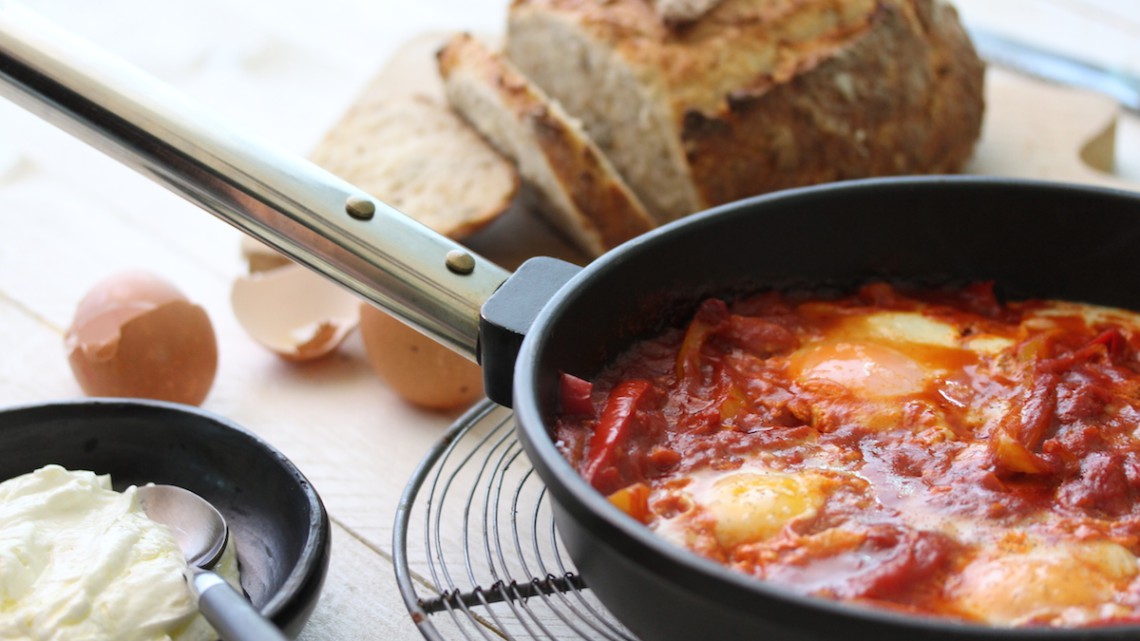
Shakshuka
Shakshuka is an Israeli breakfast dish consisting of eggs poached in a sauce of peppers and tomato. In recent years it has become more famous and found it's way into many new restaurants and cafes around the world. Here's how to make it yourself.
Serves 2
Ingredients
olive oil
1 teaspoon harissa paste
1 onion
1 red pepper
1 yellow red pepper
2 cloves garlic
1 tin tomatoes
4 eggs
1/4 teaspoon ground cumin
1/4 teaspoon smoked paprika
salt
pepper
4 tablespoons Greek yoghurt, to serve
coriander or parsley leaves to serve, optional
crispy bread or pita's, to serve
Method
Slice the onion and peppers into thin strips and finely chop the garlic.
Heat a frying pan over medium heat with 3 tablespoons olive oil. Fry the peppers and onions for about 10 minutes, adding the garlic for the last minute. Add the harissa, cumin and smoked paprika powder to the pan and fry for a further 3 minutes.
Add the tin of tomatoes, salt, pepper and 100 ml water to the pan. Bring to a boil and simmer gently for 10 minutes.
Make 4 ‘wells’ in the sauce. Gently crack the eggs into the wells. Place a lid over the pan and cook over medium heat for about 8-10 minutes until the egg whites have set and the yolks are still soft. Swirl the egg white through the sauce using a fork so that it sets quicker, if you wish. Season with salt and pepper.
Place the Greek yoghurt in small bowl and drizzle with 1 tablespoon olive oil.
Divide the sauce and eggs between 2 plates. Serve with the Greek yoghurt. Delicious served with fresh bread or pita.
We, the Amsterdam Flavours chefs, hope you enjoy this recipe as much as we do. If you have any questions on how to prepare it or just want to send us your feedback, you can reach us here Contact Amsterdam Flavours
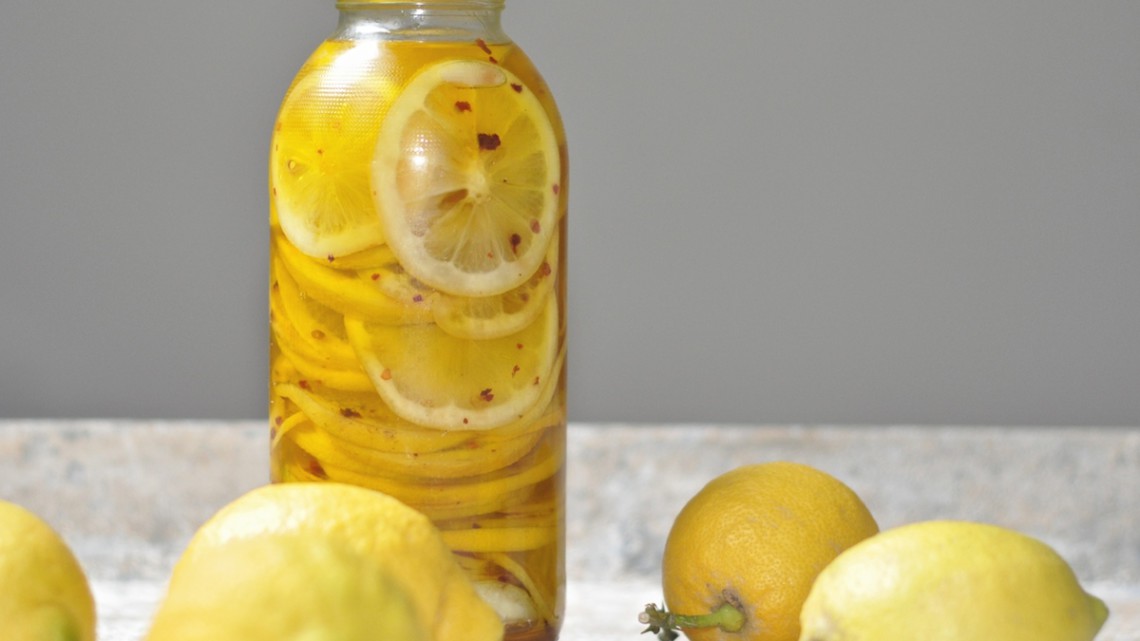
Preserved Spicy Lemons
This is a recipe we've adapted slightly from the beautiful cookbook Honey & Co. by Sarit Packer and Itamar Srulovich.
Ingredients
5 small lemons, unwaxed
3 Tablespoons salt
1 teaspoon smoked chilli flakes
olive oil to cover
Method
Slice the lemons as thinly as you can, removing any pips. Place the lemon slices in a bowl and sprinkle with the salt and smoked chilli flakes. Allow to sit for about 30 minutes and room temperature.
Push the lemon slices into a sterilised jar so that they re tightly packed with all the liquid that has formed in the bowl. Add enough olive oil so that they are covered and seal the jar. They can be used the next day, but improve over time. Once the jar has been opened, store in the fridge and use within a month.
When you use them for cooking, take as much as you need out of the jar. Chop and use the entire lemon slice - you don't need to discard the flesh. They can be used as a relish with fish or chicken , chopped through a flavoured butter or try mixing through some mayonnaise to serve with our Roast duck salad.
We, the Amsterdam Flavours chefs, hope you enjoy this recipe as much as we do. If you have any questions on how to prepare it or just want to send us your feedback, you can reach us here Contact Amsterdam Flavours
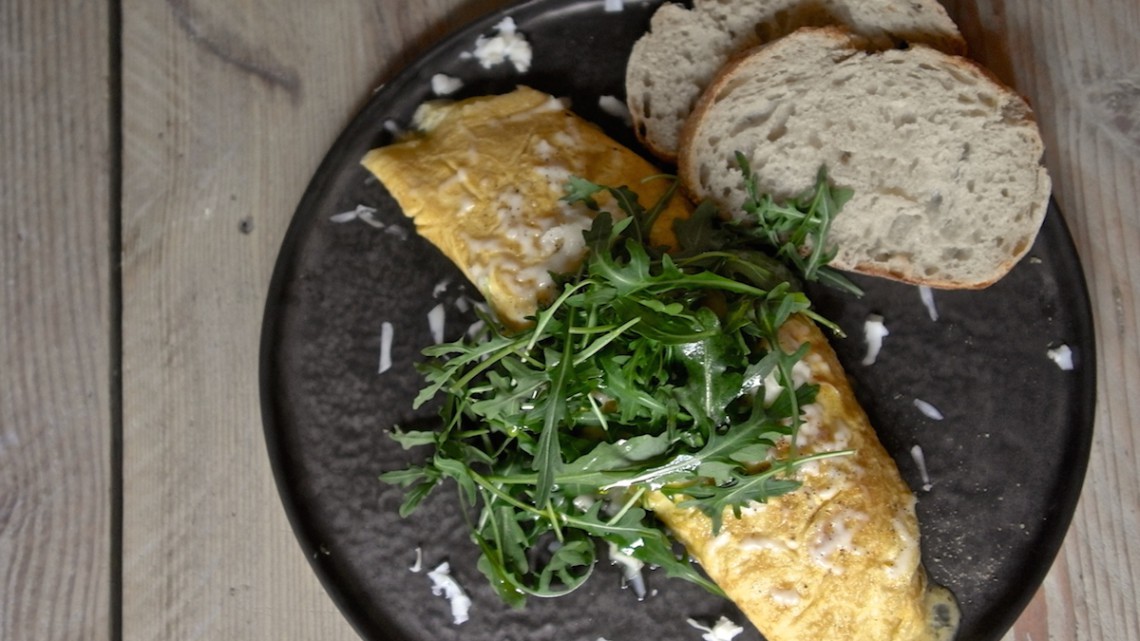
The Perfect Cheese Omelette
A prefect omelette is easy to achieve and makes for a perfect lunch or light meal. Here's our way to do it.
Serves 2
Ingredients
6 free range or organic eggs
salt and pepper
about 50 g goats or truffle cheese, grated
butter
bread, to serve
salad, to serve
Method
Crack the eggs into a bowl and whisk to combine. Season with salt and pepper. Heat a good non-stick frying pan over medium heat with a knob of butter.
Once the butter begins to foam, pour in the beaten eggs. As the egg begins to set on the base, pull it from the outer part to the center with a spatula. That way you ensure that the omelette will be light, blonde in colour and still be soft (or baveuse) in the centre. Now is the time to add the grated cheese, leaving some back to sprinkle over at the end. Reduce the heat at this point if you feel it's cooking too fast.
With the spatula, fold over a small section of the omelette, tilting the pan as you do, so that the omelette folds over itself, becoming neat and folded in the corner of the pan. Grab your serving plate in one hand and the frying pan in the other and carefully, but with confidence, turn the omelette on to the plate. Sprinkle with the remaining cheese and serve with salad of your choice dressed with a little olive oil and some delicious bread.
We, the Amsterdam Flavours chefs, hope you enjoy this recipe as much as we do. If you have any questions on how to prepare it or just want to send us your feedback, you can reach us here Contact Amsterdam Flavours

Plenty More - Yotam Ottolenghi
As most of you know by now, we are HUGE Ottolenghi fans. We love his creative use of simple ingredients, especially vegetables and is combinations of Middle Eastern spices.
Plenty More has been out for a while now. It's the sequel to Ottolenghi's immensely popular Plenty. The book has been categorised into cooking methods, again with the most tantalising and beautifully photographed recipes.
The best way to review a book, in our opinion, is to cook out of it. And that's just what we did! We made the Fig Salad for lunch and it was just delicious. Here is the recipe:
Yotam Ottolenghi's Fig Salad
Ingredients
2 small red onions (200g in total)
3 Tablespoons olive oil
50g hazelnuts, skin on
60g radicchio leaves, roughly torn
40g basil
6 large ripe figs (300g in total)
1 Tablespoon balsamic vinegar
1/4 teaspoon cinnamon
salt and black pepper
Method
Preheat the oven to 220 C.
Peel and halve the onions, lengthways and cut each half into 3cm-wide wedges. Mix together with 1/2 tablespoon of olive oil, a pinch of salt and some black pepper and spread out on a baking tray. Roast in the oven for 20-25 minutes, stirring once or twice during cooking, until the onions are soft and golden and turning crispy in parts. Remove and set aside to cool before pulling the onions apart with your hands into bite-sized chunks.
Reduce the oven temperature to 160 C. Scatter the hazelnuts on a small roasting tray and toast for 20 minutes. Remove from the oven and, when cool enough to handle, roughly crush with the flat side of a large knife.
Assemble the salad on four individual plates. Mix the three leaves together and place a few on the bottom of each plate. Cut the figs lengthways into four or six pieces. Place a dew fig pieces and some roasted onion on the leaves. Top with more leaves and continue with the remaining fig and onion. You want to build up the salad into a small pyramid.
In a small cup, whisk together the remaining olive oil, vinegar and cinnamon with a pinch of salt and some black pepper. Drizzle this over the salad, finish with the hazelnuts and serve.
Chefs Notes
We loved the salad, fresh, sweet and full of flavour. We think it can do with a little mor roasted onion, but that's a personal preference.
Publisher: Fontaine Uitgevers
Author: Yotam Ottolenghi
Price: 29,95 euro
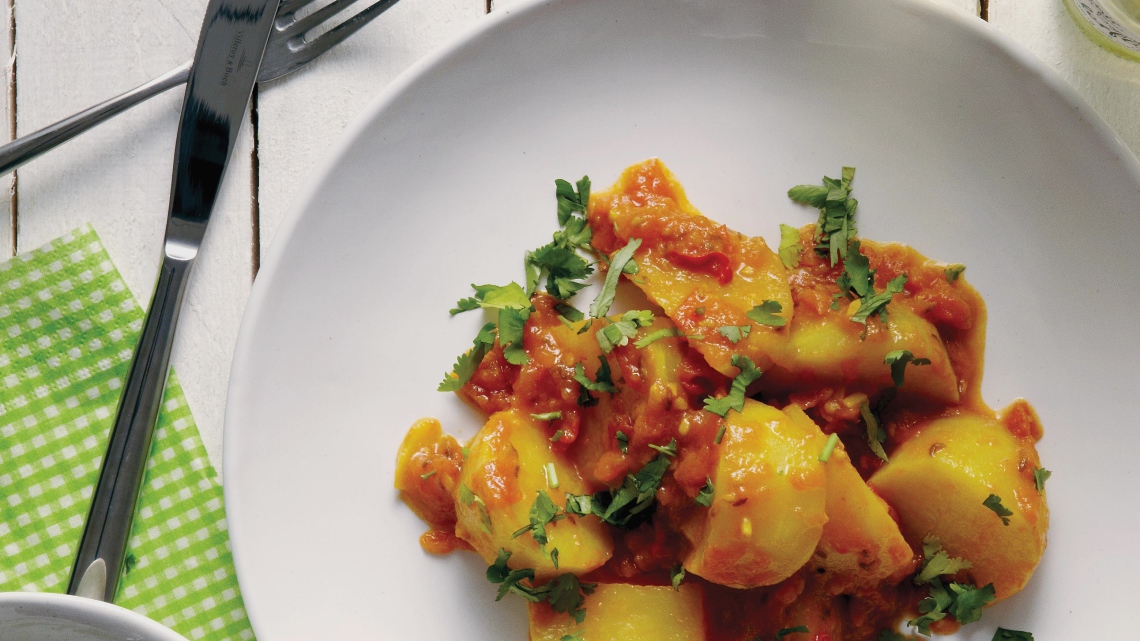
Spicy Kohlrabi
Kohlrabi is an unsual vegetable which isn't well known. You've probably seen at at the green grocers but have never know what to do with it. Well, here's an easy and flavour vegetarian recipe with kohlrabi as the star.
Serves 4
Ingredients
1,3 kg kohlrabi
1 teaspoon cumin seeds
1 heaped teaspoon turmeric
3 cloves garlic
1 red chilli pepper
6-8 tomatoes
small bunch coriander
300 g basmati rice
4 Tablespoons olive oil
salt and pepper
Method
Bring a small pot of salted water to the boil for the rice. Slice the ends off the kohlrabi and peel. Cut each into 8 pieces. Finely slice the chilli into rings and finely chop the garlic. Cube the tomatoes.
Heat a frying pan over medium-high heat. Add 4 tablespoons olive oil to the pan, followed by the chilli pepper and garlic. Fry briefly and then add the kohlrabi. Fry for 1 minute. Add the cubed tomatoes.
Add the cumin seeds and turmeric, a pinch of salt and 150 ml water to the pan. Cover with a lid and cook gently for 20-30 minutes until the kohlrabi is tender (the point of a knife should pierce through easily).
Add the rice to the small pan and boil for 8-10 minutes. Drain off the water and keep the rice warm.
Finely chop the coriander and stir half through the rice. Place the rice in a serving bowl.
Divide the spicy kohlrabi between 4 plates. Scatter with the remaining coriander and serve the rice on the side.
We, the Amsterdam Flavours chefs, hope you enjoy this recipe as much as we do. If you have any questions on how to prepare it or just want to send us your feedback, you can reach us here Contact Amsterdam Flavours

Roasted heritage beetroot
Get your beet on! As a side for dinner tonight, try roasting some heritage beetroot. Line an oven tray with a long piece of foil. Lay on the beet, add some whole, unpeeled garlic cloves, thyme, bay, olive oil, salt and pepper. Wrap up loosely with the foil and bake in the oven at 200C for about an hour or until the beets are tender. Peel and serve with a protein of your choice or turn into a salad with a vinaigrette, some herbs and goats cheese.
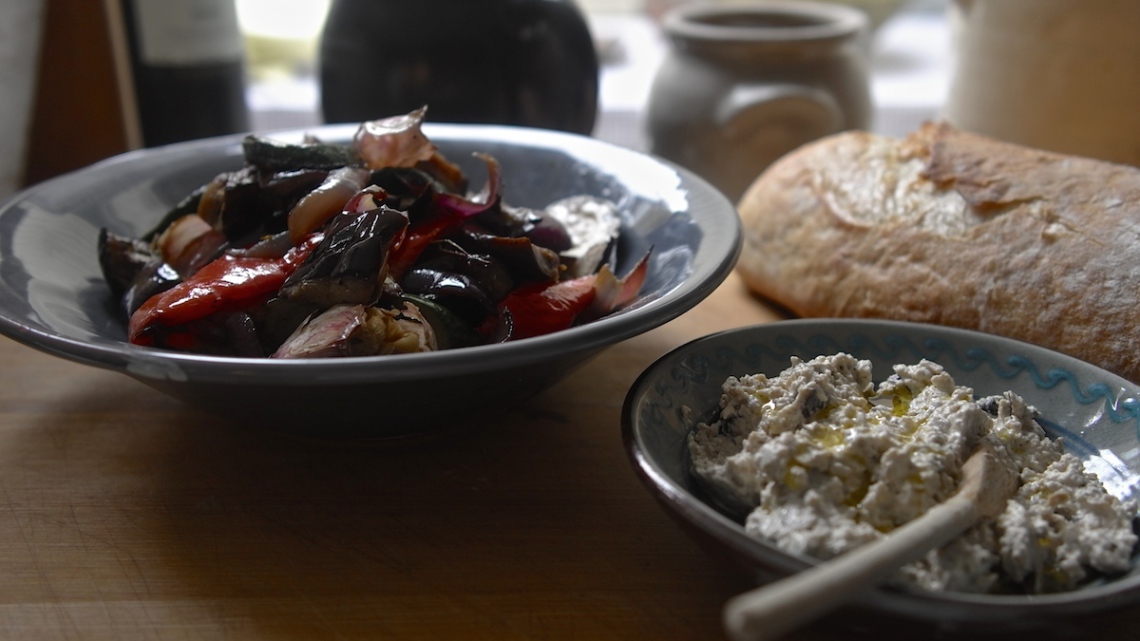
Weekend Lunch
Before you go to the market this weekend and restock your fridge with fresh produce, use up the vegetables you have left in the fridge for lunch. Here are 2 easy ways:
Roasted Vegetables
Heat the oven to 200 C. Roughly chop and aubergine, red pepper, courgette and a couple of red onions. Toss them in a roasting dish with some fresh thyme and a couple of whole, unpeeled garlic cloves, olive oil, salt and pepper. Roast for about 20-30 minutes until the vegetables are tender and tinged with a golden hue. Serve warm or at room temperature.
Aubergine Spread
Take 2 aubergines, and chop them into 1 cm cubes. Heat a griddle pan over medium-high heat. Toss the aubergine cubes in olive oil and grill until tender and coloured. Season with salt and pepper. Place half in a food processor with a couple of tablespoons good mayonnaise, 2 tablespoons olive oil and a squeeze of lemon juice. Pulse to a chunky puree. Transfer to a bowl and fold the remaining aubergine pieces through. Season with salt and pepper and serve.
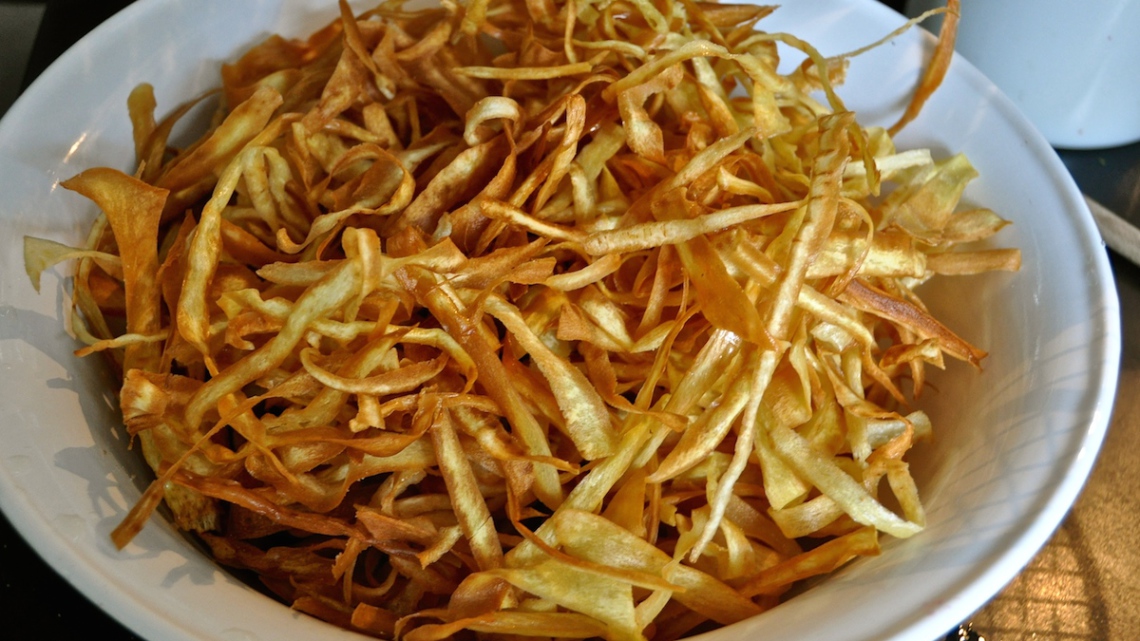
Parsnip Chips
Parsnips are in season at the moment. Instead of roasting, mashing or making soup out of them, why not turn them into chips.
It couldn't be simpler. Take a bunch of parsnips and wash off any dirt. Peel them with a vegetable peeler and top and tail them. Using the vegetable peeler, take long, thin strips, the entire length of the parsnip. You could also slice them into rounds on a mandolin if you have one, but please watch out for your fingers!
Heat a pan with sunflower oil to deep fry, or use a deep fryer set at 170 C. When the oil is hot, deep fry the parsnips. Don't over load the pan, but rather do it in batches. Also, make sure the oil is not too hot - parsnips contain a lot of natural sugars and therefore can brown very quickly. Once they're a lovely light golden colour, remove with a slotted spoon onto some kitchen paper to drain. Repeat until all the parsnips have been used up. Season with salt. They can be stored for a day or two in an airtight container.
Parsnip chips make a great textural garnish, adding some crunch, to any meat main dish from beef, chicken to game. They also make a great snack with drinks. So much better than supermarket chips and a great way to impress your friends!
We, the Amsterdam Flavours chefs, hope you enjoy this recipe as much as we do. If you have any questions on how to prepare it or just want to send us your feedback, you can reach us here Contact Amsterdam Flavours