

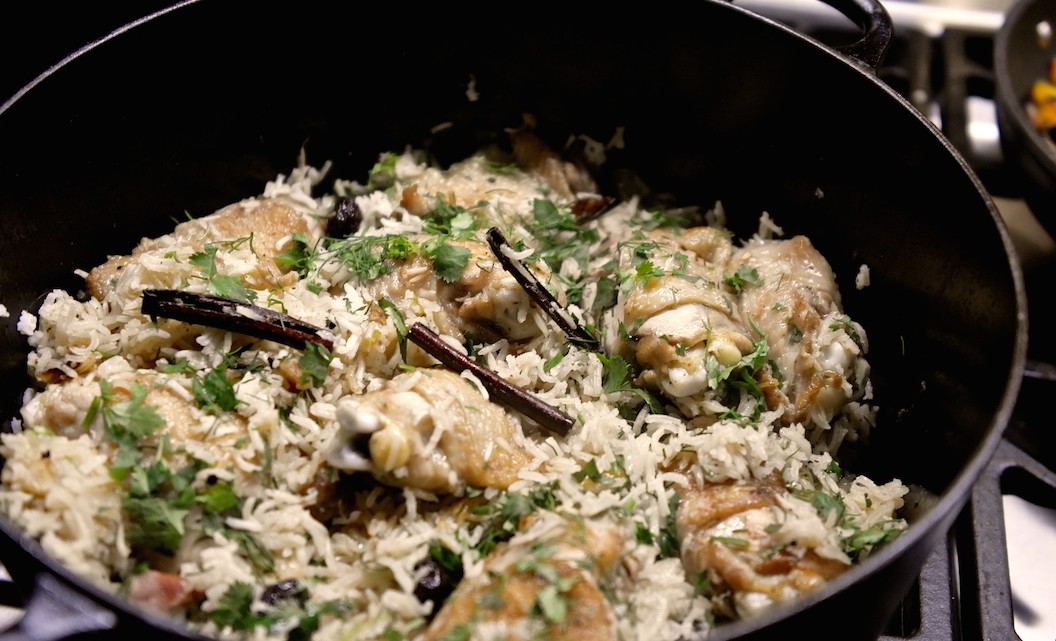
Caramelized Onion and Cardamom Chicken with Rice
This recipe is inspired by one of favourite authors and chefs, Yotam Ottolenghi.
Serves 4
Ingredients
2 onions, thinly sliced
6 Tablespoons olive oil
8 chicken thighs, bone in and skin on
salt and pepper
10 cardamom pods
1/4 teaspoon cloves
2 cinnamon sticks
300 g basmati rice
600 ml boiling water
small bunch flat leaf parsley, chopped
small bunch dill, chopped
small bunch coriander leaves, chopped
50 g raisins
100 g Greek yoghurt seasoned with 2 Tablespoons olive oil, salt and pepper, to serve
Method
Heat a (Le Creuset) casserole pan over medium heat with 2 Tablespoons olive oil and sauté the onion for 10-15 minutes, stirring occasionally until the onion has caramelised and turned a deep golden brown. Transfer the onion to a small bowl and wipe the pan clean.
Meanwhile, place the chicken thighs in a bowl with a good seasoning of salt and pepper. Add 2 Tablespoons olive oil, cardamom, cloves and cinnamon. Mix everything well together. Heat the casserole pan with the remaining 2 Tablespoons olive oil and brown the chicken (with the spices) for 5 minutes on each side until a lovely golden colour. Remove the chicken from the pan, leaving the oil and the loose spices in the pan. Add the rice and toast off for 1-2 minutes. Add the caramelised onions, salt and pepper to taste and the raisins. Stir well and then add the chicken thighs, pushing them well into the rice.
Pour over the boiling water, cover the pan and cook over a very low heat for about 30 minutes until the chicken is cooked through. Take the pan off the heat, cover with a clean tea towel, replace the lid and allow to to steam for 10 minutes. Scatter the herbs over the disk and loosen the rice with a fork. Taste if more salt and pepper is needed. Serve with the yoghurt.
We, the Amsterdam Flavours chefs, hope you enjoy this recipe as much as we do. If you have any questions on how to prepare it or just want to send us your feedback, you can reach us here Contact Amsterdam Flavours

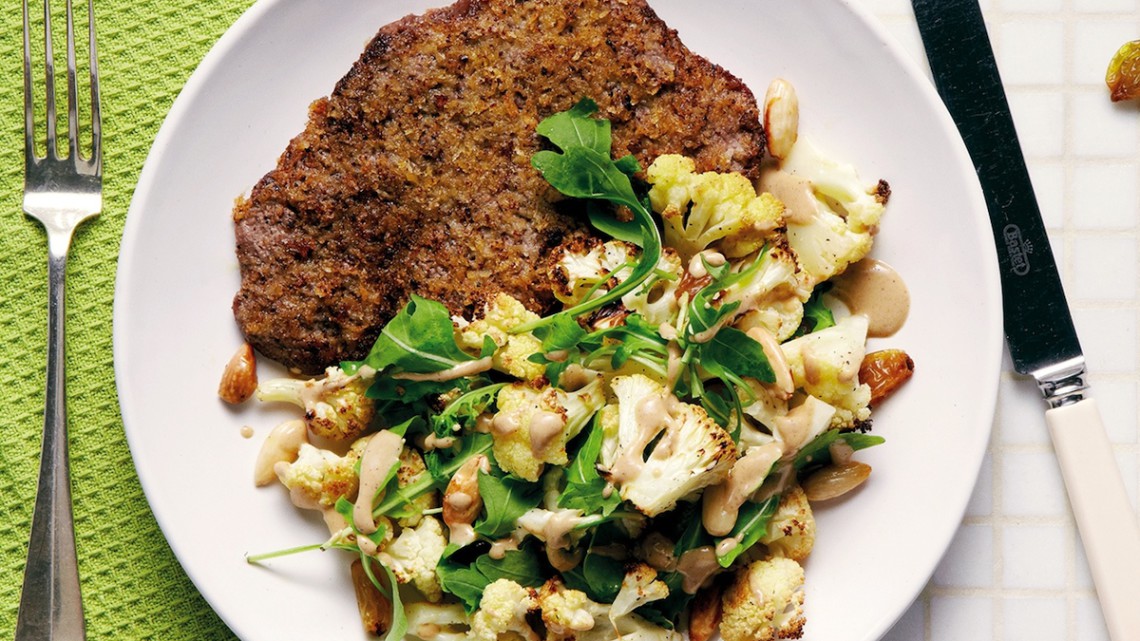
Sumac Veal Schnitzel with Cauliflower Salad
Serves 2
Ingredients
600 g cauliflower
2 Tablespoons tahini
1 lemon
2 veal schnitzels of 150 g each
2 Tablespoons sumac
50 g rocket
40 g almonds
40 g raisins
50 g panko breadcrumbs
olive oil
salt and pepper
Method
Preheat the oven to 200° C. Cut the cauliflower into florets and place them together with the almonds in a roasting dish with 2-3 tablespoons olive oil, salt and pepper. Roast in the oven for 25 minutes, stirring now and again.
In a small bowl, mix together 2 tablespoons tahini, 2 tablespoons olive oil, lemon juice to taste and 6 tablespoons lukewarm water. Season with salt and pepper. This is the dressing.
Rub the schnitzels in with a drizzle of olive oil, salt and pepper. Mix the panko and sumac together in a bowl. Run the schnitzels through the panko mixture, pressing the crumbs well on to the meat. Heat a frying pan with 3 tablespoons olive oil and fry the schnitzels until golden on each side. Remove the cauliflower from the oven.
Add the raisins and rocket to the cauliflower. Divide the schnitzels and salad between 2 plates, drizzling the tahini dressing over the salad and serve straight away.
We, the Amsterdam Flavours chefs, hope you enjoy this recipe as much as we do. If you have any questions on how to prepare it or just want to send us your feedback, you can reach us here Contact Amsterdam Flavours

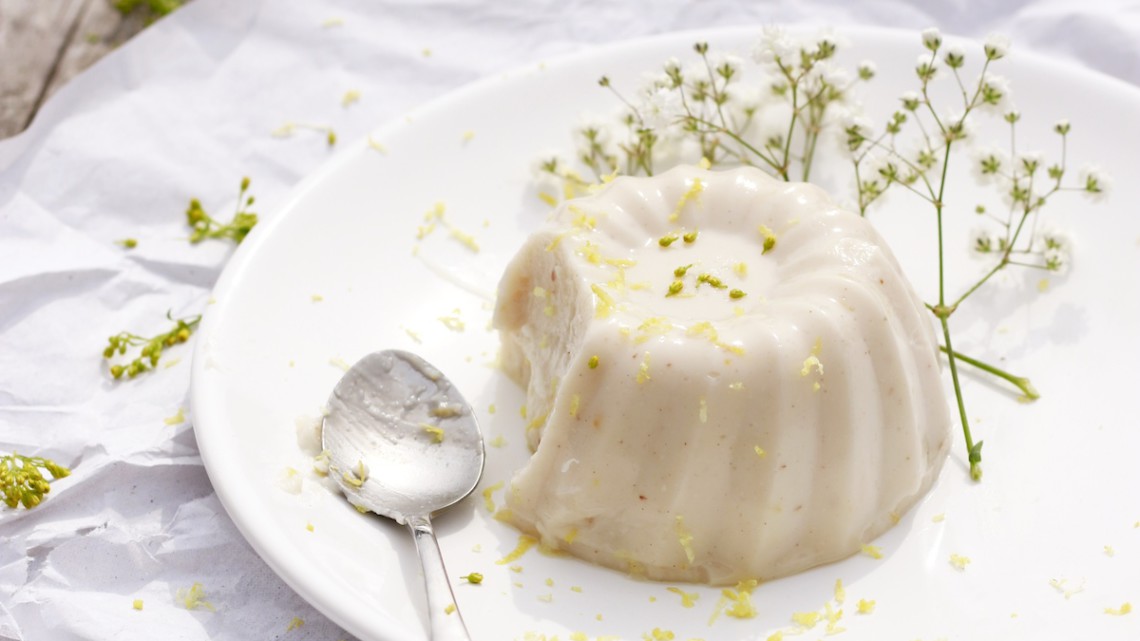
Biancomangiare
This is the first recipe and piece of writing from one of our new contributors, Jorgina Catala. Jorgina hails from Barcelona and recently moved to The Netherlands. We hope you enjoy this piece and we look forward to more contributions from Jorgina in the near future.
Biancomangiare, a sweet treat from the Middle Ages.
With a presence in several European countries, known as blanc manger in France, or menjar blanc in Catalonia, biancomangiare is the Sicialian version of what we could consider one of the most celebrated and well known medieval recipes. It’s name litteraly means “white dish” and emphasizes the whiteness of this sweet pudding based on almonds and white sugar.
Have you ever thought about the meaning of colour in food?
During the Middle Ages, food banquets where often used to display the power of the high classes; being able to prepare recipes with rare and expensive ingredients would give a hint of the hosts power to all the banquet attendants.
Serving biancomangiare to your guests would mean that the powerful host had access to the extremely expensive and refined white sugar, very difficult to obtain in the XIV century and would also symbolize good values as purity and refinement. The name biancomangiare was a generic name given to different kinds of savory and sweet recipes, based in chicken breast, rice, milk almond milk and other ingredients that gave the dish its characteristic white color.
Today, we are sharing with you the most traditional Sicilian sweet version, a delicious almond pudding, with a delicate almond flavour, lemony fragrance and of course, with its elegant snowy white presence.
Ingredients
1 litre of almond milk (you can buy it or do it yourself using 300gr of peeled almonds and 1,5 litres of water)
Zest of 1 untreated/organic lemon (avoid the white, it will make it bitter)
200g refined sugar
120g of corn starch (Maizena)
a pinch of cinnamon
Method
Keep aside a glass of almond milk.
Pour the rest of the almond milk in a saucepan and heat over a low flame. Add the lemon zest, pinch of cinnamon and the refined sugar.
Meanwhile mix the corn starch with the almond milk you kept aside. Once the corn starch is dissolved, add the mixture to the saucepan through a sieve.
Keep stirring the mixture, preferably with a wooden spoon, till it starts boiling. When it will starts to thicken remove the saucepan from the fire.
Pour the mixture into moulds of your preference. You can choose single portion moulds or a large one. Let it cool down to room temperature and only then put it in the fridge until thick.
The pudding will be ready after around 4 hours. You can then unmould it and decorate as you please. Its delicious eaten on its own, but you can also add some of your favourite jam, some chocolate sauce or cherries and syrup. Just remember that the biancomangiare has a very subtle taste that shouldn’t be over-powered by a strong sauce.
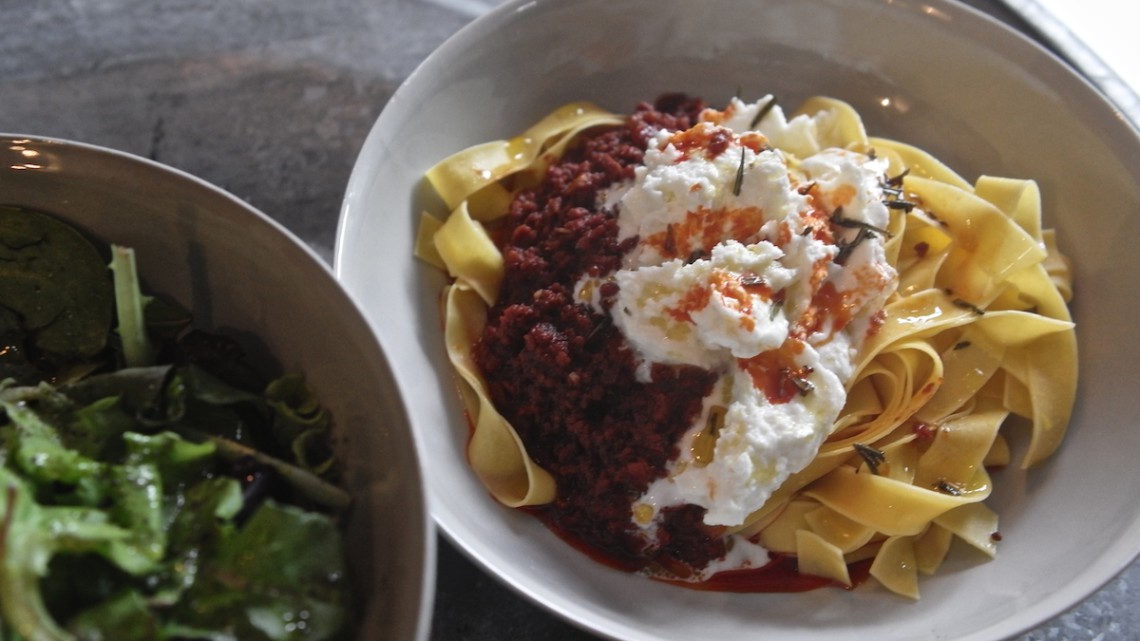
Pappardelle with Chorizo Ragu
One of our favourite cookery writers and stylists, Donna Hay, has inspired this recipe.
Serves 4
Ingredients
400 gr dried chorizo
1 tablespoon extra virgin olive oil
2 sprigs rosemary
1 red chilli
2 cloves garlic
salt and pepper
good glug of red wine (about 100 ml)
1 x 400 g can peeled tomatoes
2 tablespoons brown sugar
400 g pappradelle
250 g buffalo mozzarella
green salad, to serve
Method
Remove the cases from the chorizo and roughly chop. Place into a Magimix (foodprocessor) and process until finely chopped, resembling minced meat. Set aside.
Bring a pan of salted water to the boil for the pasta. Finely chop the garlic, deseed the chilli and finely chop half of it (or more depending on how spicy you like it). Heat the olive oil in a large frying pan over medium-high heat. Strip trip the leaves from the rosemary stalks and chop them roughly. Add the rosemary to the pan and cook for 30 seconds until crisp. Remove and set aside. Add the chorizo, garlic, chilli, salt and pepper to the pan and cook for 3-4 minutes until golden and crispy, stirring often.
Add the wine and cooked cook for 30 seconds to 1 minute. Add the tomatoes and brown sugar and bring to a simmer. Turn the heat to low and cook for 5-7 minutes. ( If you find that too much oil has come from the chorizo, you can also spoon a little off). While the chorizo is cooking, cook the pasta in the boiling water according to the package instructions. Drain and reserve 100 ml of the cooking liquid.
Add a little of the reserved cooking liquid to the chorizo mixture to start with, making sure ragu has a nice consistency. Divide the pasta between 4 bowls. Top with the chorizo ragu and tear the mozzarella over. Sprinkle over the crispy rosemary, drizzle with some of the chorizo oil in the pan and serve with a green salad simply dressed with olive oil.
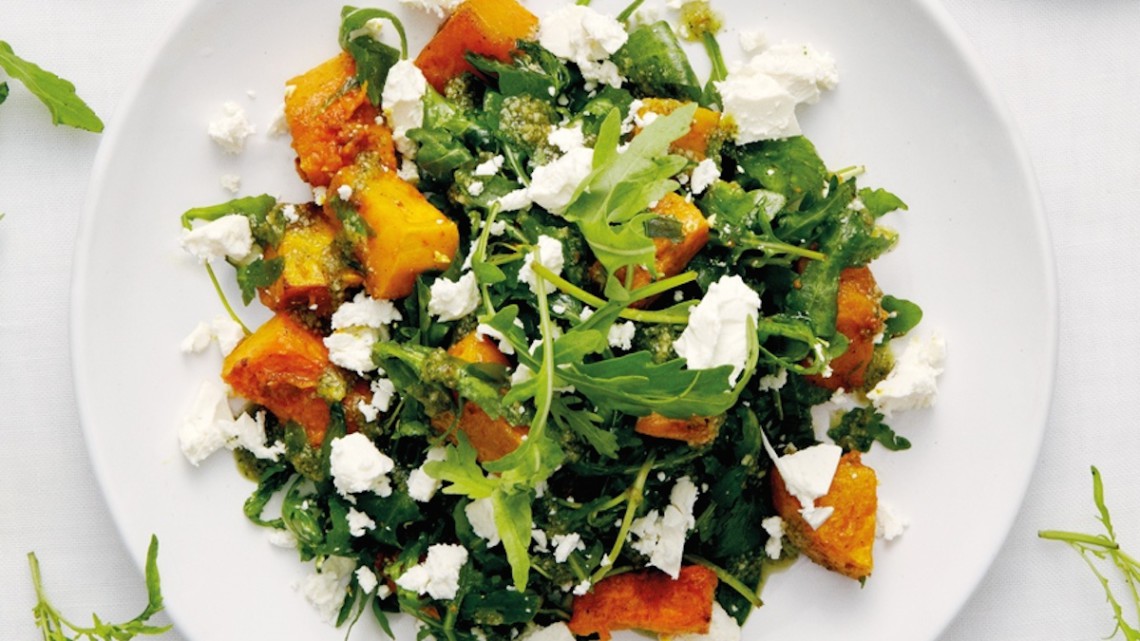
Curry-Roasted Pumpkin and Feta Salad with Pesto
Serves 4
Ingredients
2 kg butternut squash
100 g feta
60 ml pesto (homemade or bought)
1 bag rocket
1 tablespoon mild curry powder
Olive oil
Salt
Pepper
Method
Preheat the oven to 210° C. Peel the pumpkin with a vegetable peeler and cut lengthways in half. Remove the seeds and chop into 3 cm cubes.
Transfer the pumpkin to a roasting dish, sprinkle with olive oil, curry powder, salt and pepper. Roast for 15-20 minutes in the oven or until the pumpkin is soft but still holding its shape. Allow to cool off slightly.
Crumble the feta and dress the rocket with olive oil, salt and pepper.
Lay the roasted pumpkin on a serving platter. Scatter over the crumbled feta and drizzle with the pesto. Top with the rocket and serve.
Also delicious as a side dish served with roast chicken.
We, the Amsterdam Flavours chefs, hope you enjoy this recipe as much as we do. If you have any questions on how to prepare it or just want to send us your feedback, you can reach us here Contact Amsterdam Flavours

All Butter Croissants
There is nothing better than warm, butter, flakey croissants straight from the oven. Making them yourself takes a little practice, but the results are SO worth it. Serve with farmhouse butter, good jam and a cup of coffee. Heaven!
Ingredients
625g strong white flour, plus extra for rolling out
12 g salt
75 g sugar
40 g fresh yeast
500g butter, chilled
1 egg, beaten
Method
The day before you want to bake the croissants, place the flour, sugar, salt and yeast in the bowl of a mixer fitted with a dough hook, or a large mixing bowl. Pour in 350-400ml cold water and mix until it comes together as a soft dough.
Turn out the dough onto a lightly floured work surface and knead for a good 8-10 minutes, or until the dough feels smooth, stretchy and elastic. Return to the bowl and set aside to rest.
Sandwich the chilled butter between two sheets of greaseproof paper and roll out to a 30x20cm rectangle, about 1cm thick. Chill in the fridge until needed.
Turn the dough out again onto a lightly floured work surface. Roll it into a rectangle 60x30cm. Peel the greaseproof paper from the butter and place the butter centrally on top of the pastry rectangle. Fold one edge of the pastry over the butter to half-cover it, then do the same with the other edge of the pastry so that the butter is covered. Fold the rectangle in half lengthways, then give it a quarter-turn and roll out again to a rectangle measuring 60x30cm.
Repeat the folding, turning and rolling process, as before, three more times (do not roll out the pastry the final time you fold and turn it). Wrap the pastry in cling film and chill in the fridge overnight.
When the pastry has rested, roll it out to a thickness of 0.5cm. Cut the pastry into two 50x20cm strips, then cut each strip into triangles about 10cm wide at the base.
With the narrow point of one of the pastry triangles facing away from you, use your fingertips to stretch the two points of the triangle nearest to you out sideways so that they bow a little. Roll the pastry over itself, curling it into a traditional crescent shape, so that the furthest point of the triangle ends up curled over the top of the croissant. Repeat the process with the remaining pastry triangles to create about 20 croissants.
Place the croissants onto baking trays lined with silicone paper or baking parchment. Brush them all over with the beaten egg, then set aside to prove for 30-45 minutes. (The croissants can be frozen at this point, if desired.)
Preheat the oven to 190C/170C Fan. Bake the croissants for 20-25 minutes, or until risen and golden-brown. Serve warm with jam and butter.
We, the Amsterdam Flavours chefs, hope you enjoy this recipe as much as we do. If you have any questions on how to prepare it or just want to send us your feedback, you can reach us here Contact Amsterdam Flavours
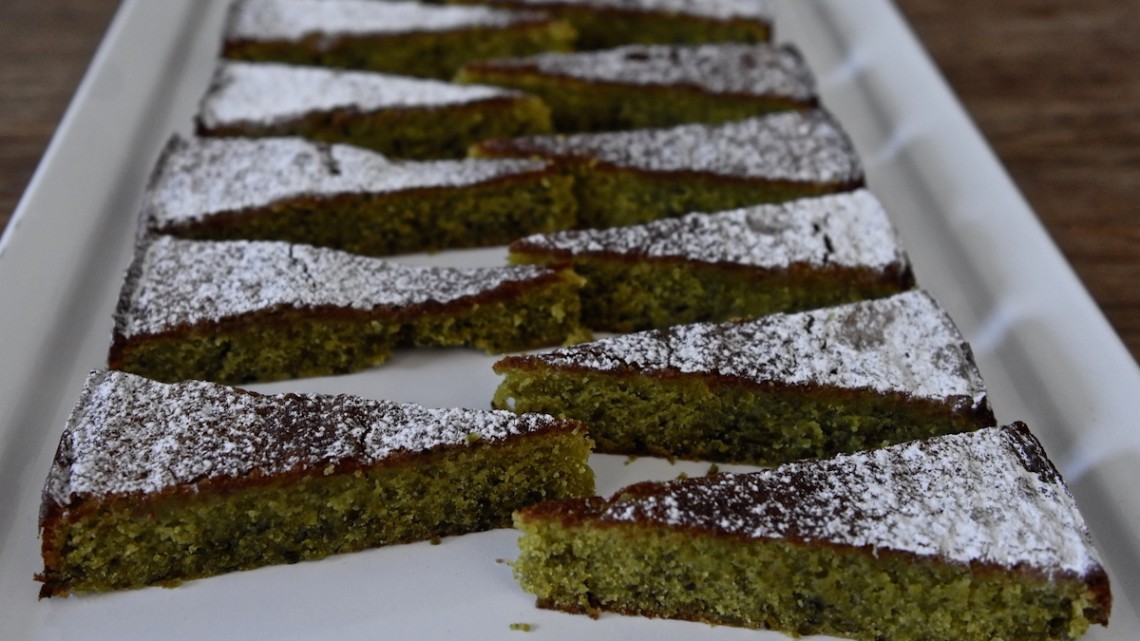
Pistachio-Olive Oil Cake
A delicious and unusual cake with a flavour of the middle east. The cake gets it's beautiful green colour from the pistachios and the olive oil keeps it moist. It's quite a rich cake, so a small piece will suffice. We usually serve it as part of a dessert with a parfait or some marinated pineapple. Yum!
Serves 8-10
Ingredients
50 g fine polenta
200 g ground pistachio nuts
50 g flour
1 teaspoon baking powder
125 ml olive oil
100 g unsalted butter, melted and cooled
3 eggs
200 g caster sugar
juice and grated zest of 1 lemon
juice of 1 orange
icing sugar for dusting
Method
Preheat the oven to 160 C. Mix the polenta, ground pistachios, flour and baking powder together.
Add the olive oil to the melted butter. Whisk the eggs and caster sugar until pale and fluffy, then slowly whisk in the olive oil and butter. Whisk in the pistachio mixture, then add the lemon juice and zest and orange juice.
Pour into a greased and lined 24 cm springform tin and bake for about 40 minutes. The cake should be slightly underdone in the middle, so that if you insert a skewer it will come out with a little of the mixture sticking to it. While cooling down, the cake will finish off cooking through. Leave to cool for 10 minutes before removing from the tin.
Once completely cooled, cut into slices and dust with icing sugar.
We, the Amsterdam Flavours chefs, hope you enjoy this recipe as much as we do. If you have any questions on how to prepare it or just want to send us your feedback, you can reach us here Contact Amsterdam Flavours
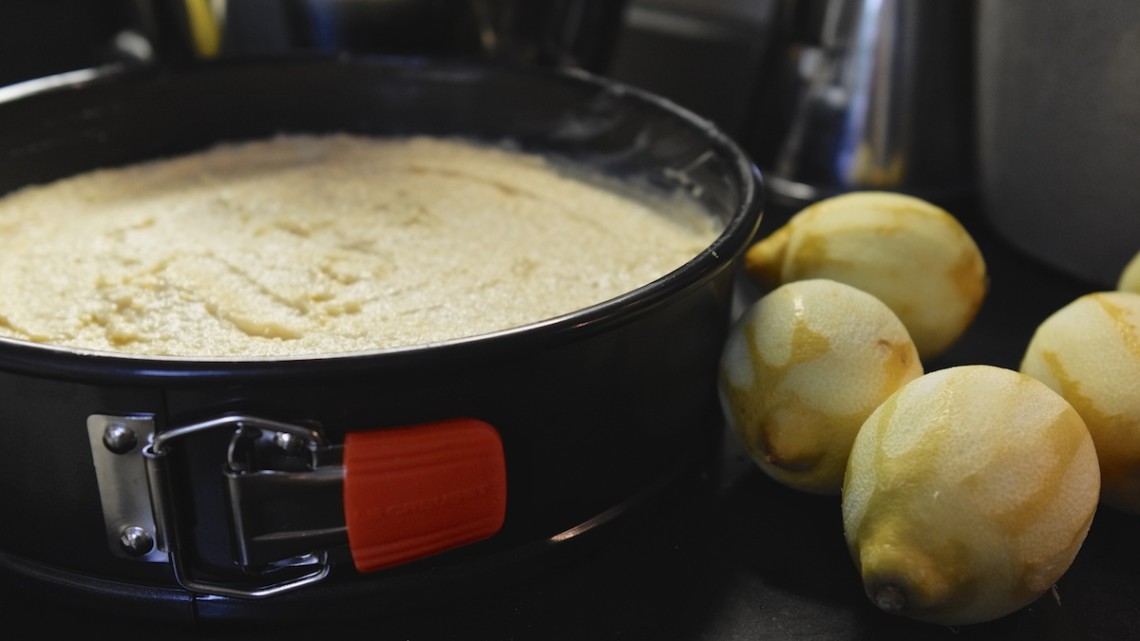
Lemon Polenta Cake
We've decided to divulge the secret and publish the recipe of a cake that has become quite famous. It's sharp and tangy and it's gluten-free too!
Serves 10-12
Ingredients
400 g soft unsalted butter (plus extra for greasing)
400 g caster sugar
400 g ground almonds
200 g fine polenta
16 g baking powder
6 large eggs, beaten
zest of 5 lemons (save juice for the syrup)
for the syrup
juice of 5 lemons
250 g icing sugar
Method
Line the base of a 26cm springform tin with baking paper and grease the sides with butter.
Preheat the oven to 150°C
Beat the butter and sugar till pale and whipped, in a Magimix Patissier or freestanding mixer.
Mix together the almonds, polenta and baking powder and salt. With the machine running, add the eggs to the butter, a little at a time.
Add the almond and polenta mixture and blend the mixture well. Finally, beat in the lemon zest. Spoon the mixture into the prepared tin and bake in the oven for about 60-70 minutes.
It may be slightly wobbly, but if the cake is cooked, a cake tester should come out cleanish and, most significantly, the edges of the cake will have started to shrink away from the sides of the tin. Remove from the oven to a wire cooling rack, but leave in the tin.
Make the syrup by boiling together the lemon juice and icing sugar in a small saucepan. Once the icing sugar’s dissolved into the juice, it's done.
Prick the top of the cake gently all over with a cake tester (or toothpick), pour the warm syrup over the cake, and leave to cool before taking it out of the tin. Serve in slices with whipped cream or creme fraiche.
We, the Amsterdam Flavours chefs, hope you enjoy this recipe as much as we do. If you have any questions on how to prepare it or just want to send us your feedback, you can reach us here Contact Amsterdam Flavours
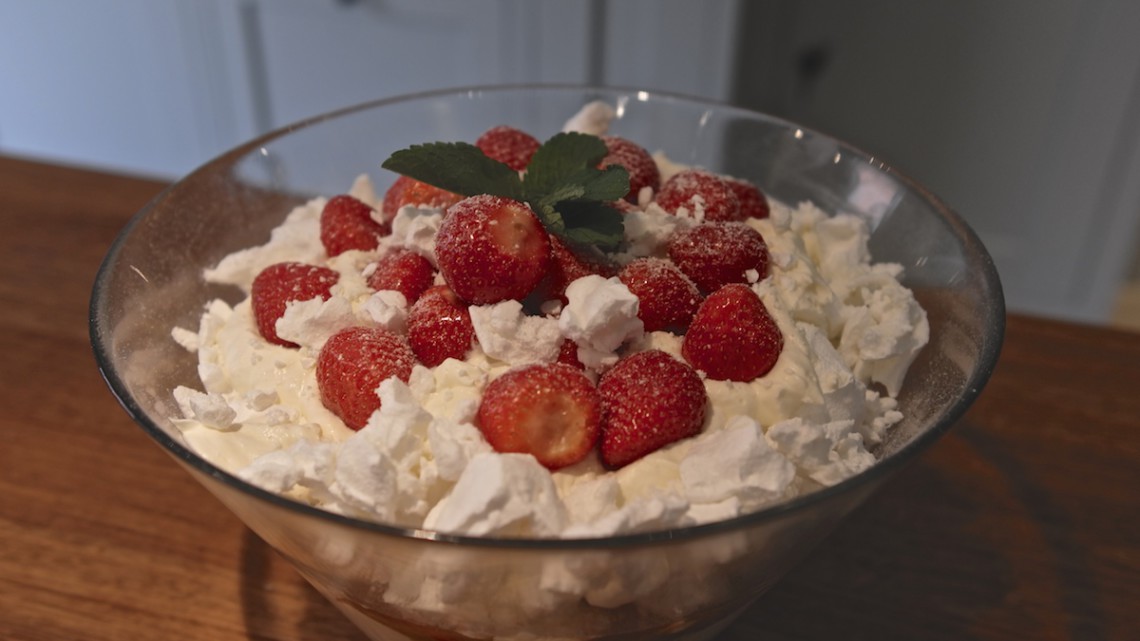
Rhubarb and Strawberry Eton Mess
This is one of those desserts that's easy to make and always a guaranteed success.
Serves 6-8
Ingredients
9 Meringues, crumbled
Rhubarb compote
1 kg rhubarb
sugar to taste
1 vanilla pod or 2 star anise
a splash of water to get it going
750 g strawberries, rinsed, hulled and halved
750 ml cream, whipped and sweetened with a touch of sugar
Method
Make the meringues according to the recipe. You'll find the recipe by clicking above.
Make the rhubarb compote by trimming the rhubarb if stringy. Chop roughly and place in a pan with sugar (start with about 200 g and add more according to your taste), the vanilla pod or star anise and a splash of water. Bring to the boil and simmer until the rhubarb is soft, with some pieces still holding their shape. If your rhubarb isn't very pink, you can always add some Grenadine syrup to give it a blushing pink colour. Allow to cool completely.
To assemble the Eton Mess, take a large glass bowl. Crumble some meringues in the base and spoon in some rhubarb compote and scatter over some strawberries. Top with a third of the cream and repeat. You want to end with a layer of cream. Top a few strawberries and crumbled meringues and serve straight away.
We, the Amsterdam Flavours chefs, hope you enjoy this recipe as much as we do. If you have any questions on how to prepare it or just want to send us your feedback, you can reach us here Contact Amsterdam Flavours
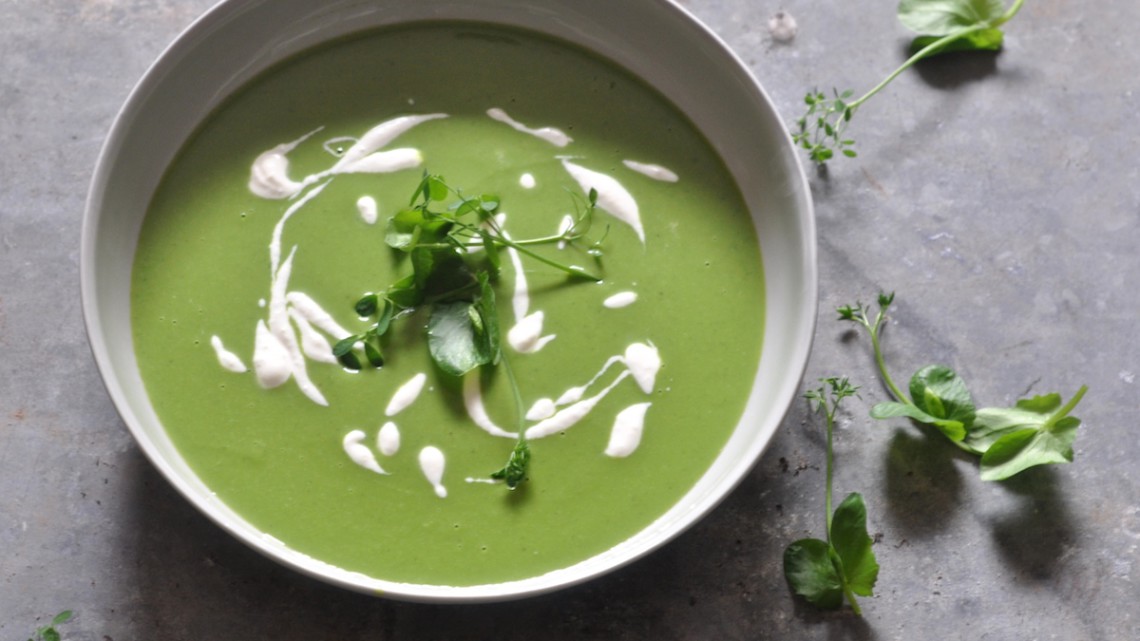
Pea and Mint Soup
Make the most of seasonal fresh peas in this bright and vibrant soup. If you can't find fresh peas. frozen work just as well.
Serves 4
Ingredients
1 large onion, chopped
olive oil
850ml vegetable or chicken stock
400 g fresh or frozen podded peas
4 tablespoons chopped fresh mint
salt and pepper
50 g fresh ricotta, thinned with a little milk, to garnish
pea shoots, to garnish
Method
Heat a pan with 2 tablespoons olive oil an fry the onion for about 5 minutes. Pour in the stock and add half the mint and bring to the boil. Add the peas and bring to the boil again.
Stir in the remaining mint and season with salt and pepper. Blend the soup in a liquidiser until smooth as you like. Taste and check the seasoning, adjusting with salt and pepper if necessary. Return to the pan and reheat.
Serve the soup in bowls, garnished with the ricotta and pea shoots.
We, the Amsterdam Flavours chefs, hope you enjoy this recipe as much as we do. If you have any questions on how to prepare it or just want to send us your feedback, you can reach us here Contact Amsterdam Flavours