

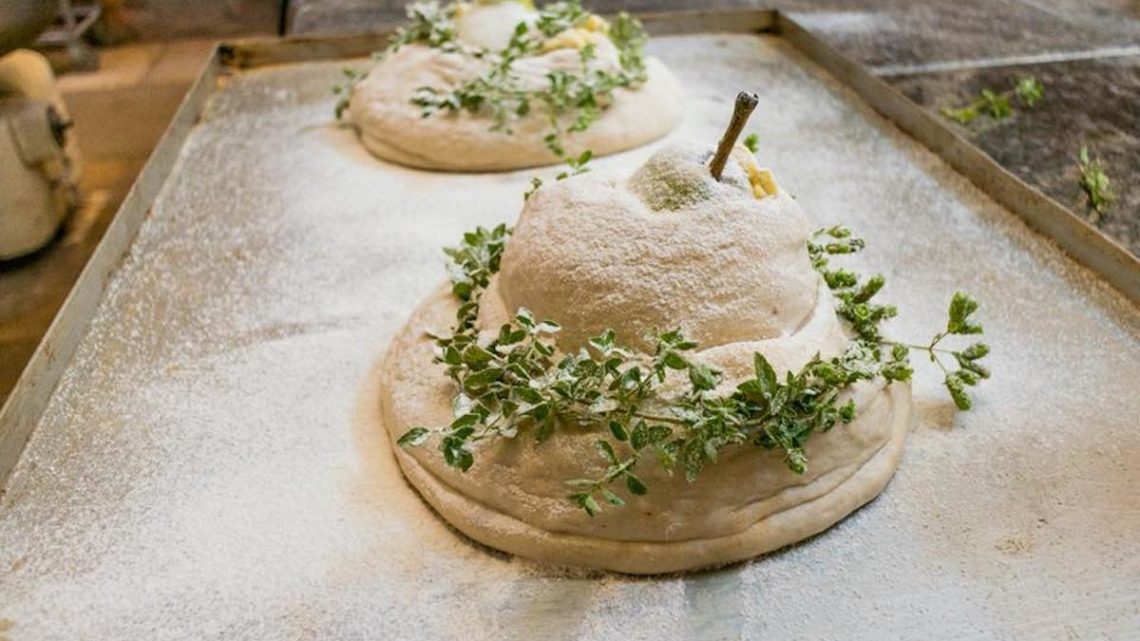
Pear bread
600 g - 1kg strong white bread flour
1 x 7 g sachet of dried yeast
300 g strong white bread flour
350 g strong white bread flour , plus extra for dusting
oil , for greasing
- For the starter, combine 200g of the flour with 200ml of lukewarm water in a non-metallic container – a glass jar is perfect. Leave it somewhere warm uncovered overnight.
- The following day, feed it by discarding half and adding a further 100g of flour and 100ml of lukewarm water.
- Repeat this feeding process each day until you see bubbles throughout the mixture (this is where a glass jar comes in handy). It will take a few days, possibly more, for the mixture to pick up the natural airborne yeasts and really start living. Don’t lose hope, it will happen!
- Removing 100g of the starter to make your loaf, chill the rest, covered but with a hole for it to breathe. You’ll need to feed this once a week – bring it up to room temperature first, allow it to bubble up, then recede (somewhere warm) for 30 minutes to 1 hour, then return it to the fridge within an hour or so. A liquid layer may develop on top, called hooch; stir it in if you like, or pour it off.
- To make the sponge, bring the 100g of starter up to room temperature.
- Combine the 300g flour and ½ teaspoon of sea salt in a bowl, then add 300ml of warm water and the starter.
- Cover with a towel and leave it to rise somewhere warm for 3 to 4 hours, or until doubled in size.
- In the meantime, top up the starter with 50g of flour and 50ml of lukewarm water (the weight you removed), allow it to bubble up and down as in step 3, then return it to the fridge.
- Either use your sponge straight away or chill it, covered, overnight.
- Now to make the sourdough bread. Bring the sponge up to room temperature (if needs be), combine it with the flour and 2 teaspoons of salt, then turn it out onto a floured surface.
- Knead for 10 minutes, or until smooth and elastic. Put the dough in a lightly oiled bowl, cover and leave to rise in a warm place for 2 to 3 hours, or until doubled in size.
- Tip the dough onto a floured surface, knock out the air, then shape it into a round loaf, placing the pear inside on an oiled baking sheet.
- Wrap the thyme around as crown, over and prove for about 1 hour in a warm place, or until it doesn’t spring back when prodded.
- Preheat the oven to 220°C.
- When the dough is ready, place a tray of water in the base of the oven (this will help it develop a good crust) and score the top of the loaf with a sharp knife.
- Bake for 30 to 40 minutes until golden and sounds hollow when tapped. Cool on a wire rack.
Delicious served with blue cheese.


Madeleines
Matcha (green tea) Madeleines
Makes about 12
Ingredients
100g caster sugar
100g flour
1 egg
Lemon zest and juice of ½ lemon
¾ teaspoon baking powder
½ teaspoon matcha powder
100g butter and some extra for greasing the tin
Method
1 Preheat oven to 200 C˚. Melt the butter in a small pan and grease the baking tin. Sprinkle lightly with some flour, shaking off the excess. Mix the dry ingredients together.
2 Whisk the eggs and sugar in a bowl until light and fluffy. Fold the dry ingredients carefully carefully through the beaten eggs followed by the melted butter. Let stand for 15 minutes.
3 Fill each mold in the Madeleine baking tin ¾ full with the batter. Bake in the oven for 8-9 minutes or until cooked through. Leave them to cool for 1 minute in the tin and then gently remove. Put them on a rack to cool and sprinkle with icing sugar.
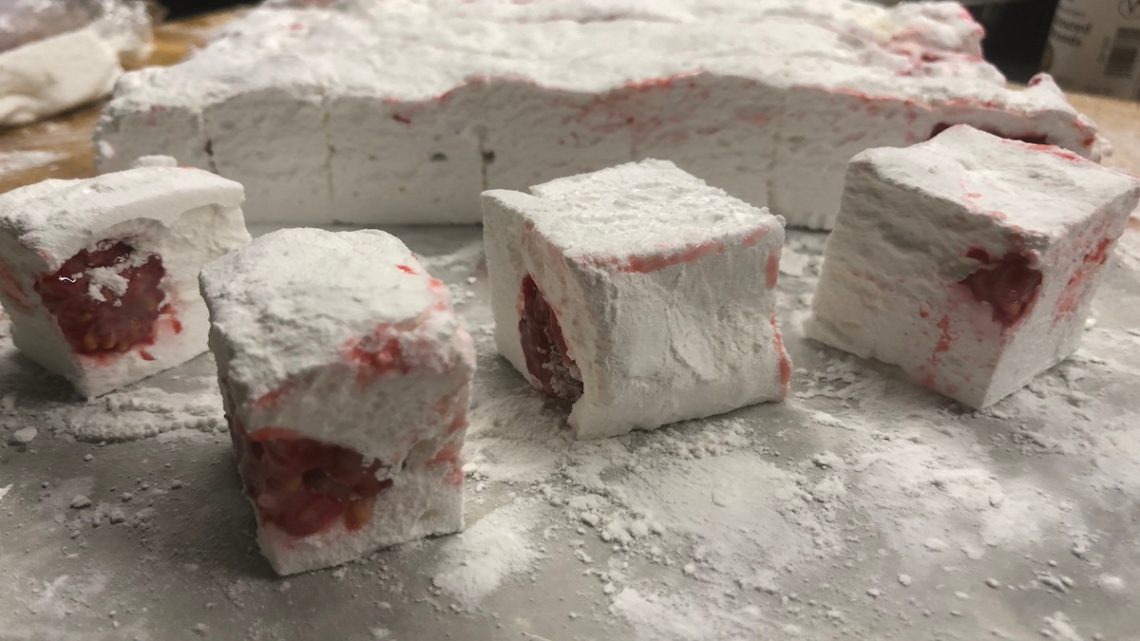
Marshmallow with raspberries
Ingredients
2 egg whites
12 leaves gelatine
pinch of salt
500 g castor sugar
350 ml water
1 tablespoon flavourings rose water
1 punnet fresh raspberries
Method
Put the sugar and water in a pan and boil until they reach 127 C. Begin to beat the egg whites in an electric mixer when the sugar is at 121C. Soften the gelatine leaves is water and then dissolve the gelatine in the hot syrup.
Pour the syrup slowly on to the whisked egg whites and add the rosewater. Let it whisk until cold and working quickly, pour half the marshmallow mixture into a tin or container dusted with a mixture of equal quantities of cornstarch and icing sugar. Lay the raspberries on top and cover with the remaining marshmallow mixture. Let it cool completely and then cut into cubes. Dust with the cornstarch/sugar mixture and serve. Store, refrigerated, in an airtight container.
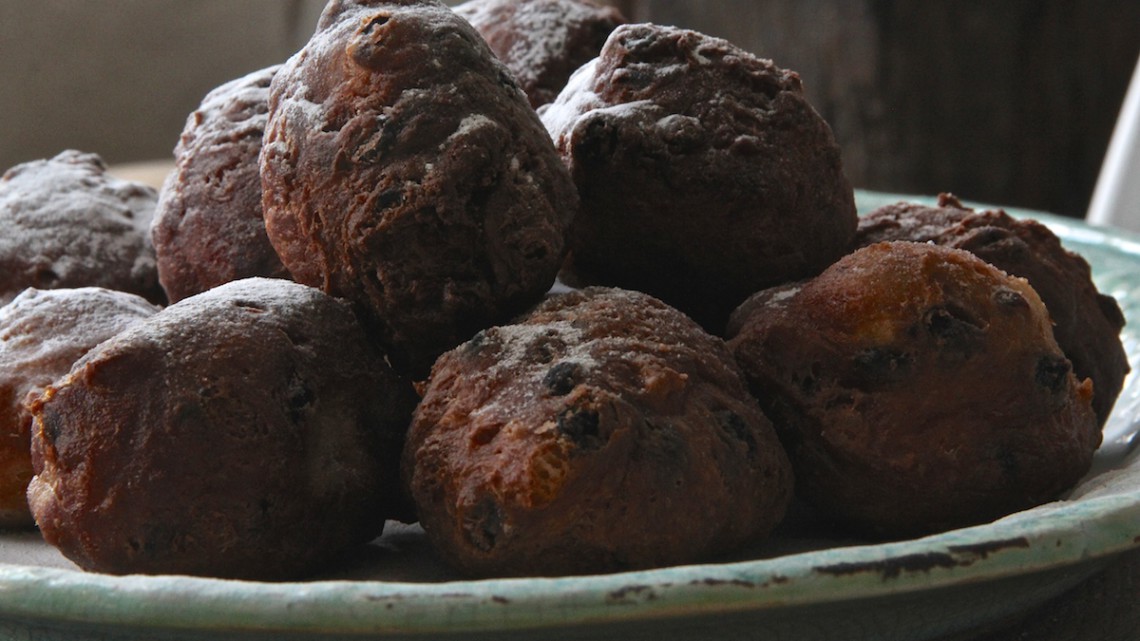
Traditional Oliebollen
An oliebol is a traditional Dutch food. They are called oliebollen (literally oil spheres) in the Netherlands. In English they are more commonly known as Dutch Doughnuts or Dutchies.
Oliebollen are a variety of dumpling made by using an ice-scooper or two spoons to scoop a certain amount of dough and dropping the dough into a deep fryer filled with hot oil. In this way, a sphere-shaped oliebol emerges. Oliebollen are traditionally eaten on New Year's Eve and at funfairs. In wintertime, they are also sold in the street at mobile stalls.
Makes about 25
Ingredients
125 g golden raisins
75 g currants
50 g butter
500 ml buttermilk
10 g dried yeast
2 Tablespoons sugar
500 g flour
1 egg
1 teaspoon salt
1 litre sunflower oil
cinnamon-sugar or icing sugar for dusting
Method
Place the dried fruit in a bowl and pour over 300 ml boiling water. Allow the fruit to swell up for 15 minutes, then pour off the water.
In the meantime, gently heat the buttermilk and butter in a saucepan over low heat until lukewarm. Place the yeast and sugar in a bowl and stir in the warmed buttermilk.
Place the flour and salt in a bowl and make a well in the centre. Beat the egg in a small bowl. Add the yeast mixture and beaten egg to the flour and mix to a thick batter.
Roughly chop the fruit and add to the batter and mix well. Cover the bowl with a damp tea towel and leave in a warm place to rise for about 1 hour.
Heat the oil in a large pan or deep fryer to 180 C. Dip an ice cream scoop or 2 tablespoons in the oil to prevent the batter from sticking and drop the spoonfuls in the oil. Fry for about 6 minutes until golden brown and cooked through.
Drain the oliebollen on kitchen paper and roll in cinnamon sugar or dust with icing sugar. Serve with a glass of champagne or sparkling wine and toast the new year in.
We, the Amsterdam Flavours chefs, hope you enjoy this recipe as much as we do. If you have any questions on how to prepare it or just want to send us your feedback, you can reach us here Contact Amsterdam Flavours
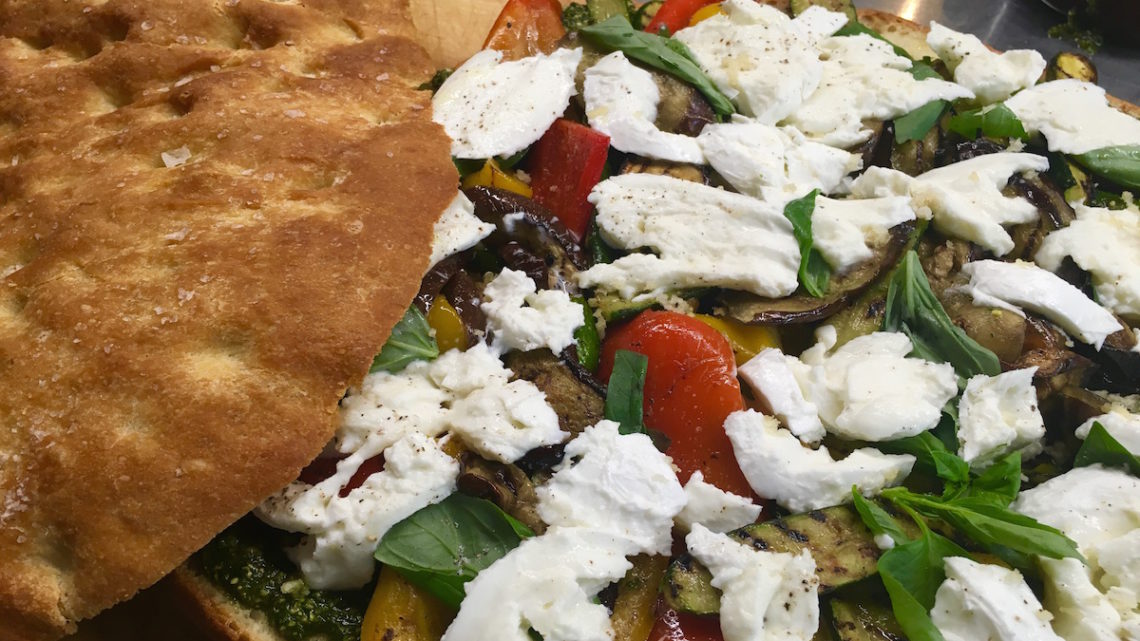
Filled Focaccia
We're all thinking of ways to enjoy summer eating, whether that be in our outdoors. Here is a great recipe/idea for summer eating. You can practice your bread making skills and use your favourite vegetables or whatever is season.
Make a batch of focaccia.
Use an array of your favourite vegetables. We like a combination of peppers, courgettes, aubergine and red onion. Cut each into bite-sized pieces. Toss in olive oil and season with salt and pepper. Grill in a grill pan until the vegetables have bar marks and are tender and cooked through. You can also finish them off in the oven to get them more tender.
Once they and the bread have cooled down, slice the bread in half. Spread with pesto (either homemade or shop bought). Top with the grilled vegetables and then tear some buffalo mozzarella over. Sprinkle with some salt and pepper. Dot a few fresh basil leaves over and a handful of rocket leaves. Close the bread to form a giant sandwich. Cut into pieces and serve.
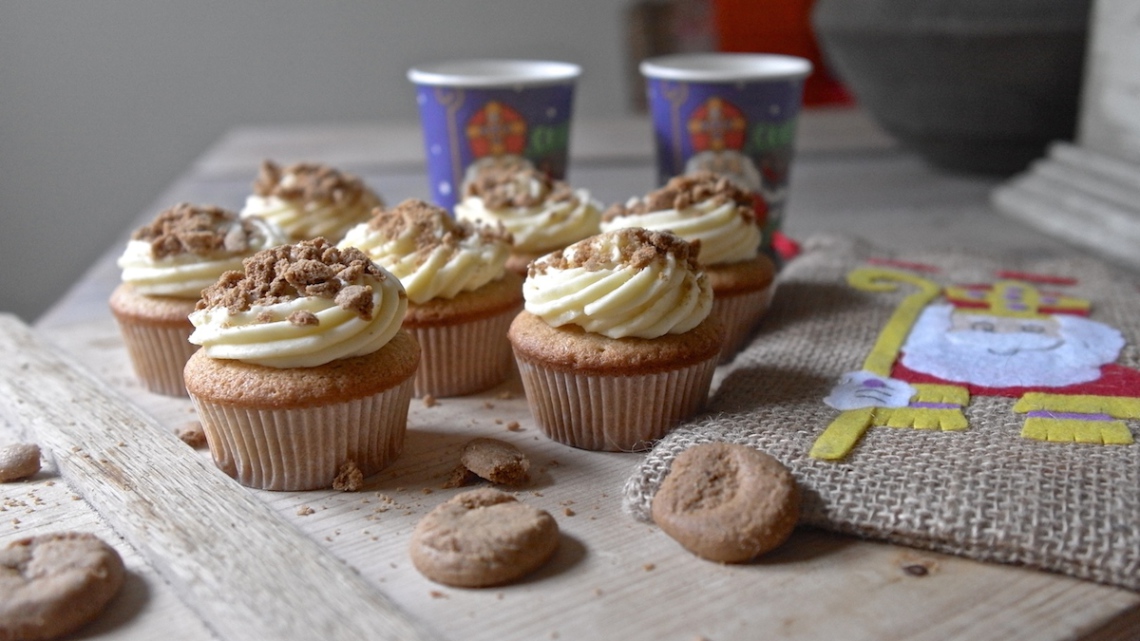
Sinterklaas Cupcakes
Sinterklaas is a holiday celebrated in The Netherlands on 5th December where children are given presents to celebrate the arrival of Sint Nicolaas. Candy and spiced cookies are traditionally eaten. We've taken the idea of the spiced cookies, called Pepernoten and created a cupcake with the same flavours. A great idea for young and old and something the kids can help with.
Ingredients
220 g unsalted butter, at room temperature
220 g caster sugar
1 teaspoon vanilla extract
4 eggs, whisked
220 g flour
8 g baking powder
pinch of salt
1 heaped teaspoon Speculaas or mixed spice
Frosting
250 g unsalted butter, at room temperature
500g icing sugar
1 teaspoon vanilla extract
handful pepernoten or spiced cookies, crushed
Method
Preheat the oven to 180 C.
Cream the butter and the sugar together in a until light and fluffy. Add 1 teaspoon vanilla extract.
Graudually add the whisked egg to the mixture. Mix the flour, baking powder, salt and spiced together and fold in to the butter mixture. Spoon the mixture into a cupcake tin lined with paper cupcacke cases until two-thirds full.
Bake for about 20 -25 minutes until risen and bouncy to touch. Allow to cool.
For the frosting, beat the butter and icing sugar together until light and fluffy. Add the vanilla extract to flavour. If the mixture is a bit tight, add a splash of milk to thin it down.
Spoon the frosting into a piping bag fitted with a star nozzle and pipe the frosting on top of the cupcakes. Sprinkle with the crushed pepernoten or spiced cookies and serve.
We, the Amsterdam Flavours chefs, hope you enjoy this recipe as much as we do. If you have any questions on how to prepare it or just want to send us your feedback, you can reach us here Contact Amsterdam Flavours
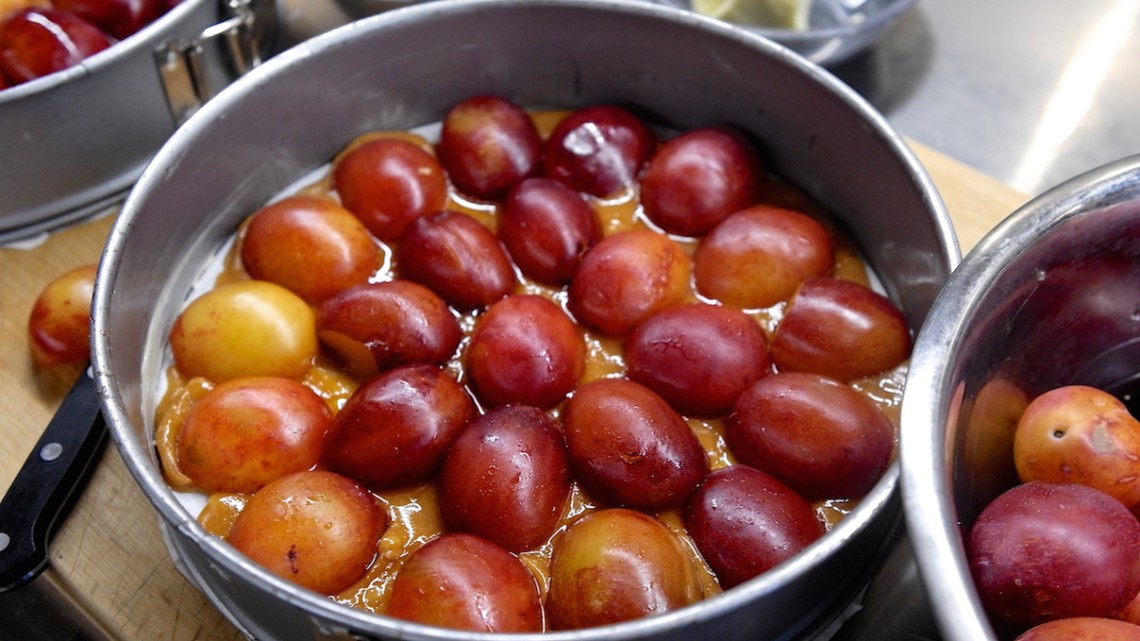
Upside Down Plum Cake
Serves 8-10
Ingredients
500g brown sugar
250 g soft, unsalted butter, chopped
12-15 plums, halved and stoned
4 eggs
2 teaspoons vanilla extract
250 g plain flour
2 teaspoons baking powder
160 ml cream
Method
Combine 300 g brown sugar with 120 g butter in a heavy-based saucepan and stir over low heat until well combined and smooth. Remove from the heat and pour into a well-greased, round, 26cm cake tin, spreading evenly. Place the plum halves on top, cut-side down.
Using an electric mixer, beat the remaining butter with remaining sugar in a bowl until creamy. Add eggs, one at a time, beating well after each, then stir in vanilla. Sift combined flour and baking powder into a bowl with a pinch of salt. Fold dry ingredients into butter mixture, add cream and mix well.
Spoon mixture over plums and bake at 175°C for about 45-60 minutes, or until cooked when tested with a skewer. Stand in tin for 5 minutes before turning out on a plate.
Serve with creme fraiche.
We, the Amsterdam Flavours chefs, hope you enjoy this recipe as much as we do. If you have any questions on how to prepare it or just want to send us your feedback, you can reach us here Contact Amsterdam Flavours

All Butter Croissants
There is nothing better than warm, butter, flakey croissants straight from the oven. Making them yourself takes a little practice, but the results are SO worth it. Serve with farmhouse butter, good jam and a cup of coffee. Heaven!
Ingredients
625g strong white flour, plus extra for rolling out
12 g salt
75 g sugar
40 g fresh yeast
500g butter, chilled
1 egg, beaten
Method
The day before you want to bake the croissants, place the flour, sugar, salt and yeast in the bowl of a mixer fitted with a dough hook, or a large mixing bowl. Pour in 350-400ml cold water and mix until it comes together as a soft dough.
Turn out the dough onto a lightly floured work surface and knead for a good 8-10 minutes, or until the dough feels smooth, stretchy and elastic. Return to the bowl and set aside to rest.
Sandwich the chilled butter between two sheets of greaseproof paper and roll out to a 30x20cm rectangle, about 1cm thick. Chill in the fridge until needed.
Turn the dough out again onto a lightly floured work surface. Roll it into a rectangle 60x30cm. Peel the greaseproof paper from the butter and place the butter centrally on top of the pastry rectangle. Fold one edge of the pastry over the butter to half-cover it, then do the same with the other edge of the pastry so that the butter is covered. Fold the rectangle in half lengthways, then give it a quarter-turn and roll out again to a rectangle measuring 60x30cm.
Repeat the folding, turning and rolling process, as before, three more times (do not roll out the pastry the final time you fold and turn it). Wrap the pastry in cling film and chill in the fridge overnight.
When the pastry has rested, roll it out to a thickness of 0.5cm. Cut the pastry into two 50x20cm strips, then cut each strip into triangles about 10cm wide at the base.
With the narrow point of one of the pastry triangles facing away from you, use your fingertips to stretch the two points of the triangle nearest to you out sideways so that they bow a little. Roll the pastry over itself, curling it into a traditional crescent shape, so that the furthest point of the triangle ends up curled over the top of the croissant. Repeat the process with the remaining pastry triangles to create about 20 croissants.
Place the croissants onto baking trays lined with silicone paper or baking parchment. Brush them all over with the beaten egg, then set aside to prove for 30-45 minutes. (The croissants can be frozen at this point, if desired.)
Preheat the oven to 190C/170C Fan. Bake the croissants for 20-25 minutes, or until risen and golden-brown. Serve warm with jam and butter.
We, the Amsterdam Flavours chefs, hope you enjoy this recipe as much as we do. If you have any questions on how to prepare it or just want to send us your feedback, you can reach us here Contact Amsterdam Flavours

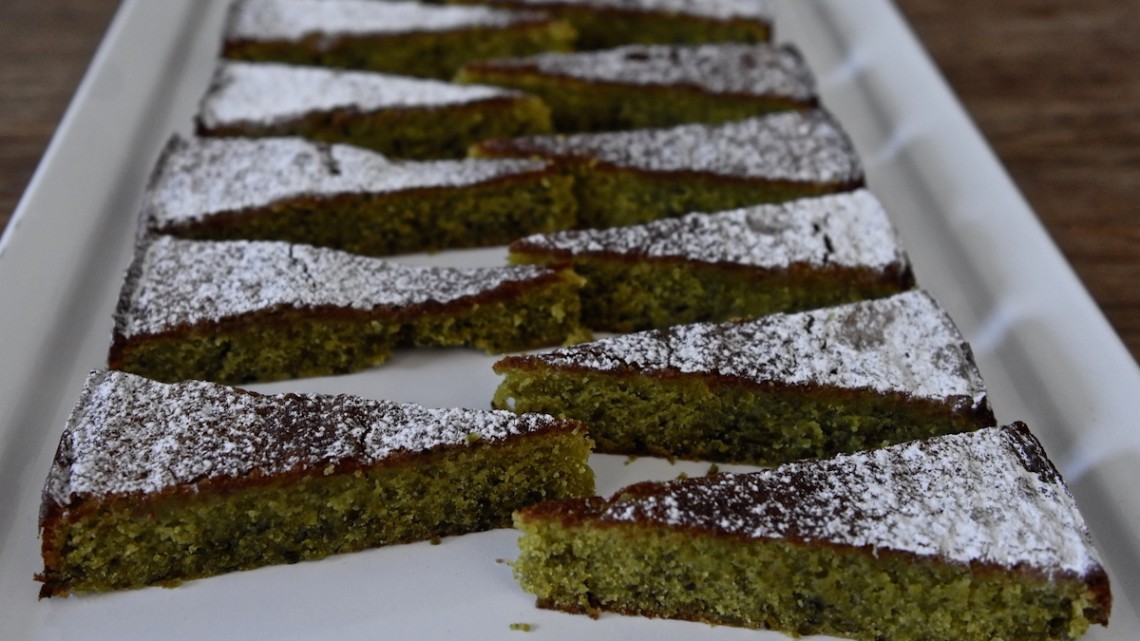
Pistachio-Olive Oil Cake
A delicious and unusual cake with a flavour of the middle east. The cake gets it's beautiful green colour from the pistachios and the olive oil keeps it moist. It's quite a rich cake, so a small piece will suffice. We usually serve it as part of a dessert with a parfait or some marinated pineapple. Yum!
Serves 8-10
Ingredients
50 g fine polenta
200 g ground pistachio nuts
50 g flour
1 teaspoon baking powder
125 ml olive oil
100 g unsalted butter, melted and cooled
3 eggs
200 g caster sugar
juice and grated zest of 1 lemon
juice of 1 orange
icing sugar for dusting
Method
Preheat the oven to 160 C. Mix the polenta, ground pistachios, flour and baking powder together.
Add the olive oil to the melted butter. Whisk the eggs and caster sugar until pale and fluffy, then slowly whisk in the olive oil and butter. Whisk in the pistachio mixture, then add the lemon juice and zest and orange juice.
Pour into a greased and lined 24 cm springform tin and bake for about 40 minutes. The cake should be slightly underdone in the middle, so that if you insert a skewer it will come out with a little of the mixture sticking to it. While cooling down, the cake will finish off cooking through. Leave to cool for 10 minutes before removing from the tin.
Once completely cooled, cut into slices and dust with icing sugar.
We, the Amsterdam Flavours chefs, hope you enjoy this recipe as much as we do. If you have any questions on how to prepare it or just want to send us your feedback, you can reach us here Contact Amsterdam Flavours
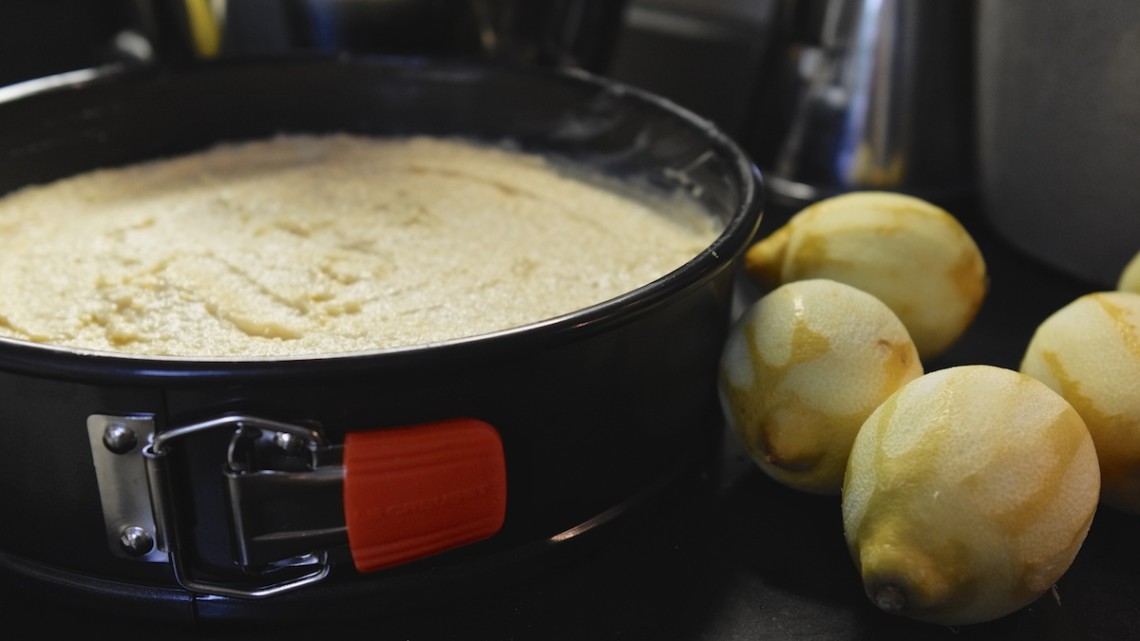
Lemon Polenta Cake
We've decided to divulge the secret and publish the recipe of a cake that has become quite famous. It's sharp and tangy and it's gluten-free too!
Serves 10-12
Ingredients
400 g soft unsalted butter (plus extra for greasing)
400 g caster sugar
400 g ground almonds
200 g fine polenta
16 g baking powder
6 large eggs, beaten
zest of 5 lemons (save juice for the syrup)
for the syrup
juice of 5 lemons
250 g icing sugar
Method
Line the base of a 26cm springform tin with baking paper and grease the sides with butter.
Preheat the oven to 150°C
Beat the butter and sugar till pale and whipped, in a Magimix Patissier or freestanding mixer.
Mix together the almonds, polenta and baking powder and salt. With the machine running, add the eggs to the butter, a little at a time.
Add the almond and polenta mixture and blend the mixture well. Finally, beat in the lemon zest. Spoon the mixture into the prepared tin and bake in the oven for about 60-70 minutes.
It may be slightly wobbly, but if the cake is cooked, a cake tester should come out cleanish and, most significantly, the edges of the cake will have started to shrink away from the sides of the tin. Remove from the oven to a wire cooling rack, but leave in the tin.
Make the syrup by boiling together the lemon juice and icing sugar in a small saucepan. Once the icing sugar’s dissolved into the juice, it's done.
Prick the top of the cake gently all over with a cake tester (or toothpick), pour the warm syrup over the cake, and leave to cool before taking it out of the tin. Serve in slices with whipped cream or creme fraiche.
We, the Amsterdam Flavours chefs, hope you enjoy this recipe as much as we do. If you have any questions on how to prepare it or just want to send us your feedback, you can reach us here Contact Amsterdam Flavours