

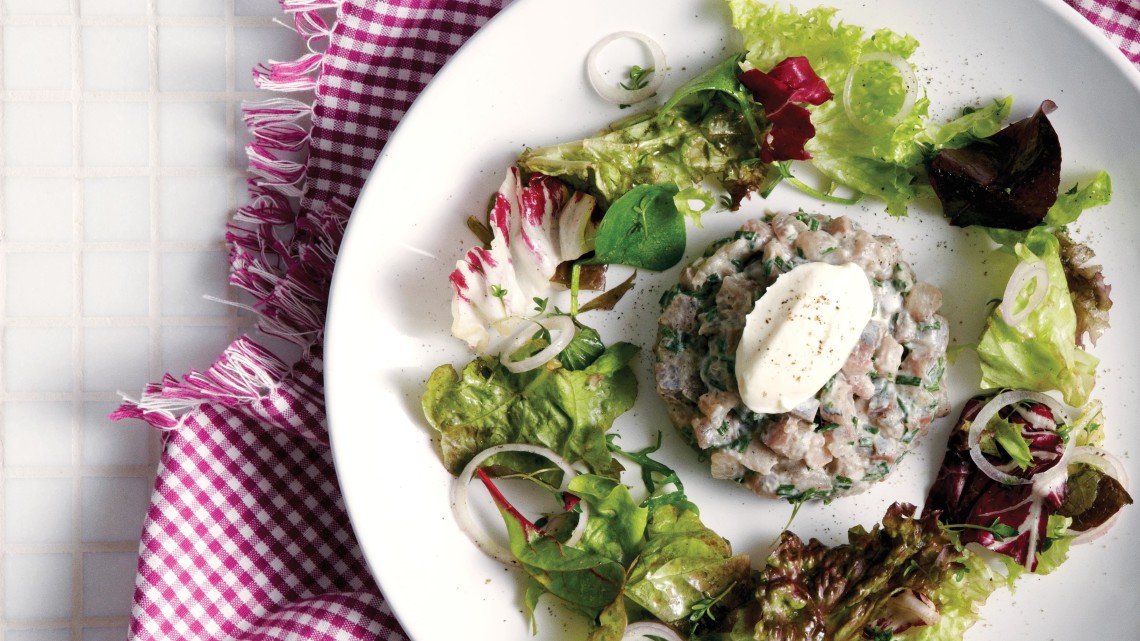
Herring Tartare
Ingredients
2 Dutch new herrings
1 shallot
small bunch chives
125 g tub creme fraiche
1 lemon
50 g mesclun salad
1 pack mustard cress
Method
Finely chop the chives. Cut the herring into 1/2cm cubes and place all the ingredients is a bowl.
Cut the lemon in half and add a few drops to taste to the chopped herring. Add 1 tablespoon creme fraiche and season with salt and pepper.
Finely slice the shallot into thin rings. Snip the mustard cress and mix together in a bowl with the mesclun salad.
Line 2 cups or ramekins with cling wrap, divide the the herring tartare between the moulds. Add 1 tablespoon olive oil to the salad and season with salt and pepper.
Unmould the herring tartare and top each with a teaspoonful of creme fraiche.
Arrange the salad around the tartare and serve with a wedge of lemon.
We, the Amsterdam Flavours chefs, hope you enjoy this recipe as much as we do. If you have any questions on how to prepare it or just want to send us your feedback, you can reach us here Contact Amsterdam Flavours

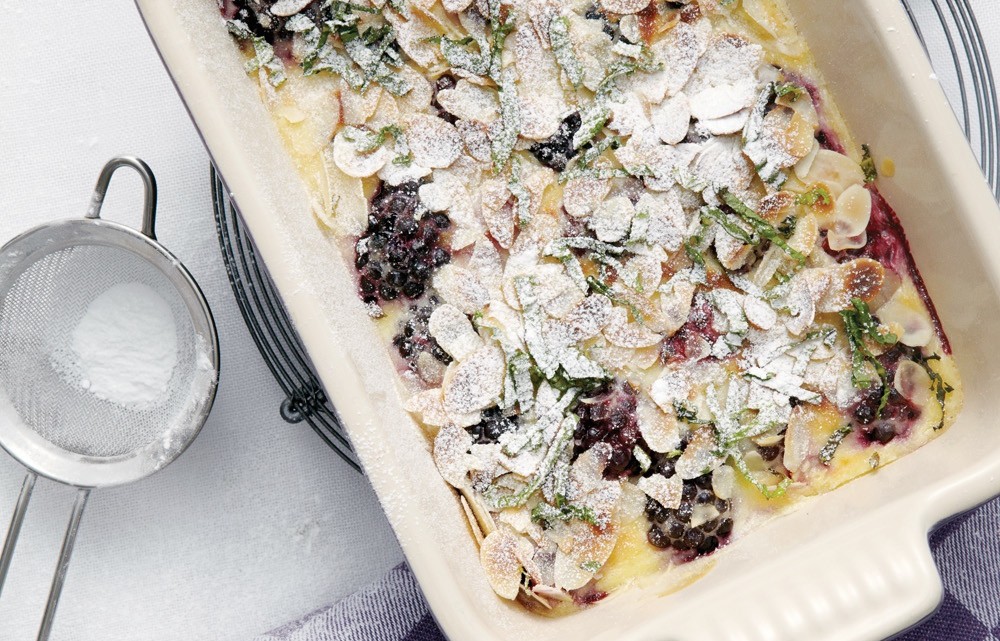
Bilder & de Clercq's New recipes week 30
As you may know by now, we are the chefs behind Amsterdam hotspot, Bilder & de Clercq. Every week we develop 3 new recipes for the stores and we'll be keeping you updated with the week's newest recipes. This weeks new recipes are:
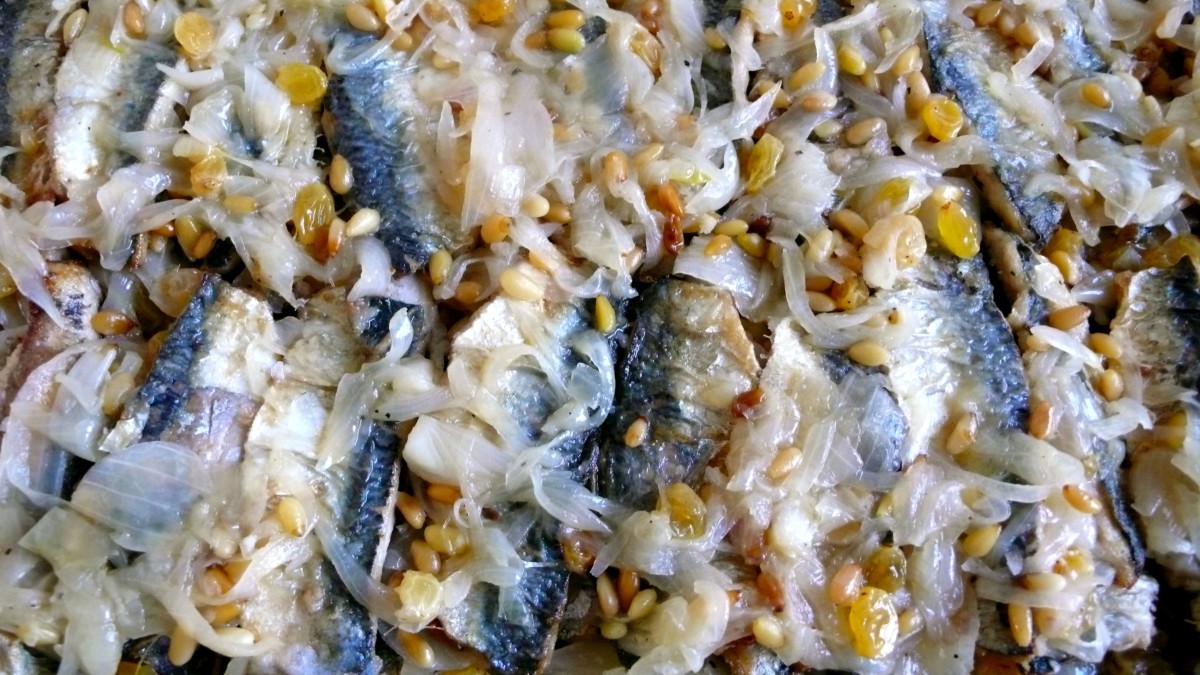
Sardines in saor
Ingredients
12 fresh sardines
flour for dusting
salt and pepper
60 ml olive oil, plus extra
2 onions
2 bay leaves
150ml white wine or rice vinegar
30 g-40 g sugar, or to taste
handful toasted pinenuts
handful sultanas
pinch of ground allspice
Method
Get your fishmonger to fillet the sardines for you. If they are unable to, this is how to do it. Ensure that the guts have been removed. With the spine of the fish pointing up towards you, gently press the fish on a board to flatten. Now turn the sardine over and you should easily be able to pull out the centre bone. Try and remove any little pin bones. Rinse the fish under cold water and dry well on a clean tea towel.
Heat the olive oil in a frying pan over medium heat. Season the flour with salt and pepper. Dredge the sardines in the flour and fry in the hot olive oil until golden. Remove and drain on kitchen paper.
Slice the onions and fry gently with the bay leaves and allspice in a pan with 4 tablespoons olive oil for about 20 minutes until soft.
Add the sugar and vinegar to the onions, followed by the pine nuts and sultanas. Take a small dish and place a layer of the onions in the bottom. Then layer the sardines on top. Repeat the process finishing with a layer of onions.
It's best to let this marinate in the fridge for a couple of hours before serving.
We, the Amsterdam Flavours chefs, hope you enjoy this recipe as much as we do. If you have any questions on how to prepare it or just want to send us your feedback, you can reach us here Contact Amsterdam Flavours
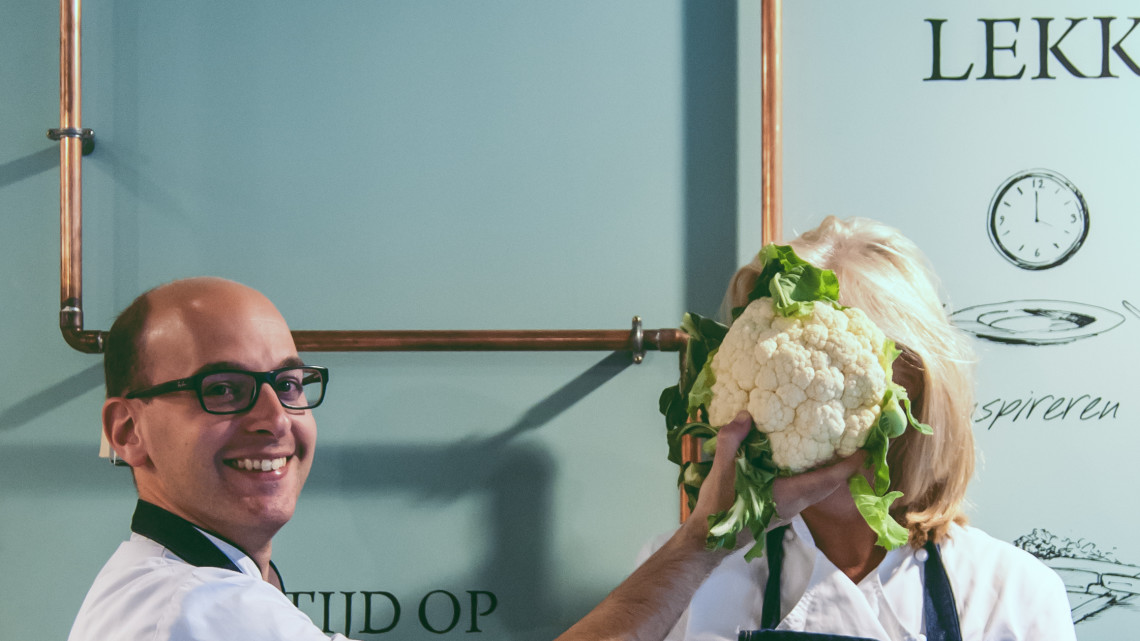
Artistic Portraits
We were recently asked to contribute to a final exam for a young gentleman, Tobias Groot, completing a project for his photographic study. After taking pictures of us in action cooking, we were asked to pose for portraits in a rather unconventional way. These are the results which we love and we hope that he passed his exams with flying colours!
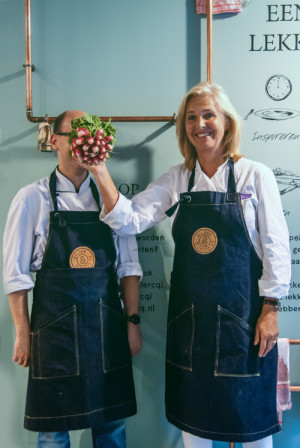
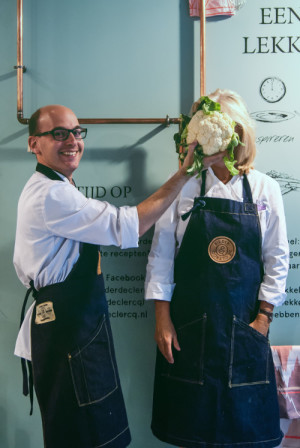
Photos © Tobias Groot
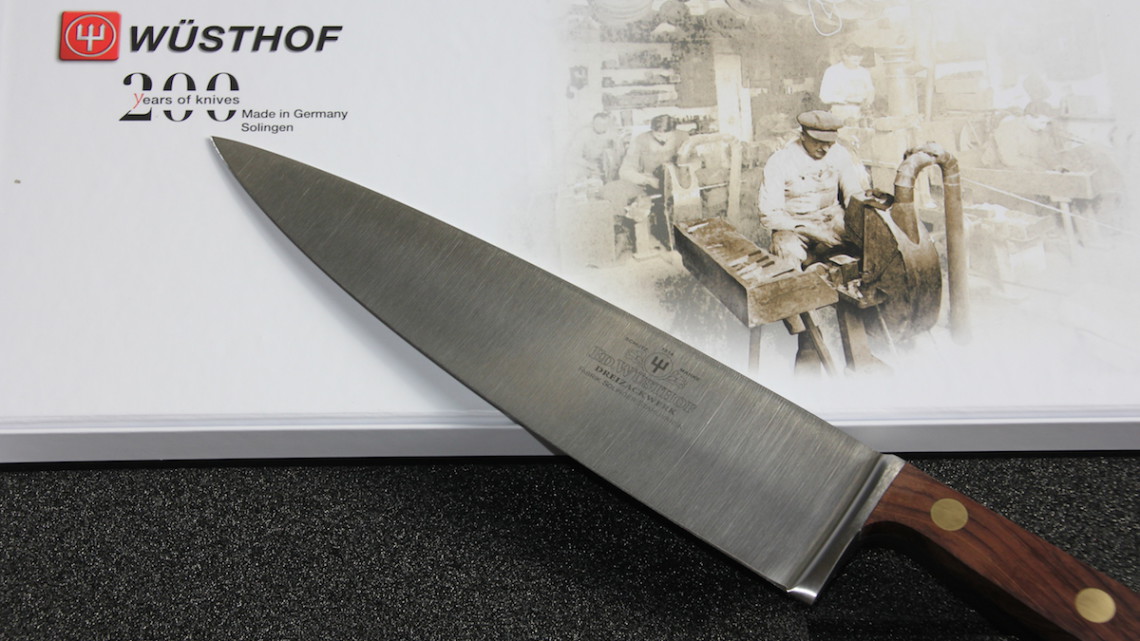
Wüsthof knives
A good set of knives are essential for every chef. Without them, we can't do any of the cutting, trimming and shaping of ingredients that is an integral part of food preparation.
They are so important that professional chefs carry their own personal portfolio of knives. Sharpness is critical, so too is matching the correct tool to the job.
We believe in having a few basic knives in your kitchen. They are the chefs knife, bread knife, vegetable knife, tomato knife and filleting knife. Also important is a steel, to keep them sharp and at their best.
Our knives of choice are by Wüsthof. The name Wüsthof first appeared as a factory in the records of the Duchy of Berg in 1814. It was in that year that the family's ancestor, Abraham Wüsthof, founded his "factory for fine steel wares", which is now known as the Dreizackwerk. The business has remained in the family ever since. Over the past 200 years, their products have established a reputation above all for their quality and functionality. Wüsthof is recognised worldwide as a specialist in outstanding knives.
We are proud to have Wüsthof as a partner of Amsterdam Flavours.
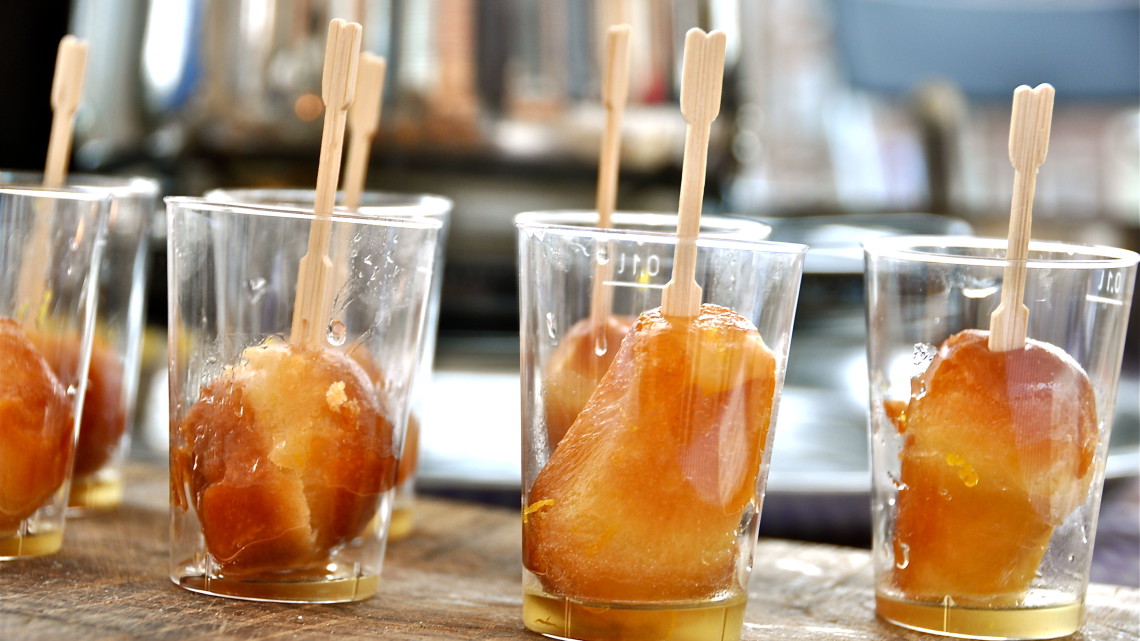
Baba au Limoncello
Ingredients
100g butter, softened to room temperature
25g fresh yeast or 10g dried yeast
250g flour, sifted
25g sugar
generous pinch of salt
4 eggs
grated zest of 1 lemon
50g melted butter, for greasing
SYRUP
1 liter water
500g sugar
1 cup limoncello
Method
Mix the yeast with 2 tablespoons warm water. Put the flour in a large bowl and make a well in the centre. Add the sugar and salt, 2 eggs and the yeast mixture. Mix with a wooden spoon until the dough is elastic, then add the other egg. Work this in and then add the final egg and work it in. Finally add the softened butter and the lemon zest.
Brush 16 dariole moulds with the melted butter. Divide the dough into 16 small pieces and put a piece into each mould. Leave in a warm place until the dough has risen to fill the moulds. Preheat the oven to 200°C and then bake them for 15-20 minutes. Turn the babas out immediately onto a rack and allow to cool completely.
Prepare the syrup by boiling together the water and sugar. Add the limoncello. Dip each baba into the boiling syrup and leave submerged until no more air bubbles are released. Drain and place on a cake rack resting over a dish. As the limoncello syrup collects in this dish, repeatedly spoon it over the babas to keep them very moist.
We, the Amsterdam Flavours chefs, hope you enjoy this recipe as much as we do. If you have any questions on how to prepare it or just want to send us your feedback, you can reach us here Contact Amsterdam Flavours
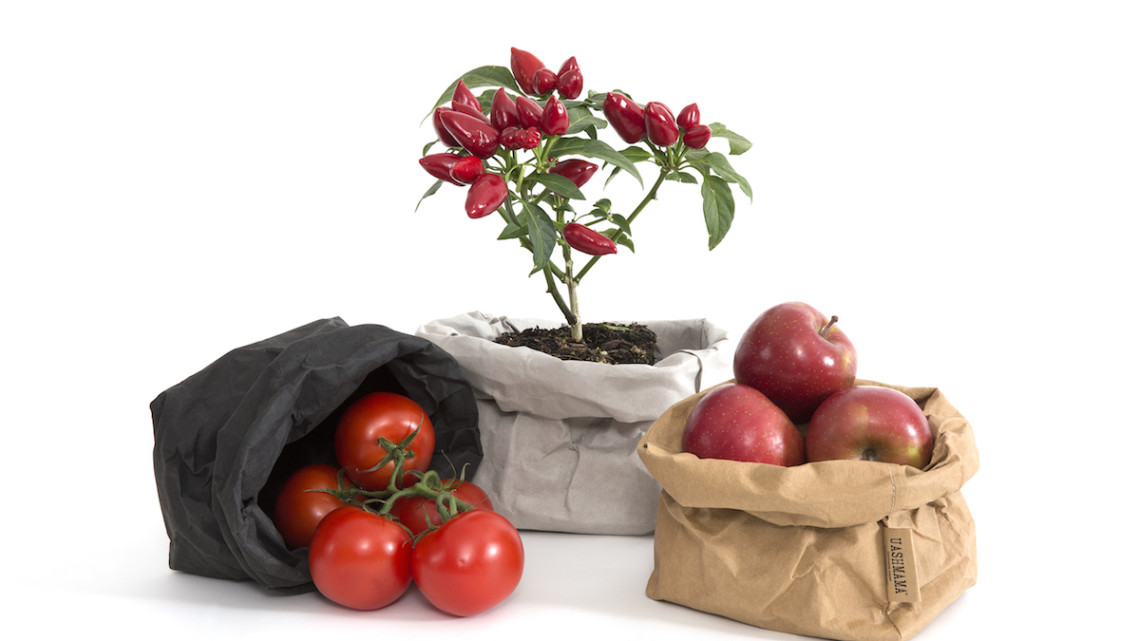
Uashmama bags
UASHMAMA washable paper looks and feels like leather but washes with ease. The bags are soft yet resilient, where the manufacturing process is similar to leather, the paper is stretched and tanned making it durable to withstand washing and daily use.
Le Sorelle 'The Sisters' is a small family run company based in Montecatini just outside the walls of Lucca. Once a popular tourist destination, Montecatini has struggled in the last decade being bypassed for more promoted areas. The village now thrives again with the growth of UASHMAMA, who employ a large group of local men and women to sew from home the paper bag you buy today.
The paper bags and other products are all sewn in a cottage in Tuscany, so they are proud to call themselves a cottage industry. The more sophisticated designs and products are produced in Florence by manufacturers who also produce for the fashion elite.
The project UASHMAMA combines functionality, tradition and innovation. Paper, leather and fabric are all part of this project.
UASHMAMA washable paper is made using a virgin fibre through cultivation and not deforestation. Paper that washes like fabric holding it’s form so it can be used over and over again promoting sustainability perfect for catering and homewares.
UASHMAMA bags are available at Moes & Griet.
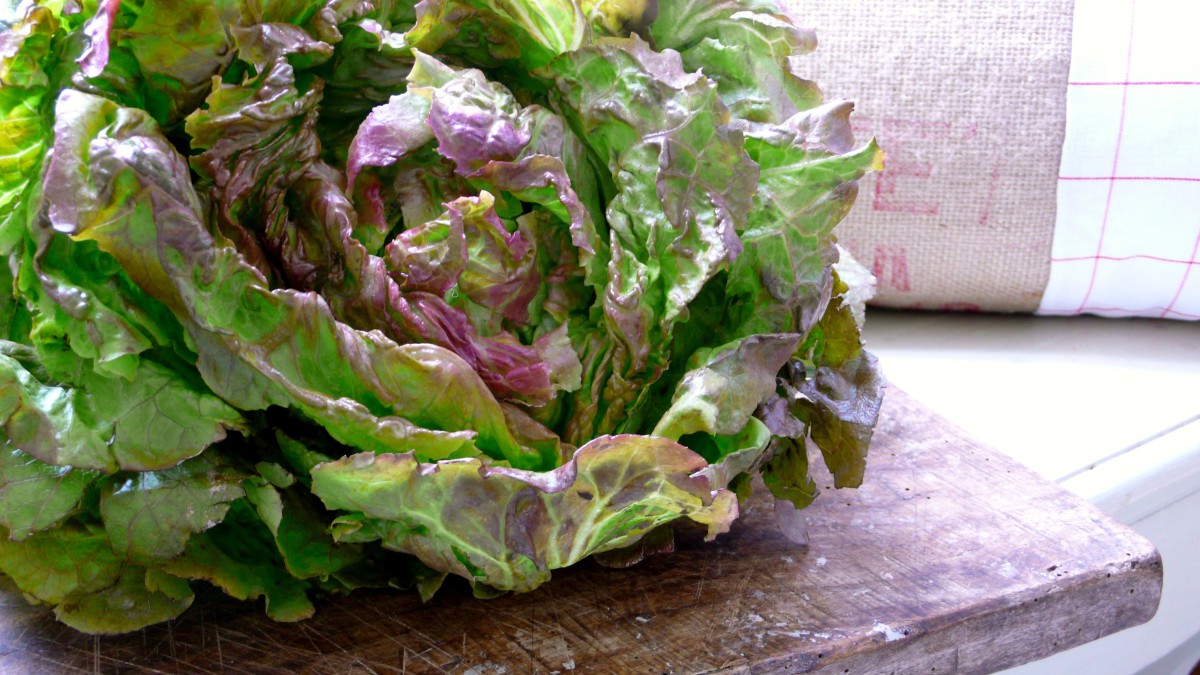
Crop Lettuce
A summer salad tastes best when fresh lettuce used. And crop lettuce is always fresh! Unlike other vegetables, crop lettuce cannot be frozen, dried or preserved. It is best to buy the lettuce as a full head and not to cut it too small; by tearing and cutting the leaves, nutrients are lost. Crop lettuce is available throughout the year in the Netherlands; in the summer from the open fields and the rest of the year from the greenhouse. This lettuce is traditionally grown and harvested by hand.
High in fiber, vitamins, iron and water and low in calories, crop lettuce is a healthy choice. There are different types of crop lettuce. Butter lettuce is perhaps the most well known; a variety that owes its name to it's delicious, mild flavour. Other types of crop lettuce include oak leaf lettuce, Lollo Biondo and Lollo Rosso (red variety).
Crop lettuce is a good basis for a quick and easy lunch or meal; just pick the leaves of the crop, possibly adding a dressing and some other ingredients and you're done, If the leaves becoming a bit limp don't throw them away. Put the leaves briefly in a bowl of water with ice cubes to refresh them and bring them back to life. The lettuce can also be used in warm dishes, for example through potato puree or to make lettuce soup.
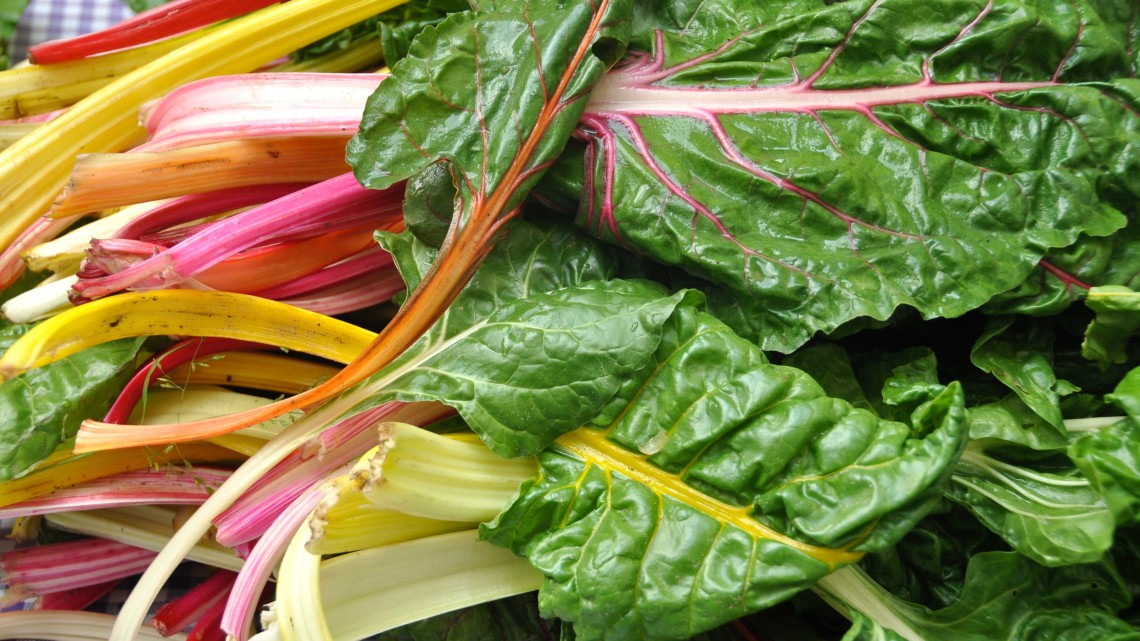
Chard
Chard is a leafy green vegetable often used in Mediterranean cooking. In some, the leaf stalks are large and are often prepared separately from the leaf blade. The leaf blade can be green or reddish in colour; the leaf stalks also vary in colour, usually white, yellow, or red. Chard has been bred to have highly nutritious leaves and is considered to be one of the most healthful vegetables available, making it a popular addition to healthy diets (like other green leafy vegetables). Chard has been around for centuries, but because of its similarity to beets and some other vegetables such as cardoon, the common names used by cooks over the centuries can be quite confusing.
The word "Swiss" was used to distinguish chard from French spinach varieties by 19th century seed catalogue publishers. Chard is very popular among Mediterranean cooks. The first varieties have been traced back to Sicily.
Fresh young chard can be used raw in salads. Mature chard leaves and stalks are typically cooked or sauteed; their bitterness fades with cooking, leaving a refined flavour which is more delicate than that of cooked spinach.
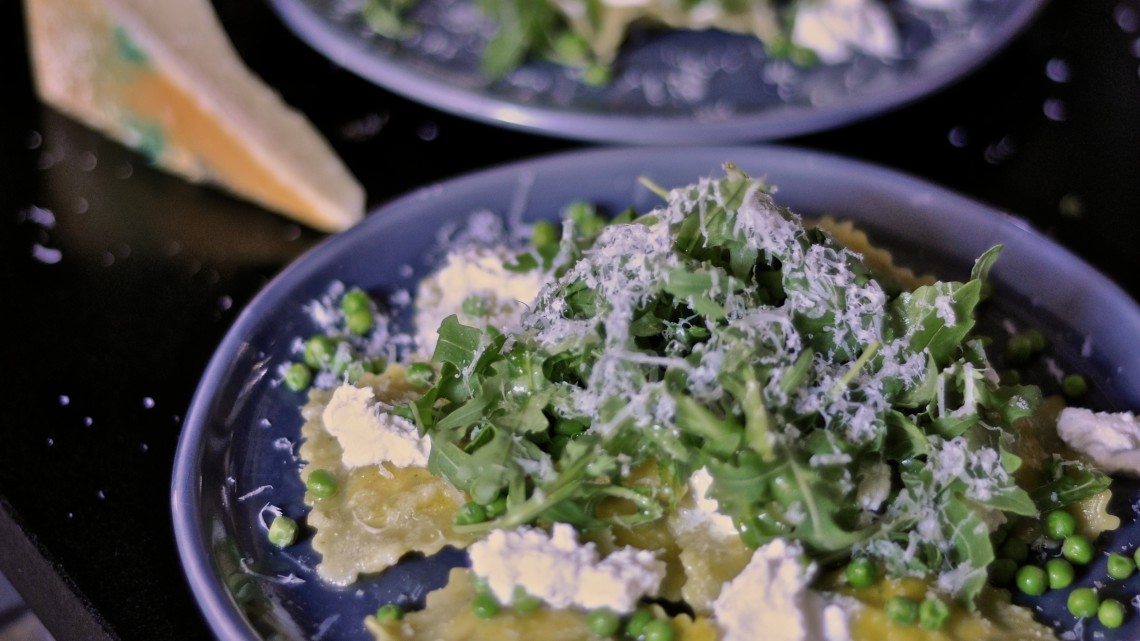
Ravioli with ricotta, mint and peas
Ingredients
16 pea, mint and ricotta ravioli
125 g ricotta
1 lemon
200 g fresh or frozen peas
1 container pea cress or 50 g rocket
grated Parmesan, to finish
Method
Bring a pot of salted water to the boil.
Place the ricotta in a bowl. Grate the zest from half the lemon over the ricotta. Mix together along with 1 tablespoon olive oil and season with salt and pepper.
Place the ravioli and peas in the pot of boiling water and cook gently for about 2-3 minutes. Drain off the ravioli and peas and return to the pot.
Mix the ravioli and peas gently together with 1 tablespoon olive oil, salt and pepper. Divide between 2 plates. Spoon the lemon-ricotta on top. Finish with the pea cress or rocket, a drizzle of olive oil and a grating of Parmesan.
We, the Amsterdam Flavours chefs, hope you enjoy this recipe as much as we do. If you have any questions on how to prepare it or just want to send us your feedback, you can reach us here Contact Amsterdam Flavours