


Raw cream butter
Raw cream butter
Ingredients
-
240 ml raw cream (skimmed from raw milk or bought, unhomogenized)
-
½ – ¾ teaspoon fine sea salt flakes
-
Ice-cold water
-
(Optional, for cultured butter) 1–2 tablespoons buttermilk or yogurt with live cultures
Culture the cream (optional but amazing for flavor)
-
Stir the cream with the buttermilk or yogurt.
-
Cover loosely (cloth or lid not fully sealed).
-
Leave at room temperature for 12–24 hours until slightly thickened and gently tangy.
Skip this for a fresher, cleaner butter taste.
Churn
-
Bring the cream to room temperature.
-
Beat with a mixer or shake in a jar until the butter separates from the liquid.
-
Pour off the buttermilk and save it for baking.
Wash the butter
-
Rinse the butter 2–3 times in ice-cold water until the water runs clear.
-
Gently squeeze out excess liquid.
Salt & knead
-
Knead in the sea salt flakes.
-
Taste and adjust — Normandy butter is generously salted.
-
Shape into a log and wrap in baking paper.
Variations (very Bordier-like)
-
Lemon sea salt butter: add ½ tsp lemon zest
-
Seaweed butter: add 1 tsp finely chopped nori or sea lettuce
-
Roasted garlic butter: add 1 roasted garlic clove
-
Piment d’Espelette butter: a pinch for gentle heat
Raw cream butter
Benodigdheden
-
250 ml rauwe room (afgeschept of gekocht, ongehomogeniseerd)
-
½ – ¾ theelepel fijne zeezoutvlokken (bijv. Guérande of Noirmoutier)
-
IJswater
-
(Optioneel) 1–2 eetlepels karnemelk of yoghurt met levende culturen
Room cultiveren (optioneel maar top voor smaak)
-
Meng de room met de karnemelk of yoghurt.
-
Dek losjes af (theedoek of deksel niet helemaal dicht).
-
Laat 12–24 uur op kamertemperatuur staan tot licht zuur ruikend en iets dikker.
Overslaan = frissere, neutralere boter.
Kloppen
-
Breng de room op kamertemperatuur.
-
Klop met mixer of schud in een pot tot de boter zich afscheidt.
-
Giet de karnemelk af en bewaar.
Wassen
-
Spoel de boter 2–3 keer in ijskoud water tot het water helder blijft.
-
Knijp overtollig vocht eruit.
Zouten & kneden
-
Kneed de zoutvlokken erdoorheen.
-
Proef en pas aan (Normandië is echt goed gezouten).
-
Vorm tot een rol en wikkel in bakpapier.
Serveren & bewaren
-
Op kamertemperatuur het lekkerst
-
In koelkast: ± 2 weken
-
Invriezen: tot 6 maanden
Variaties
-
Citroen-zeezoutboter: ½ tl citroenrasp
-
Zeewierboter: 1 tl fijngehakte nori of zeesla
-
Geroosterde knoflookboter: 1 teen geroosterde knoflook
-
Piment d’Espelette-boter: snufje voor warmte


Blood orange marmalade
Blood Orange Marmalade (makes about 4 jars)
Ingredients
-
1 kg blood oranges (preferably organic)
-
1 lemon (organic)
-
1 litre water
-
800 g granulated sugar
(You can use 1:1 jam sugar, but this will be slightly sweeter)
Preparation
-
Wash the oranges and lemon thoroughly.
-
Cut the oranges in half, squeeze out the juice and reserve the seeds and membranes (they contain natural pectin).
-
Slice the peel into thin strips (julienne).
-
Tie the seeds and membranes in a piece of muslin or place them in a tea infuser.
Cooking
-
Put the juice, peel, lemon juice, water and the bag of seeds/membranes into a large pan.
-
Bring to the boil, then simmer gently
-
Add the sugar and stir until fully dissolved.
- Add the peel
-
Bring to a rolling boil and cook till you reach a temperature of 105 C
-
Test for setting: place a small spoonful on a cold plate. If it wrinkles when pushed, it’s ready.
Jarring
-
Pour the hot marmalade into sterilised jars.
-
Seal immediately and turn upside down for 5 minutes.
-
Allow to cool completely and store in a cool, dark place.
Variations
Vanilla: add a split vanilla pod during cooking
Rosemary: infuse briefly, then remove
Cointreau or Grand Marnier: add a splash at the end
Chilli: just a pinch for gentle heat
Cardamon: a few
Bloedsinaasappel-marmelade (ca. 4 potjes)
Ingrediënten
-
1 kg bloedsinaasappels (bij voorkeur biologisch)
-
1 citroen (biologisch)
-
1 liter water
-
800 g geleisuiker (1:1 kan ook, maar dit geeft iets zoetere marmelade)
Voorbereiding
-
Was de sinaasappels en citroen grondig.
-
Snijd de sinaasappels doormidden, pers het sap eruit en bewaar pitten en vliesjes (die bevatten pectine), snijd wat van het wit uit de schil
-
Snijd de schillen in dunne reepjes (julienne).
-
Doe pitten en vliesjes in een stukje kaasdoek
Koken
-
Doe sap, schillen, citroensap, water en het zakje met pitten/vliesjes in een grote pan.
-
Breng aan de kook en kook voor 20 minuten
-
Voeg de suiker toe en roer tot deze is opgelost, voeg daarna de gesneden sinaasappelschil toe
-
Breng stevig aan de kook en laat doorkoken totdat jam een temperatuur van 105 C bereikt heeft
-
Doe een geleitest (druppel op koud schoteltje): rimpelt het bij duwen, dan is het goed.
Inpotten
-
Giet de hete marmelade in gesteriliseerde potten.
-
Sluit direct af en zet 5 minuten op de kop.
-
Laat afkoelen en bewaar koel en donker.
Variaties (erg lekker)
vanille: kook een opengesneden vanillestokje mee
rozemarijn: kort laten meekoken en weer verwijderen
Cointreau of Grand Marnier: scheutje na het koken
Chili: miniem snufje voor pit
Kardamon: enkele peultjes
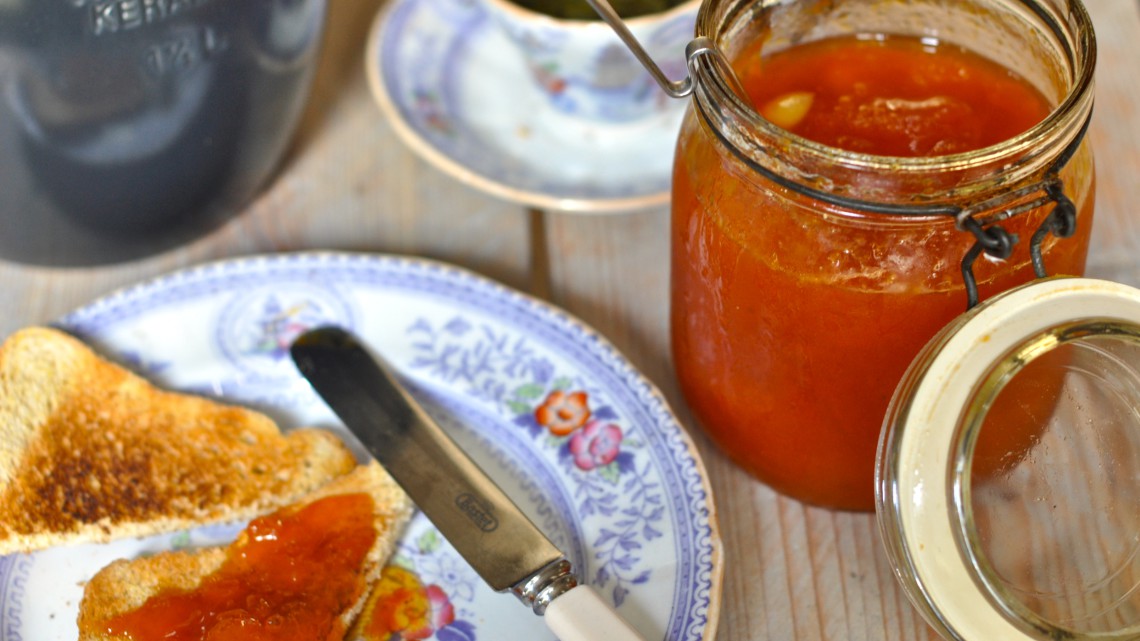
Apricot jam
Ingredients
1 kg fresh apricots
800 g sugar
juice of 1 lemon
Method
Rinse the apricots and dry them. Slice in half and remove the stones. Do not throw the stones away. Place the sugar with 250 ml water in a heavy-based pan. Heat the gently and stir until the sugar has dissolved. Bring to the boil until it reached 113° C on a sugar thermometer.
Add the apricots and lemon juice. Bring back to the boil. Skim off any scum which rises to the surface and cook, stirring often for about another 10 minutes. When the bubbles become larger and less in number and the apricots are translucent, check the consistency on a cold saucer or with a sugar thermometer (115° C).
In the meantime, place the apricot stones in a small pan with water and cook them until the skins loosen and that they can easily be removed. Drain off the water and peel off the skins.
Remove the pot from the heat and pour the jam into sterilised jars. Place the peeled stones on top of the jam and close the jars. Allow to cool and store in a cool, dark place. Once opened, be sure to keep in the refrigerator.
We, the Amsterdam Flavours chefs, hope you enjoy this recipe as much as we do. If you have any questions on how to prepare it or just want to send us your feedback, you can reach us here Contact Amsterdam Flavours
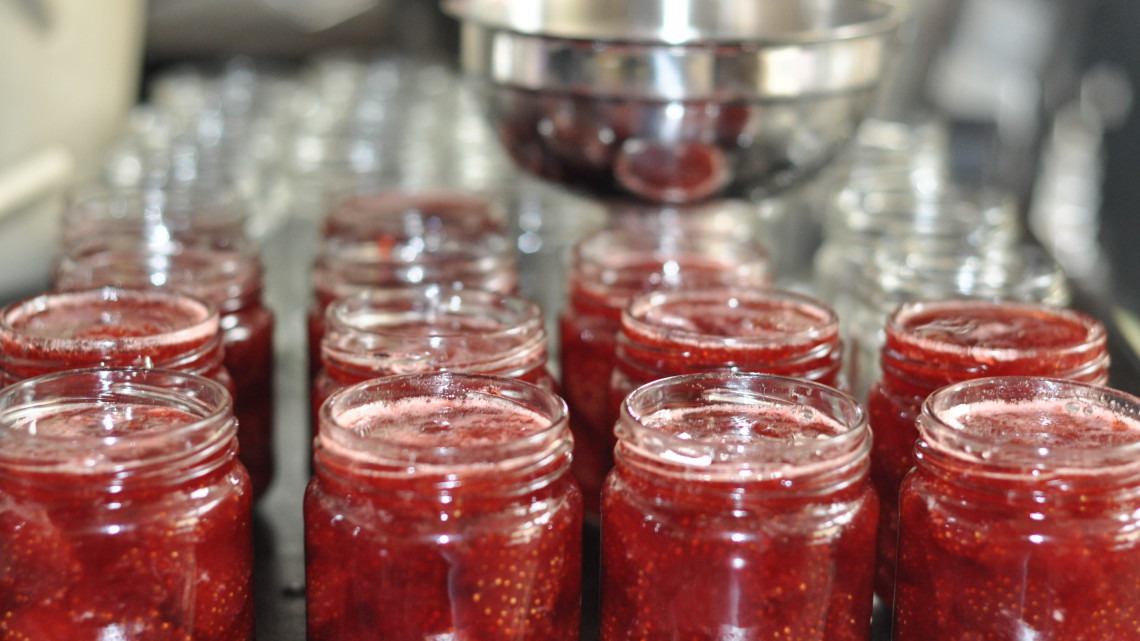
Strawberry and Basil Jam
Ingredients
1 kg fresh strawberries
800 g sugar
1 lemon
10 g basil
Method
Rinse the strawberries in a colander under cold running water. Cut away the green calyx and slice the strawberries in half. Place them in a heavy based pan.
Add the sugar and the juice of the lemon. Bring the mixture gently to the boil, making sure the sugar dissolves before the mixture boils. Once the it starts boiling, remove the strawberries with a slotted spoon and place in a bowl. Boil the sugary mixture until it reaches about 105° C on a sugar thermometer. If you don't have a thermometer, another way to test if the jam is ready is by placing a saucer in the freezer until cold. Spoon a little of jam on the saucer and return to the freezer until the jam is cold. Run a finger through the jam - if it hold itself and wrinkles, you know that it has reached the right temperature.
In the meantime, place a few jars in a 180° C oven until heated through and sterilized, about 10 minutes. Allow them to cool slightly.
Return the strawberries with the basil to the pan and bring to the boil. Taste to see if enough basil flavor has infused through. Remove the basil and ladle the jam into the jars. Seal with the lids and turn the jars upside down to cool. This helps with the air pocket and ensures good distribution of the fruit. Allow to cool completely before using.
The jam can be kept, unopened for at least 6 months. Refrigerate once opened. These also make fantastic gifts to give away to family and friends.
We, the Amsterdam Flavours chefs, hope you enjoy this recipe as much as we do. If you have any questions on how to prepare it or just want to send us your feedback, you can reach us here Contact Amsterdam Flavours
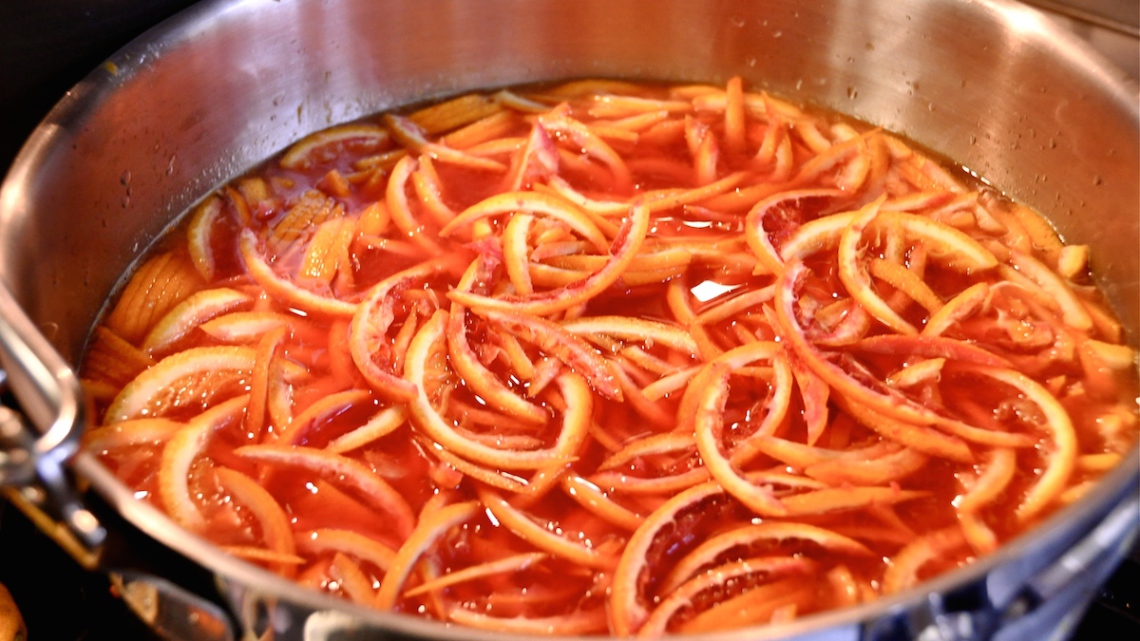
Blood Orange Marmalade
This is a recipe we have adapted from Delia Smith.
Makes about 6 x 350 ml jars
Ingredients
900 g blood oranges
1 lemon
1.8 kg granulated sugar
Method
Begin by measuring 2.25 litres water into a preserving pan, then cut the lemon and oranges in half and squeeze the juice out of them. Add the juice to the water and place the pips and any bits of pith that cling to the squeezer on a square of muslin.
Now cut the orange peel into quarters with a sharp knife, and then cut each quarter into thinnish shreds. As you cut, add the shreds to the water and any pips or spare pith you come across should go on to the muslin. The pith contains a lot of pectin so don't discard any and don't worry about any pith and skin that clings to the shreds – it all gets dissolved in the boiling.
Now tie the pips and pith up loosely in the muslin to form a little bag, and tie this on to the handle of the pan so that the bag is suspended in the water. Then bring the liquid up to simmering point and simmer gently, uncovered, for 2 hours or until the peel is completely soft (test a piece carefully by pressing it between your finger and thumb).
Meanwhile, chill a couple of saucers in the freezer.
Next, remove the bag of pips and leave it to cool on a saucer. Then pour the sugar into the pan and stir it now and then over a low heat, until all the crystals have dissolved (check this carefully, it's important). Now increase the heat to very high and squeeze the bag of pips over the pan to extract all of the sticky, jelly-like substance that contains the pectin. As you squeeze you'll see it ooze out. You can do this by placing the bag between two saucers or using your hands. Then stir or whisk it into the rest.
As soon as the mixture reaches a really fast boil, start timing. Then after 15 minutes spoon a little of the marmalade on to one of the cold saucers from the freezer and let it cool back in the fridge. You can tell – when it has cooled – if you have a 'set' by pushing the mixture with your little finger: if it has a really crinkly skin, it is set. If not, continue to boil the marmalade and give it the same test at about 10-minute intervals until it does set.
After that remove the pan from the heat (if there's a lot of scum, most of it can be dispersed by stirring in half a teaspoon of butter, and the rest can be spooned off). Leave the marmalade to settle for 20 minutes.
In the meantime, the jars should be washed, dried and heated in a moderate oven for 5 minutes. Pour the marmalade, with the aid of a funnel or a ladle, into the jars and seal while still hot.
Label when cold and store in a dry, cool, dark place.
We, the Amsterdam Flavours chefs, hope you enjoy this recipe as much as we do. If you have any questions on how to prepare it or just want to send us your feedback, you can reach us here Contact Amsterdam Flavours
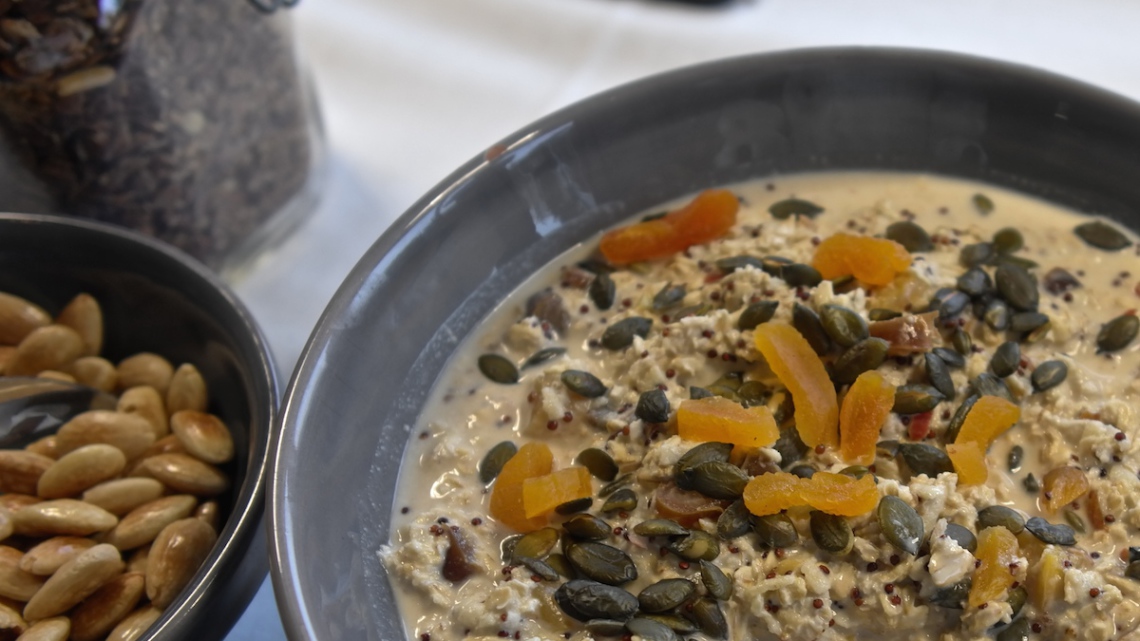
Bircher Muesli
If you want to enjoy this muesli for a delicious and healthy breakfast, you have to start it the night before.
Ingredients
250 g organic oats
30 g red quiona, toasted in a frying pan with a little sunflower oil
50 g dried apricots, chopped
50 g dates, pitted and chopped
500 ml -1 liter milk
250 g natural yoghurt
1-2 teaspoons ground cinnamon
1 tablespoon demarara sugar
1 large apple, grated
Method
Place the oats, quiona, chopped apricots, dates, cinnamon and sugar in a bowl. Add the milk and yoghurt and stir to combine.
Grate in the apple and mix it through immediately to prevent the apple from discolouring. Cover with cling wrap and place in the fridge overnight.
Before serving, give the muesli a good stir and add some extra milk to slacken it slightly. Serve in bowls with fresh berries, bananas, seeds or whatever else you like or have in the store cupboard.
We, the Amsterdam Flavours chefs, hope you enjoy this recipe as much as we do. If you have any questions on how to prepare it or just want to send us your feedback, you can reach us here Contact Amsterdam Flavours
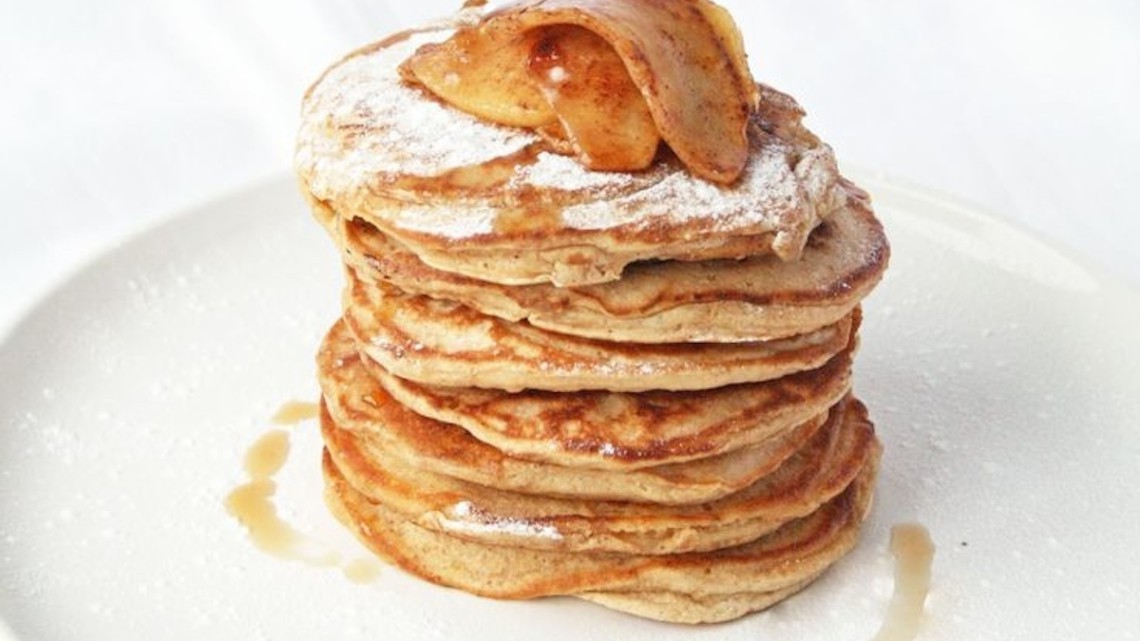
Apple Pancakes
Serves 4
Ingredients
for the pancakes
¾ cup milk (about 200 ml)
1½ tablespoons vinegar
1 cup flour
3 tablespoons sugar
1 teaspoon cinnamon
1 teaspoon baking powder
½ teaspoon bicarbonate of soda
½ teaspoon salt
1 egg
2 tablespoons oil
caramelized apples
2 tablespoon butter
2 apples, peeled, cored, and thinly sliced
2 tablespoons brown sugar
½ teaspoon cinnamon
⅓ cup maple syrup
Method
Whisk together the milk and vinegar and allow to rest for 5 minutes.
While the milk is curdling (the milk will literally start to separate. Don't be alarmed, this is supposed to happen!), whisk together the flour, sugar, baking powder, bicarbonate of soda and salt in a large bowl. Whisk egg and oil into milk. Add the wet ingredients to dry ingredients and stir until combined (don't over-mix, it should still have some lumps).
Heat a non-stick frying pan over medium heat and grease with some sunflower oil. Pour large spoonfuls of the batter into the pan. Cook about 2 minutes until bubbles form and the edges start to look "dry". Use a spatula to flip the pancakes and cook another 1-2 minutes on the other side. Set the pancakes aside and repeat with remaining batter.
Using the same pan, add the butter, apples, brown sugar and cinnamon. Stir over medium heat 3-5 minutes until apples are tender. Add the maple syrup. Serve the apples over the warm pancakes.
We, the Amsterdam Flavours chefs, hope you enjoy this recipe as much as we do. If you have any questions on how to prepare it or just want to send us your feedback, you can reach us here Contact Amsterdam Flavours
Morgan & Mees
Morgan & Mees is a brand new hotel and restaurant situated in a completely renovated historical building in Amsterdam West. The interior matches the characteristics of the monumental building, but with a modern twist. With an elegant timeless look and an eye for detail Morgan & Mees is a stylised hotel for international travellers and locals.
The bar, restaurant and hotel are tastefully designed, classical, yet modern at the same time.
The restaurant menu is brasserie inspired with very accessible dishes. In the evenings, the bar is really popular and even standing space is hard to find.
In the short time they've been open, Morgan & Mees has gained quite a following and they are certainly a valuable addition to the area.
For more information, please visit Morgan & Mees.
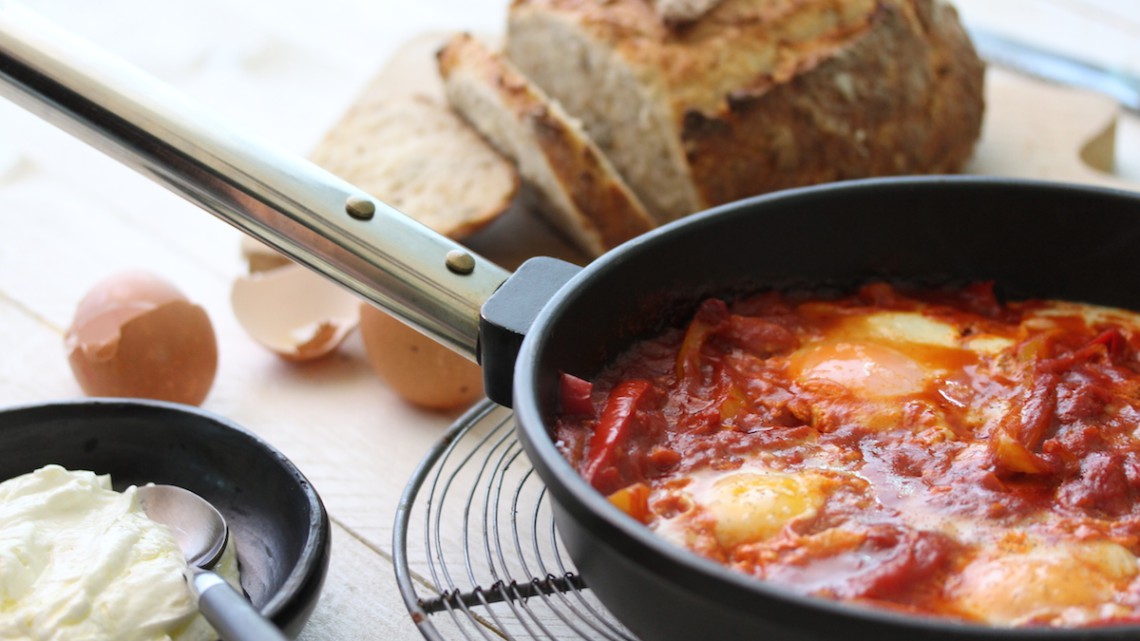
Shakshuka
Shakshuka is an Israeli breakfast dish consisting of eggs poached in a sauce of peppers and tomato. In recent years it has become more famous and found it's way into many new restaurants and cafes around the world. Here's how to make it yourself.
Serves 2
Ingredients
olive oil
1 teaspoon harissa paste
1 onion
1 red pepper
1 yellow red pepper
2 cloves garlic
1 tin tomatoes
4 eggs
1/4 teaspoon ground cumin
1/4 teaspoon smoked paprika
salt
pepper
4 tablespoons Greek yoghurt, to serve
coriander or parsley leaves to serve, optional
crispy bread or pita's, to serve
Method
Slice the onion and peppers into thin strips and finely chop the garlic.
Heat a frying pan over medium heat with 3 tablespoons olive oil. Fry the peppers and onions for about 10 minutes, adding the garlic for the last minute. Add the harissa, cumin and smoked paprika powder to the pan and fry for a further 3 minutes.
Add the tin of tomatoes, salt, pepper and 100 ml water to the pan. Bring to a boil and simmer gently for 10 minutes.
Make 4 ‘wells’ in the sauce. Gently crack the eggs into the wells. Place a lid over the pan and cook over medium heat for about 8-10 minutes until the egg whites have set and the yolks are still soft. Swirl the egg white through the sauce using a fork so that it sets quicker, if you wish. Season with salt and pepper.
Place the Greek yoghurt in small bowl and drizzle with 1 tablespoon olive oil.
Divide the sauce and eggs between 2 plates. Serve with the Greek yoghurt. Delicious served with fresh bread or pita.
We, the Amsterdam Flavours chefs, hope you enjoy this recipe as much as we do. If you have any questions on how to prepare it or just want to send us your feedback, you can reach us here Contact Amsterdam Flavours
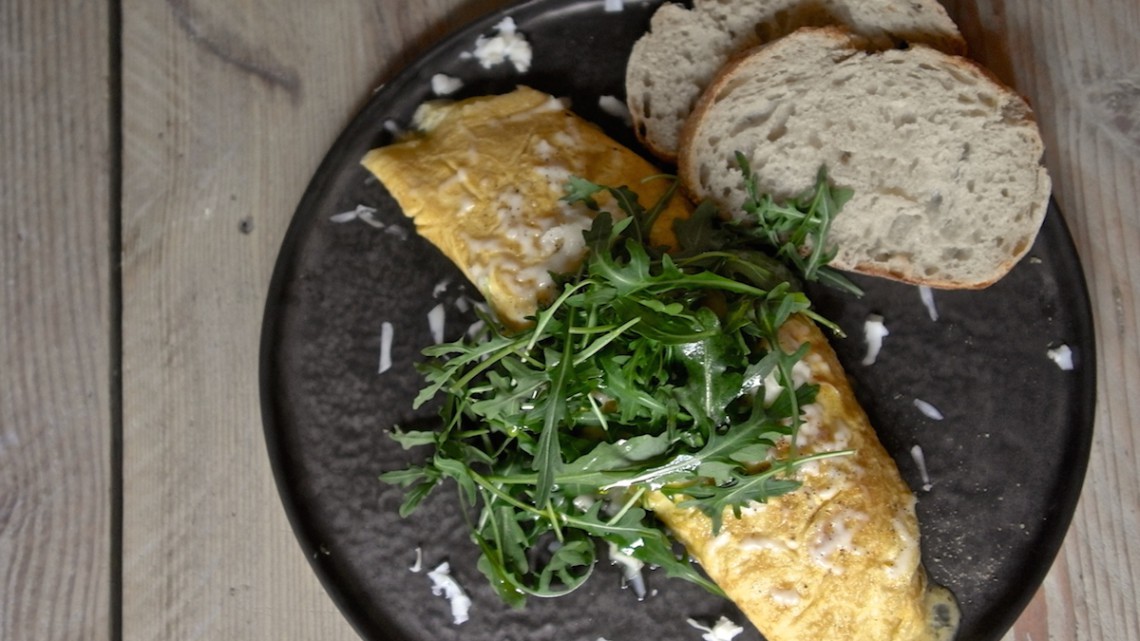
The Perfect Cheese Omelette
A prefect omelette is easy to achieve and makes for a perfect lunch or light meal. Here's our way to do it.
Serves 2
Ingredients
6 free range or organic eggs
salt and pepper
about 50 g goats or truffle cheese, grated
butter
bread, to serve
salad, to serve
Method
Crack the eggs into a bowl and whisk to combine. Season with salt and pepper. Heat a good non-stick frying pan over medium heat with a knob of butter.
Once the butter begins to foam, pour in the beaten eggs. As the egg begins to set on the base, pull it from the outer part to the center with a spatula. That way you ensure that the omelette will be light, blonde in colour and still be soft (or baveuse) in the centre. Now is the time to add the grated cheese, leaving some back to sprinkle over at the end. Reduce the heat at this point if you feel it's cooking too fast.
With the spatula, fold over a small section of the omelette, tilting the pan as you do, so that the omelette folds over itself, becoming neat and folded in the corner of the pan. Grab your serving plate in one hand and the frying pan in the other and carefully, but with confidence, turn the omelette on to the plate. Sprinkle with the remaining cheese and serve with salad of your choice dressed with a little olive oil and some delicious bread.
We, the Amsterdam Flavours chefs, hope you enjoy this recipe as much as we do. If you have any questions on how to prepare it or just want to send us your feedback, you can reach us here Contact Amsterdam Flavours
