


Lemon verbena
Lemon verbena has a bright, slightly sweet, herbaceous flavour with a distinct hint of lemon. Despite its strong lemon scent, this citrusy herb has a far less aggressive lemon flavor than lemon balm, lemon thyme, lemon mint, and lemongrass.
This lemon-scented herb has a number of culinary uses ranging from rich roasts to sweet citrusy desserts and jams. Lemon verbena can be used to make flavourful olive oil-based salad dressings, subtle lemon ice cream, and lemon verbena jelly, as well as season poultry dishes, salsa verde, and soups. It can be used in place of lemon zest or dried lemon as a more subtle addition to dishes, or infused into pantry ingredients like sugar and vinegar.
In Europe and other global destinations, tea lovers combine lemon verbena leaves with hot water to create a popular herbal tea known as Louisa in England, “te de cedron” in Mexican kitchens, and Luiza in Greek households. This kind of tea is also popular among French, Spanish, and Italian drinkers. Lemon verbena can also be used to make a flavorful iced tea or lemonade made with fresh lemon juice, lemon verbena, simple syrup, and mint leaves.
Lemon verbena tea made with fresh lemon verbena leaves and boiling water is commonly used to relieve the symptoms of colds including chills, fever, and congestion. Lemon verbena essential oil is also used topically to relieve muscle pain.

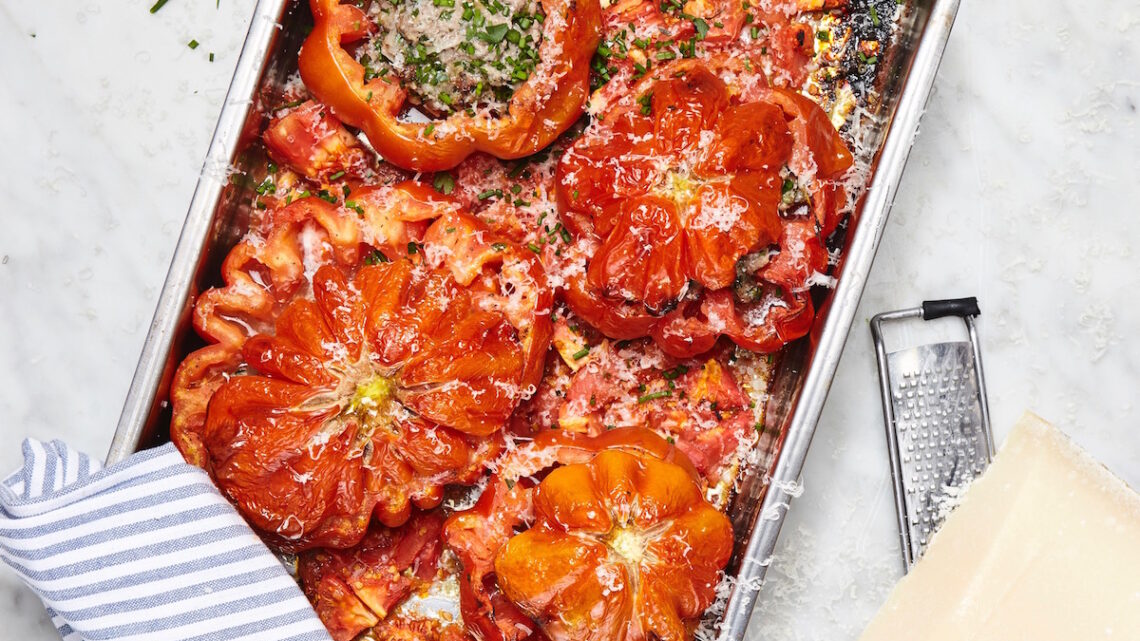
Stuffed Tomatoes
Tomatoes are incredibly versatile and are at the best towards the end of summer when they have had time to absorb the sun's rays and become beautifully ripe and flavourful.
English
serves 2
Ingredients
4 beef steak tomatoes
1 shallot
1 clove garlic
20g panko
3 sprigs thyme
1 small bunch chives
400g minced veal
1 small bunch flat leaf parsley
50g grated Parmesan
4 tablespoons olive oil
salt and pepper
Method
Preheat an oven to 210°C. Finely chop the shallot and garlic. Heat a frying pan with 1 tablespoon olive oil and sweat the shallot for 2 minutes. Add the garlic and fry for a further 1 minute.
Slice off the top of the tomatoes (this is the lid) and set aside. Scoop out the flesh and finely chop.
Finely chop the chives and parsley. Pick the thyme leaves from the stalks. In a bowl mix the shallot, garlic, panko, thyme and half the chives and parsley with the minced veal and season with salt and pepper. Fill the tomatoes with the meat mixture.
Place the chopped tomato flesh in a roasting dish and place the tomatoes on top. Replace the lids on the already stuffed tomatoes and bake in the oven for 20 – 30 minutes.
Remove the tomatoes from the oven and sprinkle over the grated Parmesan, parsley and chives and serve.
Nederlands
voor 2 personen
Ingrediënten
4 coeur de boeuf tomaten
1 sjalotje
1 teentje knoflook
20gr panko
3 takjes tijm
1 bosje bieslook
400gr kalfsgehakt
1 bosje bladpeterselie
50gr geraspte Parmezaan
4 eetlepels olijfolie
zout en peper
Bereiding
Verwarm de oven voor op 210 C. Snijd knoflookteentje en sjalotje fijn. Verwarm een koekenpannetje met 1 eetlepel olijfolie en smoor hierin het sjalotje 2 minuten en voeg dan knoflook toe voor nog eens 1 minuut.
Snijd het kapje van de tomaten af en zet opzij. Haal het vruchtvlees uit de tomaten en hak het fijn.
Hak de bieslook en peterselie fijn. Pluk de blaadjes van de takjes tijm. Meng de sjalot, knoflook, panko, tijm, de ½ van de bieslook en peterselie door het gehakt in een kom. Breng op smaak met zout en peper.
Doe het vruchtvlees in de ovenschaal en zet de tomaten er bovenop. Zet de deksels van de tomaten op de gevulde tomaten en zet de schaal in de oven voor 20-30 minuten.
Haal de tomaten uit de oven en rasp er Parmezaan overheen. Verdeel ze over 2 borden.
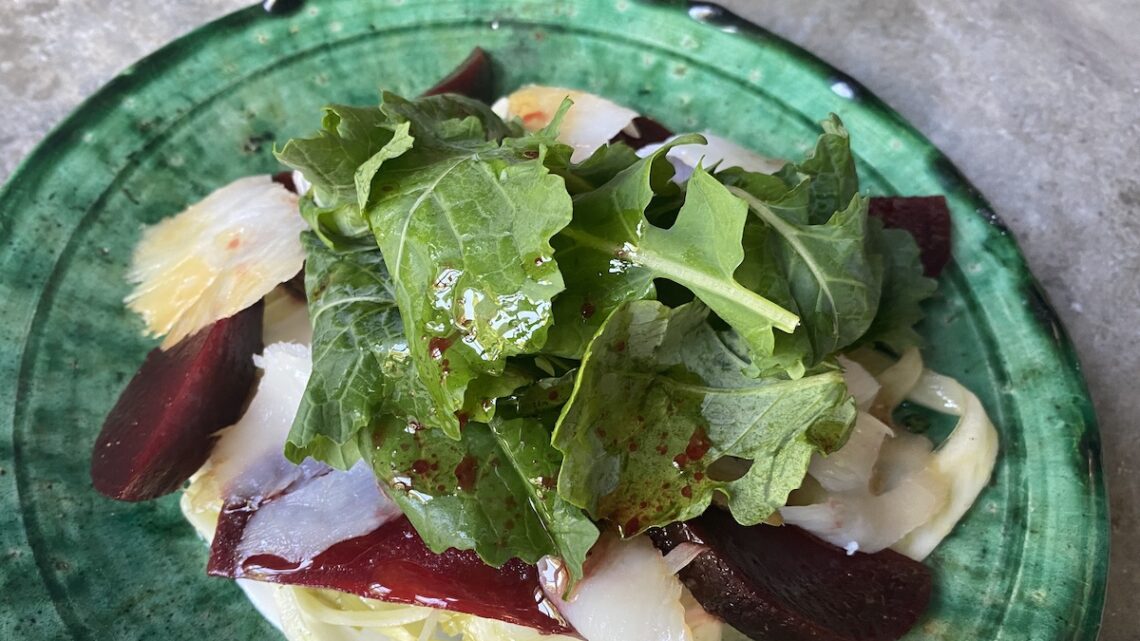
Light summer salad
As a light lunch for 3 or for 4 as starter
Ingredients
500g cooked organic beetroot
1 tablespoon sherry vinegar
50g curly kale leaves
70ml creme fraiche
2 teaspoons prepared horseradish
1 fennel bulb
100g sliced smoked halibut
1 lemon
4 tablespoons extra virgin olive oil
salt and pepper
Method
Cut the beetroot into thin segments and place in a bowl. Add 1 tablespoon sherry vinegar, 2 tablespoons olive oil, salt and pepper and leave to marinate.
Shave the fennel thinly on a mandolin or with a sharp knife and place in a bowl. Add 2 tablespoons olive oil, lemon juice to taste, salt and pepper. Leave this too to marinate.
Mix the creme fraiche with the horseradish, salt and pepper and set aside.
To serve, spoon some of the horseradish creme fraiche on the base of each plate. Top with the shaved fennel, followed by the beetroot.
Drape pieces of the smoked halibut around and top with the curly kale leaves. Drizzle over the dressing left from marinating the beetroot and serve.
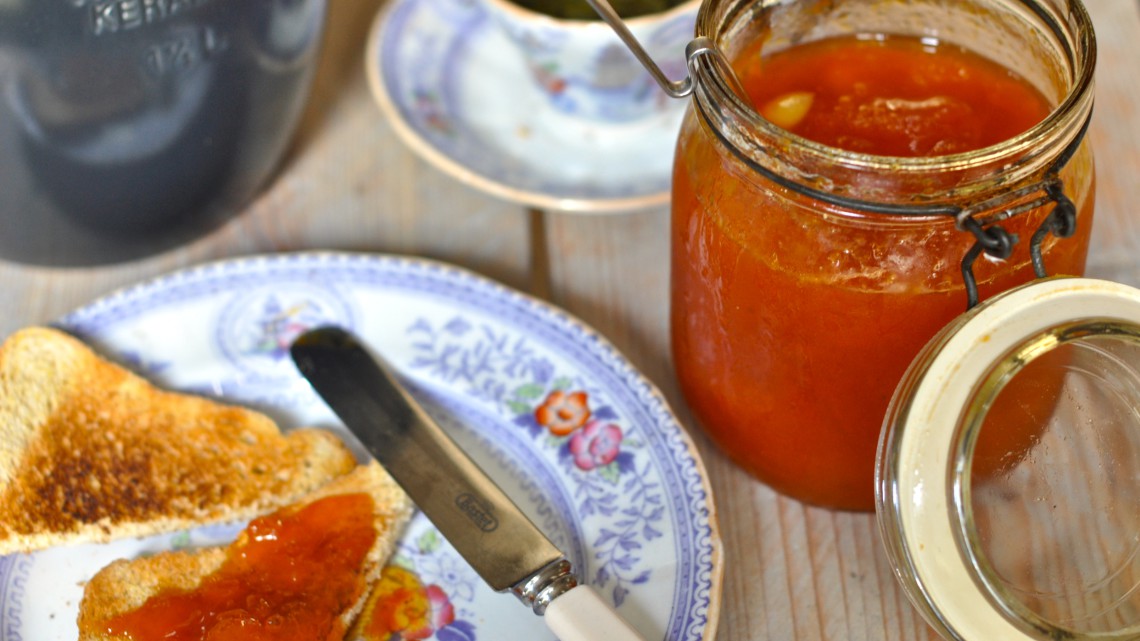
Apricot jam
Ingredients
1 kg fresh apricots
800 g sugar
juice of 1 lemon
Method
Rinse the apricots and dry them. Slice in half and remove the stones. Do not throw the stones away. Place the sugar with 250 ml water in a heavy-based pan. Heat the gently and stir until the sugar has dissolved. Bring to the boil until it reached 113° C on a sugar thermometer.
Add the apricots and lemon juice. Bring back to the boil. Skim off any scum which rises to the surface and cook, stirring often for about another 10 minutes. When the bubbles become larger and less in number and the apricots are translucent, check the consistency on a cold saucer or with a sugar thermometer (115° C).
In the meantime, place the apricot stones in a small pan with water and cook them until the skins loosen and that they can easily be removed. Drain off the water and peel off the skins.
Remove the pot from the heat and pour the jam into sterilised jars. Place the peeled stones on top of the jam and close the jars. Allow to cool and store in a cool, dark place. Once opened, be sure to keep in the refrigerator.
We, the Amsterdam Flavours chefs, hope you enjoy this recipe as much as we do. If you have any questions on how to prepare it or just want to send us your feedback, you can reach us here Contact Amsterdam Flavours
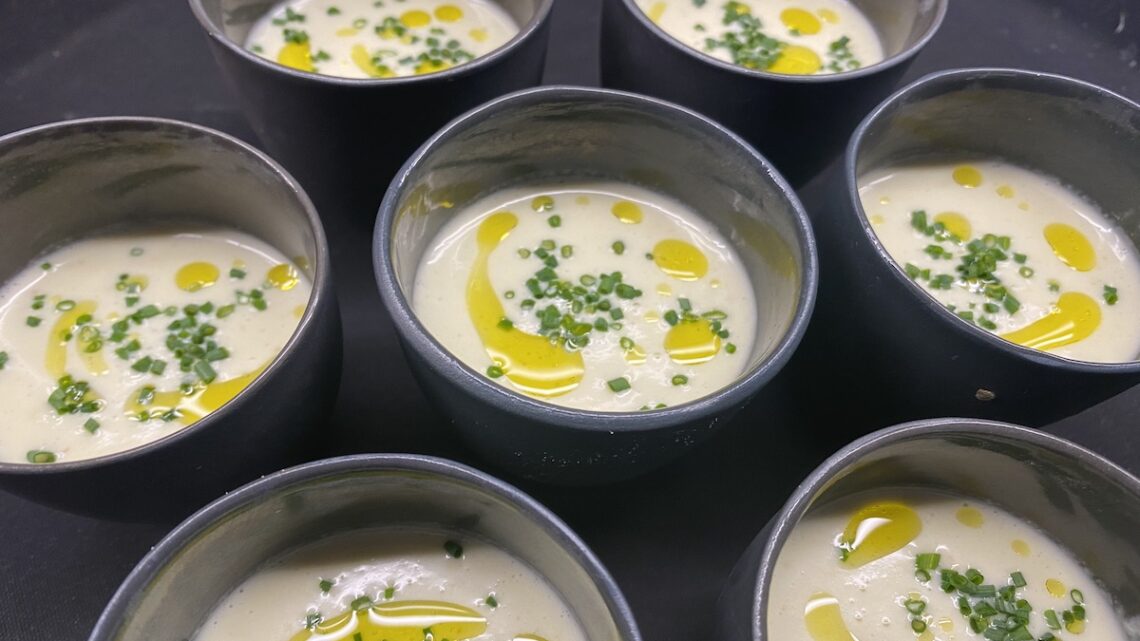
White Gazpacho
An unusual version of the traditional Gazpacho made using bread, garlic, almonds and grapes. It has an amazing creaminess and sweet and sour flavour. Serve as a small shot before lunch or dinner.
Serves 8 in shot glasses
Ingredients
2 cups cubed stale white bread from a baguette or sliced bread (crusts removed)
375ml cold water, divided
1/3 cup whole, blanched almonds
1 clove garlic
2 tablespoons chopped shallot
2 cups diced, peeled English cucumber (about 1 large cucumber)
3/4 cups green grapes
2 tablespoons extra-virgin olive oil
3 1/2 teaspoons sherry vinegar
1 teaspoon salt
Chives for garnish (optional)
Method
Place the bread cubes in a bowl and pour 1/2 cup water on top to soften them.
Place the almonds and garlic in a blender and purée until finely ground. Add the shallot, cucumber, grapes, oil, vinegar, salt, and softened bread to the blender along with the remaining 1 cup water. Purée until smooth. Taste and adjust salt as needed. Add more water to the soup as needed to achieve desired consistency. Serve at room temperature or chilled. Serve in bowls or glasses and garnish with sliced grapes, almonds, and chives, if desired.
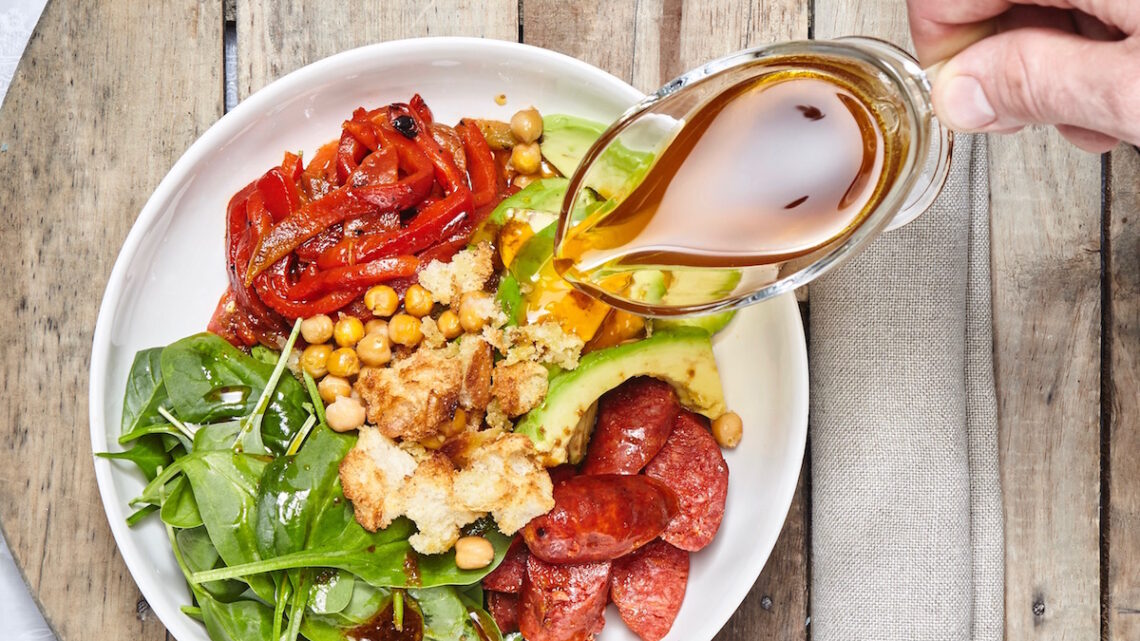
Chorizo, Avocado and Roasted Pepper Bowl
A great use of summer Spanish flavours in a healthy and spicy bowl.
English
Serves 3
Ingredients
3 fresh chorizo sausages
3 red peppers
3 tablespoons sherry vinegar
2 ripe avocado’s
1 lemon
1 ciabatta roll
1 tin chickpeas
125g baby spinach leaves
7 tablespoons olive oil
salt and pepper
Method
Preheat an oven to 200°C. Rinse the peppers and place on an oven tray. Drizzle with 2 tablespoon olive oil and roast in the oven until the skins are black, about 20 minutes. Alternatively, place the peppers over an open gas flame until blackened. Place the peppers in a bowl and cover with plastic wrap. Leave to stand until slightly cooled so the skins peel off easier.
Break the ciabatta into chunky pieces and drain the liquid from the chickpeas. Place both on an oven tray and drizzle with 3 tablespoons olive oil, salt and pepper. Roast in the oven for about 10 minutes.
Heat a frying pan over medium heat with 2 tablespoons olive oil and fry the chorizo sausages until golden brown, about 12 minutes. Peel the peppers, remove the seeds and cut into thin strips.
Add the sherry vinegar to the pan with sausages and allow to reduce slightly. Remove the sausages from the pan and cut into diagonal slices. Halve and peel the avocado’s and cut into thin slices.
In a bowl, mix together 2 tablespoons olive oil, 1 tablespoon lemon juice, 1 teaspoon lemon zest and the reduced vinegar from the pan. Place some baby spinach leaves into a serving bowl and spoon avocado and peppers next to the spinach. Add the chorizo and chickpea-ciabatta crumb to the bowl and spoon over the dressing.
Nederlands
voor 3 personen
Ingrediënten
3 stuks verse chorizo worstjes
3 rode paprika
3 eetlepels sherryazijn
2 rijpe avocado’s
1 citroen
1 ciabatta broodje
1 blikje kikkererwten
125g baby spinazieblaadjes
7 eetlepel olijfolie
zout en peper
Bereiding
Verwarm een oven voor op 220°C. Spoel de paprika’s af en leg ze op een bakplaat. Besprenkel met 2 eetlepels olijfolie en rooster ze in de oven totdat de schil zwart is in ongeveer 20 minuten, of leg ze op een vlam van gasfornuis totdat ze zwart worden. Doe de paprika’s in een kom, dek af met plasticfolie en laat enkele minuten staan.
Breek de ciabbata in grove stukjes en giet het water van de kikkererwten af. Leg beide ingrediënten op een bakblik en besprenkel ze met 3 eetlepels olijfolie, zout en peper. Zet het blik in de oven voor ongeveer 10 minuten.
Verwarm een koekenpan met 2 eetlepels olijfolie en bak de chorizoworstjes hierin goudbruin, ongeveer 12 minuten. Schil de paprika’s, haal de zaadjes eruit en snijd ze in dunne reepjes.
Voeg de sherryazijn toe aan de pan met de worstjes en kook licht in. Haal de worstjes uit de pan en snijd ze in schuine plakjes. Haal de schil van de avocado en snijd in dunne plakjes.
Meng in een kom 2 eetlepels olijfolie, 1 eetlepel citroensap, 1 theelepel citroenrasp en de ingekookte azijn uit de pan. Leg wat bladspinazie in de kom, lepel wat avocado en paprika naast de spinazie, leg daarnaast wat chorizoworstjes en daarnaast wat kikkererwten en ciabatta. Lepel de dressing er overheen.
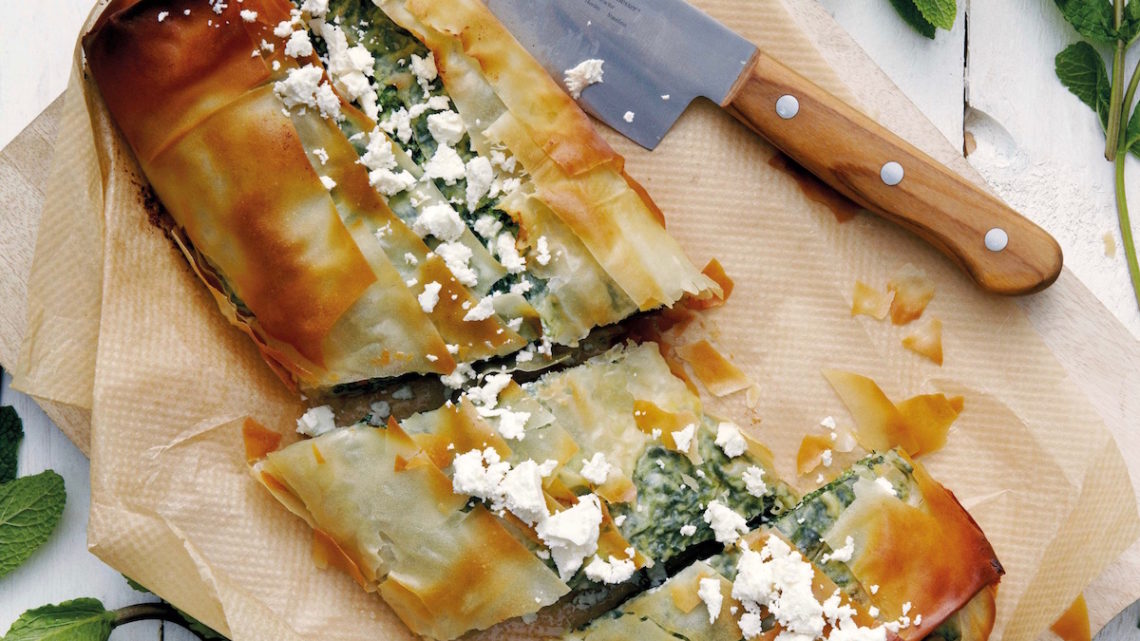
Spinach and Feta Strudel
A strudel is often associated with the famous apple strudel. Here is a savoury version made with the classic Greek flavours of spinach and feta. Ideal for lunch on a warm day.
English
Serves 2
Ingredients
1 roll filo pastry
50g butter
500g spinach
250g ricotta
2 eggs
25g grated Parmesan
1 small bunch mint
75g feta
2 tablespoons olive oil
salt and pepper
Method
Preheat the oven to 180° C. Heat a frying pan over medium heat with 2 tablespoons olive oil. Add the spinach and cook until wilted. Season with salt and pepper and drain well in a colander, pressing as much of the moisture out as you can.
Finely chop the spinach and the mint, add to a bowl with the ricotta, eggs, Parmesan, salt and pepper. Mix the ingredients well and crumble ¾ of the feta through the mixture.
Melt the butter in a small pan (this can also be done in a microwave). Brush 6 sheets of filo pastry with the melted butter, laying each sheet on top of the other.
Spoon the filling in the centre of the filo pastry. Fold the ends towards the centre to form a closed package.
Lay the strudel on a baking tray and bake in the oven for 25-30 minutes.
Remove the strudel from the oven, cut on the diagonal and serve sprinkled with the remaining feta.
Nederlands
voor 2 personen
Ingrediënten
1 rol filodeeg
50g boter
500g spinazie
250g ricotta
2 eieren
25g geraspte Parmezaan
1 bosje munt
75g feta
2 eetlepels olijfolie
zout en peper
Bereiding
Verwarm de oven voor op 180° C. Verwarm een koekenpan op medium vuur met 2 eetlepels olijfolie. Voeg de spinazie toe en bak totdat het geslonken is. Breng op smaak met zout en peper. Doe de spinazie in een vergiet en druk er zoveel mogelijk water uit.
Hak de spinazie en munt fijn, doe het in een kom met de ricotta, eieren, Parmezaan, zout en peper. Meng alle ingrediënten goed door elkaar. Kruimel ¾ van de feta er doorheen.
Smelt de boter in een pannetje (dit kan ook in de magnetron gedaan worden). Bestrijk 6 filodeeg vellen met de boter en leg ze op elkaar.
Leg de vulling in het midden van de deeg. Vouw de zijkanten naar binnen, zodat het een dicht pakketje wordt.
Leg de rol op een bakplaat en bak 25-30 minuten.
Haal de strudel uit de oven, snijd schuin in stukken, kruimel het resterend stukje feta er overheen.
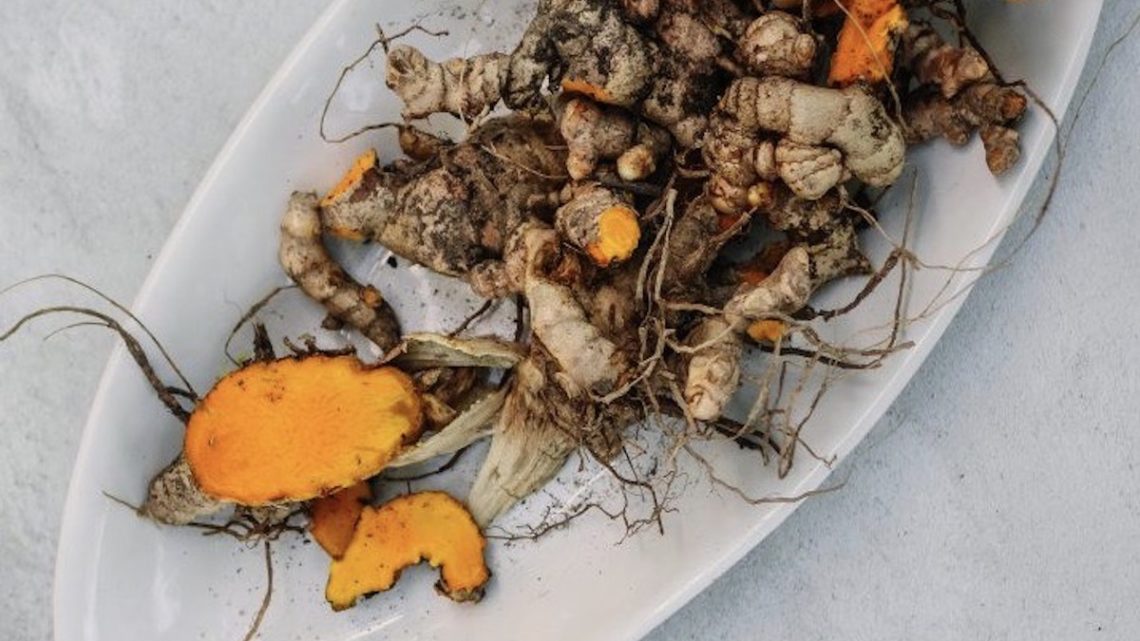
turmeric
Though having only recently entered the mainstream as the ingredient of the moment, turmeric – or Curcuma longa as it’s known by its biological name – has been used for millennia everywhere from China and India to Jamaica and West Africa. While it’s likely that just about every bite of curry you’ve tasted in your lifetime contains turmeric, there is archaeological evidence indicating its use over 4 500 years ago. It has also long been used as a sacred root for body embellishment during cultural ceremonies. The Hindu tradition of Haldi, for example, sees the bride and groom having a tincture of oil, water and turmeric applied to their bodies as a blessing before their wedding.
Other than its gastronomical and religious uses, turmeric was grown and harvested as a natural textile dye – for centuries the distinctive yellow of Buddhist robes got their colour from turmeric. In contemporary fashion circles, one of the world’s largest fashion dye houses, Tintoria di Quaregna in Italy, has made headlines for its return to plant-based formulas with turmeric featuring prominently. Hip cosmetics brands such as NARS, Kiehl’s and Urban Decay have also been inspired by turmeric’s ancient cultural use as a beauty aid (it’s said to get skin glowing) and incorporated it into everything from make-up and foundation to face masks and moisturisers.
And then there is the evidence-based healing and health properties of turmeric, long used in the practice of natural medicine – in particular Ayurveda, the Indian system of holistic healing. Curcumin, the compound responsible for turmeric’s vivid colour, is known to have potent antioxidant, anti-inflammatory and anti-bacterial properties. This is a plant that packs a lot of punch!
HOW TO USE TURMERIC
Turmeric is on-trend, versatile, mild and earthy.
- Concoct a warm tea or iced tea with thinly sliced fresh turmeric and ginger, sweeten with honey.
- Make your favourite curry paste using turmeric and coconut oil. Store in a jar in the refrigerator and use in a sauce or when you make chicken, prawn or any other curry
- Add a bit of grated turmeric and cardamom to hot chocolate for a mild earthy flavour.
- For a pick-me-up a wellness shot mix grated turmeric, ginger and freshly squeezed orange juice. Add a little cayenne pepper at the end. Fresh mango or pineapple juice works just as well.
- Mix turmeric and paprika and sprinkle over cauliflower florets. Season with salt and pepper and a drizzle of olive oil and lemon juice. Roast in the oven at 180 degrees in the oven on a tray until golden brown. You can do the same with butternut or pumpkin.
- Add to carrot, pumpkin, corn or sweet potato soup.
- Spice up breakfast by adding a teaspoon or two of freshly grated turmeric to your flapjacks recipe. Serve with ginger honey.
- Garnish your favourite cocktail with a ribbon of fresh turmeric just before serving and watch the colour change. Magic.
- Add a bit of turmeric for your Asian style broth or any mash such as potato, sweet potato, pumpkin or carrot and potato.
GROWING TURMERIC
- Turmeric is a fast grower, shooting new growth from the tubers in early summer. They can quickly grow up to two metres within a few weeks.
- Turmeric is easy to grow during the warm summer months when plants will need regular watering. Grow tubers in pots with a fertile compost mix that drains well. Tubers should be kept dry when they are dormant.
- We love turmeric because it’s such an easy grower. The leaves are very attractive but it’s the flowers that are the real show-stoppers. They’re like hidden gems between tall, lush growth.
- It’s a little known fact, but the flowers also taste good!
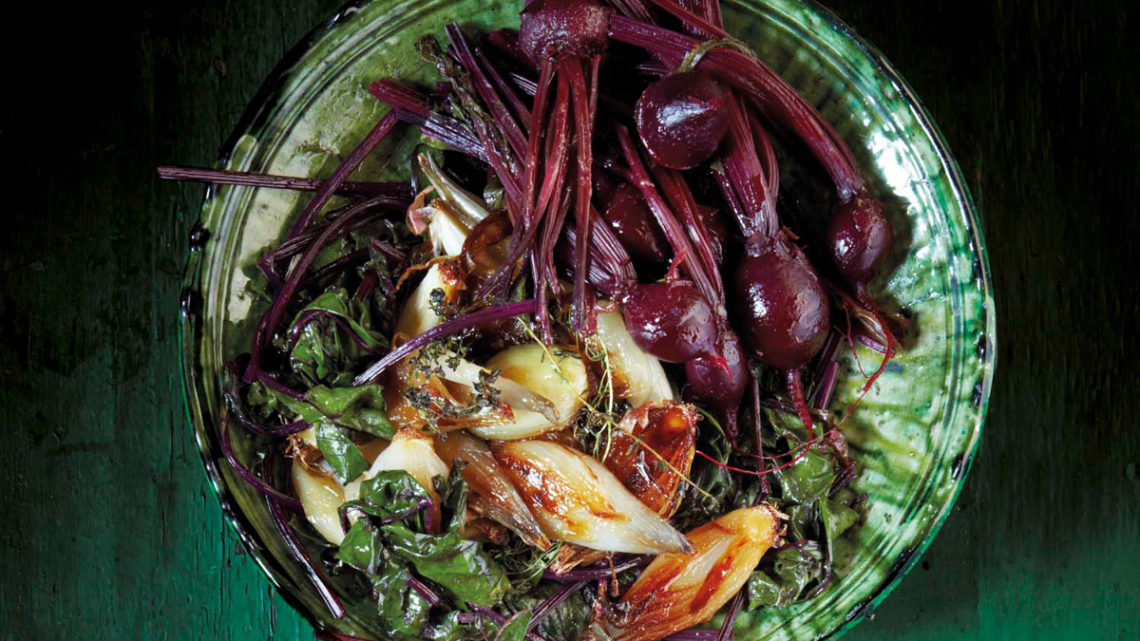
Beetroot
Beetroot, freshly harvested, are super-sweet, ready to eat after boiling for a much shorter time and just delicious without anything added. The balance of the sweetness and almost liquorice lingering aftertaste is amazing.
This is a two-in-one vegetable because the young leaves and the root are both edible. In the old days, beetroot was quite ordinary – cooked and served as a salad with sweet vinegar, or commercially pickled, causing everything else on the plate to turn red.
Nowadays, however, the humble beetroot has reinvented itself. It’s trendy for good reason: its health benefits are numerous (beetroot is a rich source of nutrients), and its versatility makes it ideal for use in all types of cuisine. Different varieties of beetroot now being cultivated are still finding their way into the market. Even the young leaves can be steamed or boiled – they have the taste and texture of spinach.
BEETROOT FOR BREAKFAST
- in a fresh juice with ginger and fresh apple
- in a beetroot soufflé with melting Gorgonzola
- scrambled eggs on toast with beetroot chutney
BEETROOT IN A SALAD
- cook with roasted butternut and toasted pumpkin seeds; serve with a cinnamon and balsamic reduction dressing
- cook and slice with pitted fresh cherries, raspberries, sliced baby radish and red basil; toss with walnuts and a walnut dressing
- cook and grate over a potato salad with a mustard and lemon vinaigrette
- top julienned fresh carrots with fresh julienned beetroot and thinly sliced shallots; serve with an orange and dill dressing with grated orange rind
- cook and top with rocket and an anchovy dressing
BEETROOT FOR LUNCH OR DINNER
- cook and bake in a quiche with prosciutto, Parmesan and caperberries
- cook and peel whole beetroot while still warm; serve with Boursin, toasted pine nuts and pomegranate syrup, seasoned with salt and freshly cracked black pepper
- cook or pickle as part of a beef or ostrich burger with a generous dollop of beetroot and onion chutney
- top a carpaccio of raw beetroot with lightly smoked grilled trout; serve with a horseradish dressing and warm crusty bread
- slice beetroot on a toasted baguette with ham and melting Brie; top with a beetroot pickle
- as a warm creamy soup with lightly smoked mussels
- in a risotto with star anise and shaved Parmesan
- as part of a vegetarian lasagne, using only cooked sliced beetroot and steamed beet greens with sautéed red onion and béchamel sauce; top with Gorgonzola and Parmesan
- roast and serve with seared duck breast and a ground coriander and orange sauce
PINK BAKING AND COOKING WITH BEETROOT
- add beetroot coulis to your favourite cheesecake recipe
- add grated beetroot to your rich chocolate cake to keep the cake moist and give a dark red colour
- add a little beetroot juice to icing for a pink colour
- add a little beetroot juice when melting white chocolate for drizzling over cake or any baked goods
- add beetroot juice to waffle mixture to make pink waffles
- add a little beetroot juice to cooked rice
- enhance any red or pink colour with beetroot juice instead of food colourant
BEETROOT IS BEST WITH:
PROTEIN: anchovies / bacon, prosciutto, salted pork / smoked fish, trout / venison
PRODUCE: apples / cherries / pears / raspberries / lemons / oranges / cucumber / ginger / horseradish / onions / shallots / potatoes / rocket
HERBS AND SPICES: allspice / star anise / cloves / curry / cumin / mustard seeds / chives / mint / dill / nutmeg / curry leaves / parsley / tarragon / watercress / radicchio
CONDIMENTS: mustard / vinaigrette / balsamic vinegar / sherry and red wine vinegar / walnut oil / brown sugar / balsamic reduction
DAIRY: butter / cream / crème fraîche / sour cream / Parmesan / Boursin / cheddar / ricotta
NUTS: walnuts
TIP: ABOUT THOSE BEETROOT STAINS…
Beetroot is a water-soluble dye; using hot water will react as a fixative for stronger colour. Use cold water and rub your hands with salt and lemon juice to remove stains on your skin. For stains on fabric, rub raw pear on the mark before washing in cold water. Then wash with soap.
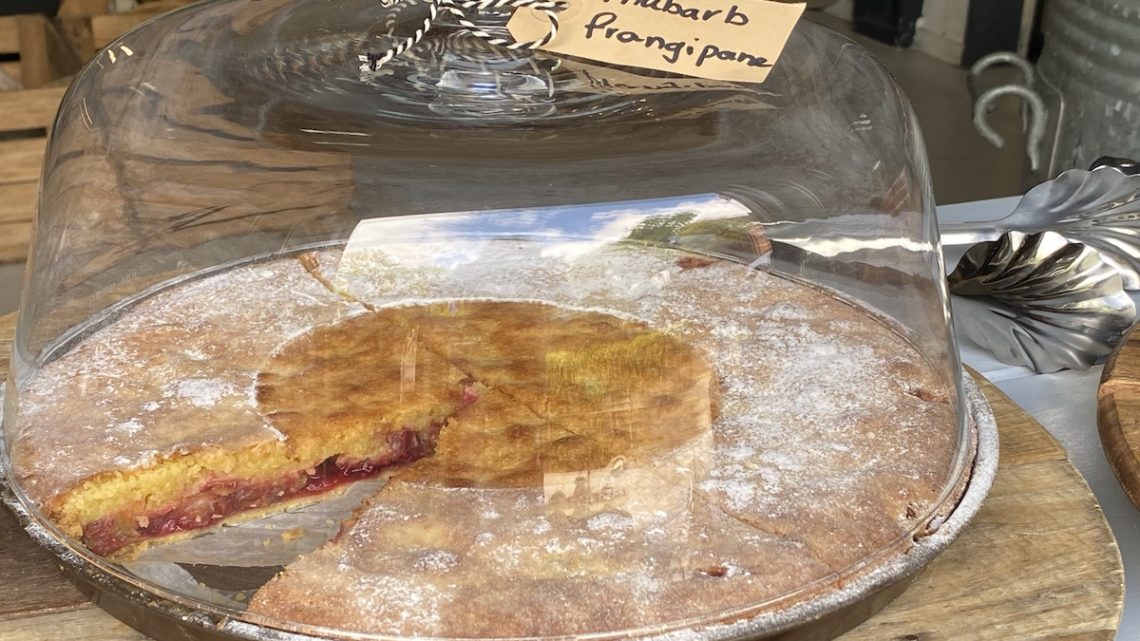
Frangipane with rhubarb
Ingredients
Pastry
350 g flour
225 g butter
100 g powdered sugar
75 g egg yolks (± 3 egg yolks)
salt
Filling
225 g butter
225 g caster sugar
175 g ground almonds
50 g flour
4 eggs
3 tablespoons raspberry jam
1 kg rhubarb
demarara sugar, to taste
2 tablespoons grenadine
icing sugar, for dusting
Method
To make the dough, place the flour, powdered sugar and salt in a large bowl. Make a well in the middle and add the butter and egg yolks. Knead the butter and eggs to combine and then gradually incorporate the flour. If the pastry seems too dry, add extra egg yolk or a little cold water. Knead the pastry gently until soft but not sticky. Cover with plastic and place in the refrigerator for 30 minutes.
Roll the pastry out on a lightly floured surface to a thickness of 5 mm to line a tart tin of 20 cm in diameter.
Allow the pastry case to rest in the fridge for about an hour so that it won’t shrink on baking. Bake the pastry case blind – line the with a piece of baking paper or aluminium foil and fill with dried beans or rice. Place in preheated oven at 180°C for about 15 minutes or until the pastry is cooked. Remove the beans and paper or foil. Brush the pastry with an egg yolk return to the oven for another 5 minutes or until the pastry is golden.
Cut the rhubarb into 1 cm pieces, place on a roasting tray and sprinkle with demarara sugar to taste and 2 tablespoons grenadine. Roast at 200C for 10 minutes. Allow to cool.
To make the frangipane, beat the butter and sugar together in an electric mixer until light. Mix the ground almonds and flour together in a separate bowl. Add the eggs to the butter-sugar mixture, one at a time, followed by a spoonful of the almond-flour mixture. Once all the eggs have been added, add the brandy and remaining almond mixture.
Spoon the jam into the pastry case. Spoon the rhubarb in a single layer and spoon the almond filling on top. Bake in the oven for 30-35 minutes or until gilden brown and set. Allow the tart to cool in the tin. Dust with icing sugar before serving.